That kind of early influence rarely comes from an ad campaign. It comes from a trusted peer.
Most B2B companies already get these referrals informally. A happy customer mentions your name at a conference. A partner forwards an introduction email. The problem is nobody's tracking it, rewarding it, or turning it into a repeatable pipeline.
This guide covers the different types of B2B referral programs, a step-by-step process for building one, and how to choose incentives that actually motivate high-value introductions.
Key Takeaways
- A structured program turns informal referrals into a trackable revenue channel
- Referrer quality beats quantity — target satisfied, engaged customers and partners
- Rewards should scale with deal value and benefit both referrer and prospect
- Frictionless tracking and multi-channel promotion determine whether a program thrives
- An experienced incentive partner can handle reward fulfillment and tracking end-to-end
What Is a B2B Referral Program?
A B2B referral program is a structured system that rewards existing customers, partners, or employees for introducing your business to other companies. Instead of hoping word-of-mouth happens on its own, you build a repeatable process around it, with defined rewards, tracking, and promotion.
B2B referrals behave differently than the consumer version:
- Move through professional networks, not casual social circles
- Influence higher-value, longer-cycle deals
- Require buy-in from more than one decision-maker, almost without exception
That last point matters more than most companies realize. Forrester's research on business buying found the average B2B purchase involves 13 internal stakeholders and nine external participants working through the decision together.
A referral from a trusted peer doesn't just open a door. It gives your champion credibility with an entire committee before you've said a word.
That's also why referrals carry outsized weight in B2B. Forrester's B2B Brand and Communications Survey found more than 90% of buyers trust professional colleagues and industry peers, compared to just 29% who trust vendor salespeople. 85% of respondents trust customers of a vendor — nearly three times the trust extended to a sales rep.
Types of B2B Referral Programs
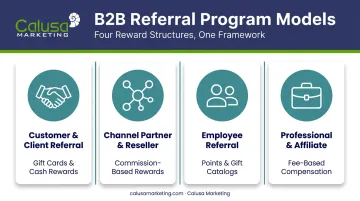
The right referral model depends on who already has credibility with your target customers. A software company's power users look different from a distributor's channel partners. Most B2B businesses end up running a mix of these four models.
Customer & Client Referral Programs
Satisfied customers already talk about you informally. A referral program just adds structure and reward. This model is common in distribution, media, and service industries, where account credits, cash, or gift cards give customers a tangible reason to make the introduction.
Calusa Marketing has managed customer incentive programs for media clients including the Houston Chronicle and McClatchy, using gift cards to reward subscriber acquisition using the same tracking and fulfillment mechanics that power referral rewards.
Channel Partner & Reseller Referral Programs
Resellers, distributors, and consultants already selling alongside you are natural referral sources. They typically earn commissions or revenue-share on closed deals rather than flat rewards, since their introductions carry direct sales value.
- Works best when partners are already compensated on performance
- Commission structures should mirror existing partner agreements to avoid channel conflict
- Deal registration processes prevent double-crediting when multiple partners work the same account
- Tiered commissions that increase with deal size encourage partners to prioritize larger opportunities
Employee Referral Programs
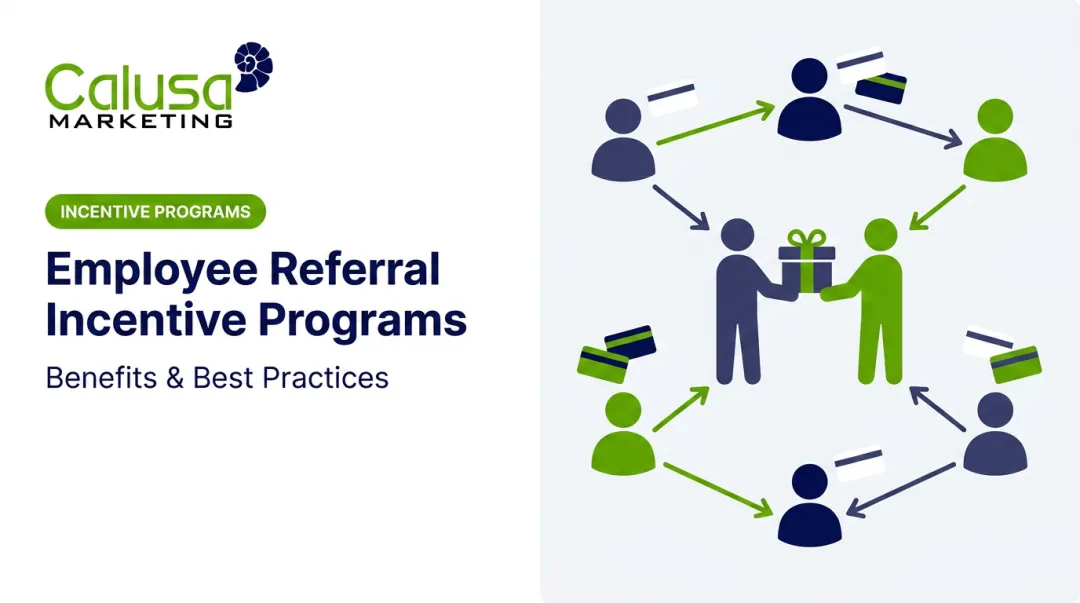
Employees can refer both new business leads and qualified job candidates, making this one of the more flexible program types. Designing rewards that motivate participation without adding administrative work is where most companies get stuck. Calusa Marketing addresses this administrative burden with points-based platforms and gift card catalogs that don't require manual reward tracking on the client's end.
Professional & Affiliate Referral Programs
Industry consultants or agencies who recommend your product to their clients in exchange for a fee are a good fit here. This model works especially well for specialized or technical B2B offerings, where a trusted advisor's endorsement carries real weight. It requires clear fee structures and disclosure practices, particularly if the affiliate serves the same clients you're trying to sell to.
How to Build a B2B Referral Program: A Step-by-Step Strategy
A referral program that works takes deliberate design across goals, targeting, incentives, and promotion. Emailing your customer list a referral link isn't a program. It's a hope.
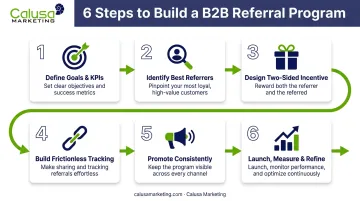
Step 1: Define Your Goals and KPIs
Decide upfront what success looks like — more leads, faster conversions, or expansion into a new market. Your goal shapes everything downstream, including incentive size and audience targeting.
- New market expansion often needs bigger rewards tied to a specific target-account list
- Faster conversions may mean targeting referrers whose network already trusts your product
Step 2: Identify Your Best Potential Referrers
Not every customer makes a good referrer. Target loyal, engaged accounts that have seen measurable results, rather than blanket-asking your entire customer base.
- Check renewal history, product usage, and satisfaction scores to spot likely champions
- A handful of highly engaged partners will outperform hundreds of lukewarm ones
Step 3: Design a Two-Sided Incentive Structure
Rewards should benefit both the referrer and the referred business. When a new prospect gets something too, such as a discount or a free month, they have a reason to take the meeting instead of ignoring the introduction.
A referral puts someone's professional reputation on the line. The reward needs to feel proportional to that risk. A small gift card won't move someone to introduce a $50,000 deal.
Step 4: Build a Frictionless Referral and Tracking Process
Use unique referral links, a one-step sign-up form, and CRM tagging so referrals get credit from first contact through a long B2B sales cycle. If your team can't trace where a lead came from six months later, the referrer won't get rewarded, and they won't refer again. Cloud-based reward platforms, like the one Calusa Marketing builds for its incentive programs, handle this tracking without requiring a new integration or app download, so credit follows the referral automatically from first click to closed deal.
Step 5: Promote the Program Consistently
One announcement email won't sustain participation. Promote it repeatedly:
- Email campaigns spaced throughout the quarter
- Sales and customer success team briefings
- Renewal conversations and quarterly business reviews
- Social media and community channels
Step 6: Launch, Measure, and Refine
Roll the program out in stages instead of all at once. Track KPIs from day one, then adjust incentives or messaging based on what participation and conversion data actually show you.
Best Incentives and Rewards for B2B Referral Programs
A referral puts someone's professional reputation on the line. The reward needs to feel worth that risk, which means generic swag or a $10 credit won't move the needle for a five- or six-figure deal.
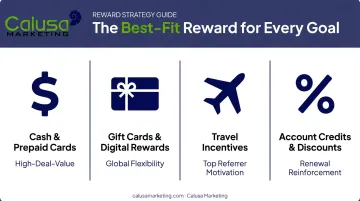
Cash and prepaid cards. Cash is the most flexible, frictionless reward available, and prepaid cards offer the same simplicity with easier expense tracking for compliance-focused programs. Neither requires interpretation of value, making them a strong fit for high-deal-value B2B referrals where the reward needs to match the size of the opportunity.
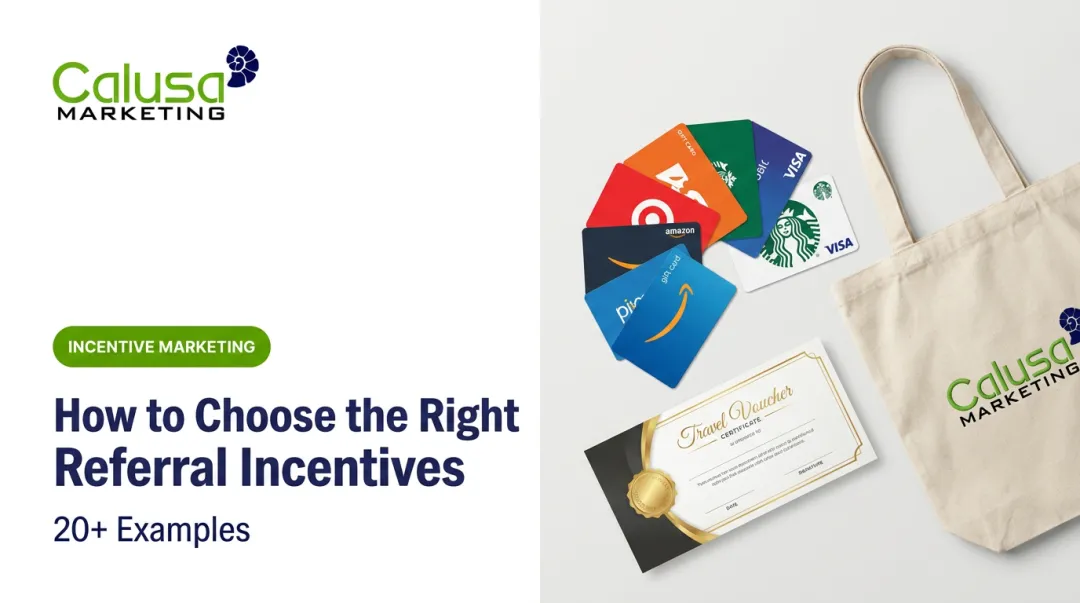
Gift cards and digital rewards. Gift cards offer meaningful choice without payout infrastructure. A broader retailer selection increases perceived value. Calusa Marketing's ANY-Card platform gives recipients 100+ options (national retailers, restaurants, grocery, and a VISA cash-alternative) plus international card options for global referral programs.
Travel incentives. Travel rewards work as a high-perceived-value incentive for top referrers, particularly in media and distribution, where account teams already respond to trip-based motivation.
Managing group travel bookings, fulfillment, and customer service in-house is a heavy lift. Calusa Marketing handles that end-to-end, from hotel and Royal Caribbean cruise certificates to group trips for up to 10,000 people.
Account credits and discounts. These work best for customers already deeply engaged and likely to renew or expand, since the reward reinforces a relationship you expect to continue.
Determining reward value. Referral rewards should represent a small fraction of new customer revenue or lifetime value. Benchmark against norms in your industry, and consider tiering rewards by deal size rather than offering one flat amount.
Managing multiple reward types (cash, gift cards, and travel) at scale creates real administrative burden. Someone has to source, ship, reconcile, and support every redemption. Outsourcing fulfillment to a dedicated incentive marketing partner keeps the process fast, cost-effective, and easy to manage.
Measuring and Optimizing Your B2B Referral Program
Track these KPIs from the day your program launches:
| KPI | What It Tells You |
|---|---|
| Referral participation rate | How many eligible referrers are actively engaged |
| Referral-to-customer conversion rate | Deal quality of referred leads versus other channels |
| Time-to-close | Whether referrals shorten your sales cycle |
| Referral-driven CAC vs. other channels | Cost efficiency of the referral channel |
Patience matters here. B2B sales cycles run long. 6sense's 2025 buyer research found the average B2B buying journey now takes 10.1 months from first research activity to purchase decision. Revenue from a referral submitted this quarter may not show up for months, so track submissions and qualified leads as your early indicators.
Beyond tracking these indicators, watch for common mistakes that stall programs before they gain traction:
- Overly complex referral processes with multi-step forms or unclear rules
- Mismatched incentives that don't reflect actual deal value
- Inconsistent promotion after a strong initial launch
Review performance quarterly. Adjust referrer targeting, incentive size, or messaging based on what the data shows, not on assumptions from launch day.
Frequently Asked Questions
What is a B2B referral?
A B2B referral is a recommendation from an existing customer, partner, or professional contact that introduces your business to a new prospective client. It carries weight because it comes from someone the prospect already trusts.
Does B2B referral marketing pay well?
Referrals arrive backed by peer trust, which shortens sales cycles and improves close rates compared to cold outbound. A well-structured program, with incentives sized to deal value, typically delivers return well above its cost — referred deals close faster and demand less sales effort.
What is the rule of 7 in B2B marketing?
The rule of 7 holds that prospects generally need around seven touchpoints before taking action. For referral programs, that means promoting consistently across email, sales briefings, and renewal conversations rather than relying on one announcement.
How do you structure a B2B referral program?
Set clear goals, identify your best potential referrers, design a two-sided incentive aligned to deal value, and build a frictionless tracking process. Then promote it consistently and refine based on results.
What incentives work best for B2B referral programs?
Double-sided incentives, such as cash, gift cards, and travel rewards, tend to perform best when matched to deal value. Higher-value deals warrant higher-perceived-value rewards, such as travel or larger cash payouts.
How long does it take to see results from a B2B referral program?
Because B2B sales cycles can run close to a year, track referral submissions and qualified leads as early indicators. Revenue impact typically follows several months behind initial program activity.