Introduction
Think about the last new business you tried - a dentist, a landscaper, a favorite taco spot. Chances are a friend told you about it first, not an ad.
That instinct to trust people over advertising is measurable. According to Nielsen's 2021 Trust in Advertising study, which surveyed more than 40,000 consumers worldwide, 88% trusted recommendations from people they know more than any other channel.
Most businesses, though, leave that trust to chance instead of building it into a system. Referral programs change that, turning a happy customer's casual mention into a repeatable, trackable growth channel with a reward attached.
This article covers 10 creative, ready-to-use referral program ideas, plus guidance on choosing the right incentive, launching your program, and promoting it so it doesn't fizzle out after week one.
Key Takeaways
- Referral programs cost less and build more trust than most paid acquisition channels
- Matching the incentive type to your buying cycle matters more than the reward size
- Double-sided rewards (one for the referrer, one for the new customer) outperform one-sided offers for experience-based purchases
- Prompt reward delivery and simple tracking separate scaling programs from fading ones
- Outsourcing tracking and fulfillment to a partner cuts most of the operational lift
What Is a Referral Program and Why It Drives Business Growth
A referral program is a clear strategy that rewards existing customers, clients, or employees for introducing new business through their personal networks. Instead of hoping word-of-mouth happens on its own, you give it a clear ask, a tracking mechanism, and a reward.
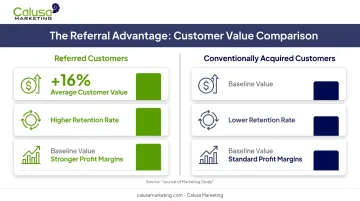
That structure matters. A Journal of Marketing study of a German bank's referral program compared 5,181 referred customers against a matched group acquired through conventional marketing. Referred customers showed at least 16% higher average value, driven by stronger margins and retention.
Referral programs aren't limited to consumer brands. They work for:
- Local service businesses (HVAC, home improvement, salons)
- Distributors and dealers rewarding channel partners
- Retailers and jewelry stores
- Subscription and membership companies
The mechanics shift slightly by industry, but the core idea stays the same: reward the people already vouching for you. Here are 10 ways to structure that reward.
10 Creative Referral Program Ideas to Grow Your Business
The best referral programs combine the right incentive, dead-simple participation, and consistent promotion : not just a generic "refer a friend for 10% off" banner buried on a website.
Idea 1: Double-Sided (Two-Sided) Incentives
Reward both the referrer and the new customer at the same time. It reframes the ask: instead of pitching a friend, a customer is handing over a gift.
A simple structure: the referrer gets a $25 service credit, the new customer gets 15% off their first purchase.
Three experiments found Reward-Both outperformed Reward-Me for experiential purchases, though the advantage disappeared for purely material goods, per research published in the Asia Marketing Journal. Match the structure to what you sell.
Idea 2: Tiered or Milestone Rewards
Rewards grow as customers refer more people, using a simple points or level system. This keeps top referrers engaged well past their first successful referral.
A sample breakdown:
- 1 referral: $10 gift card
- 5 referrals: $75 credit or merchandise item
- 10+ referrals: VIP tier with ongoing perks or a larger cash bonus
Idea 3: Flexible Gift Card and Cash Rewards
Gift cards or cash work best when purchases are infrequent : a roofer, a mattress company, a one-time home renovation. A discount on "your next service" has little pull if there won't be a next service anytime soon.
A flexible, any-brand gift card removes the guesswork of picking one retailer everyone will actually use. This is where incentive marketing partners add value - a firm like Calusa Marketing offers ANY-Card flexibility along with full reward fulfillment, so businesses aren't sourcing, storing, or shipping gift cards themselves.
Idea 4: Charitable Donation Referrals
Donate a fixed amount to a cause for every successful referral. This appeals to socially conscious customers and gives your brand a story beyond "refer a friend, get paid."
Keep the choice simple: two or three relevant causes, not a long dropdown list. Larger donation amounts tend to increase participation, but only when customers believe the company's motives are genuine rather than a marketing stunt.
Idea 5: Referral Contests and Sweepstakes
Time-bound contests with a grand prize create urgency and friendly competition. Whoever refers the most people in a quarter wins a big prize - a trip, premium merchandise, or a sizable cash bonus.
Keep a small guaranteed reward alongside the contest. Customers who don't win the grand prize should still walk away with something, or participation drops fast after the first round.
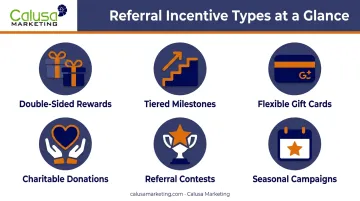
Idea 6: Seasonal and Limited-Time Campaigns
Tying referral bonuses to holidays or slow seasons gives you a built-in reason to re-promote the program throughout the year, instead of launching once and letting it go stale.
Example: a home services company doubles referral rewards every January, its historically slowest booking month, to fill the pipeline before spring demand hits.
Idea 7: Surprise and Delight Mystery Rewards
Unannounced bonus gifts create excitement and make referrals more memorable and shareable. Instead of promising a fixed reward, you simply tell customers to refer a friend and get a surprise.
This works best when:
- Trend-based or excess inventory needs moving
- Your customer base skews toward enjoying surprises over guaranteed amounts
- Social sharing matters to you (mystery rewards get posted online more than routine discounts)
Idea 8: Service Credits and Free Upgrades
Offering credit toward a future service, instead of cash, keeps the reward's value inside your business and increases repeat bookings. A customer who gets $50 off their next HVAC tune-up is more likely to book that tune-up with you specifically.
Compare that to a one-time discount at checkout, which gets spent and forgotten. Credits build stronger long-term loyalty and work especially well for recurring-service businesses like pest control, lawn care, or salons.
Idea 9: Employee Referral Incentives
Employees who interact with customers daily are an underused referral channel. Reward them for bringing in new customer business, not just new hires.
A simple structure: a $50-$100 bonus or gift card per successful customer referral, or a team leaderboard with a monthly prize for whoever refers the most business. It's a channel most companies overlook entirely.
Idea 10: B2B Partnerships and Affiliate Referrals
Partner with non-competing, complementary businesses to exchange referrals. This opens access to a new, pre-qualified audience without paying for cold outreach.
Example: an HVAC distributor partners with independent installers, each referring customers to the other. A window retailer partners with a general contractor. Structure the arrangement so both sides benefit - a referral fee, reciprocal rewards, or co-marketing credit.
How to Choose and Launch the Right Referral Program
Choosing the Right Incentive for Your Business
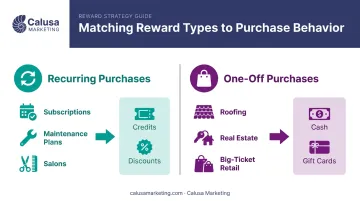
Start by identifying whether your customers buy recurring or one-off. That single question determines your reward type:
- Recurring purchases (subscriptions, maintenance plans, salons): credits and discounts work well, since customers will actually use them
- One-off or infrequent purchases (roofing, real estate, big-ticket retail): cash or gift cards make more sense, since "10% off next time" has no near-term use
Then compare the reward cost against customer lifetime value (LTV) and customer acquisition cost (CAC). A reward priced higher than the profit a new customer generates undermines the program's economics. Size rewards against contribution margin, not just order value.
Promoting and Tracking Your Program
A referral program only works if people know it exists. Key touchpoints to promote it:
- Invoices and receipts
- Email campaigns and newsletters
- Social media posts and pinned links
- Website banners
- Post-service reminder cards or follow-up texts
Manual tracking - a shared spreadsheet someone updates "when they get to it" - is where most referral programs die. Referrals get lost, rewards go out late, and customers stop bothering. Dedicated incentive and loyalty platforms, like the cloud-based SaaS systems Calusa Marketing runs for clients managing 500,000+ program members, automate tracking and payout so a referral triggers a reward without anyone chasing it down manually.
Conclusion
The most effective referral programs don't rely on one flashy idea. They pair a well-matched incentive—credit, cash, donation, or tier—with simple, consistent promotion at the moments customers are already paying attention.
Start with one or two ideas from this list. Measure results for a quarter, then refine before adding more.
If you'd rather not build and manage the tracking, fulfillment, and reward logistics yourself, that's exactly what an experienced incentive marketing partner is for.
Calusa Marketing has designed and managed more than 1,000 incentive programs with a 99% client retention rate. The team handles everything from reward sourcing to customer support, so your team can focus on referrals instead of paperwork.
Frequently Asked Questions
What's the best way to increase referrals?
Use double-sided incentives so both the referrer and new customer get something, make sharing effortless with a referral link, and promote the program consistently at invoices, emails, and post-service touchpoints.
How do I reward clients for referrals?
Match the reward to purchase frequency: credits or discounts for recurring services, cash or gift cards for one-off purchases, and donations for socially conscious audiences. Value should scale with what a new customer is worth.
What are good promotional ideas for a referral program?
Invoices, email campaigns, social proof posts, and post-service reminder cards are low-cost channels that reach customers right when they're most satisfied with your service.
How do I start a referral program for my small business?
Set a clear goal, choose an incentive that fits your buying cycle, decide how you'll track referrals, and promote it regularly rather than launching once and forgetting about it.
What's a good reward amount for a referral?
Keep the reward below the profit or lifetime value a new customer generates. Larger rewards can bring in more referrals but often erode the profitability of those new customers.
How can incentive marketing companies help manage a referral program?
Firms like Calusa Marketing handle tracking, reward fulfillment, and customer support on your behalf, so you can launch a program without adding operational work to your team's plate.