Businesses have caught on. Instead of one-off bonuses, generic gift cards, or an "employee of the month" plaque that gathers dust, companies are building structured points programs for employees, customers, and dealer networks alike.
The problem? Many organizations still rely on rewards that feel arbitrary, disconnected, or forgettable. A $50 bonus buried in a paycheck doesn't inspire anyone. A gift card nobody wanted doesn't either.
This guide breaks down what a point-based reward system actually is, how it stacks up against traditional rewards, the benefits backed by research, and the best practices for building a program that keeps people engaged, whether they're on your payroll, your customer list, or your dealer roster.
Key Takeaways
- Points let participants earn continuously and redeem anytime, not just once.
- The same mechanics work for employee, customer, and dealer incentive programs.
- Research shows points feel like gifts, not compensation, boosting motivation.
- Transparent values, varied rewards, and reliable technology drive program success.
- A skilled incentive partner cuts admin work while improving outcomes.
What Is a Point-Based Reward System?
A point-based reward system is a structured program where participants earn points for specific actions and later redeem those points for rewards they actually want. That's the whole concept, stripped down.
For employees, this typically means earning points for:
- Hitting performance milestones or sales targets
- Receiving peer-to-peer recognition
- Completing training or certifications
- Maintaining safety records
- Demonstrating company values in daily work
Points get redeemed for gift cards, PTO, merchandise, or travel experiences.
For customers, dealers, and distributors, the model shifts slightly but the mechanics stay familiar. Participants earn points for purchases, referrals, or program engagement. This is standard practice across distribution and retail industries, including HVAC, electrical, tire, and jewelry sectors.
Dealer loyalty programs, for instance, often tie point accumulation directly to purchase volume and account growth, giving distributors a reason to consolidate spend with one supplier instead of splitting it across competitors.
The Core Mechanics
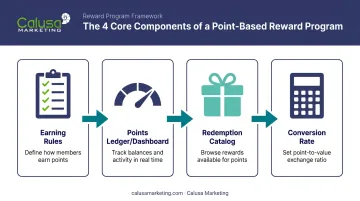
Every point program, regardless of audience, runs on four basic components:
- Earning rules: clear criteria for how points are awarded
- A points ledger or dashboard: real-time tracking so participants always know their balance
- A redemption catalog: the menu of rewards points can be exchanged for
- A conversion rate: the formula that translates points into dollar value
That conversion rate varies enormously by program. Some organizations set values as low as a penny per point; others price points higher depending on budget, program goals, and how "premium" they want redemptions to feel. There's no single industry standard here, so the right ratio depends on your specific budget and the rewards catalog you're offering.
Why Points Feel Different Than Pay
Here's where the psychology gets interesting. The Incentive Research Foundation surveyed over 1,000 workers and found that 80% said receiving points felt like a gift. Meanwhile, 83% called the experience "a treat" and 75% found it memorable, according to the Incentive Research Foundation's Psychology of Points study.
That distinction matters. Cash tends to get mentally filed under "salary" and disappears into routine spending. Points don't. They get treated as a separate, almost indulgent windfall, which is exactly why participants save them up, plan redemptions around them, and remember receiving them long after a cash bonus would have been forgotten.
The goals and audience shift the earning structure and catalog, but the underlying mechanics, and the psychological lift, stay consistent whether you're rewarding a warehouse employee or a top-tier dealer.
Point-Based vs. Traditional Reward Systems: Key Differences
Traditional rewards are one-and-done. A bonus lands, a plaque gets handed out, a gift card gets mailed. There's no continuity or accumulation, and consistency often depends on whether a manager remembers to follow through.
Points work differently. Participants build a balance over time, which creates an ongoing relationship with the program instead of a single transaction. This also solves a fairness problem: earning criteria are automated and tracked, so recognition doesn't hinge on whether a manager happened to remember.
Here's how the three most common reward types stack up:
| Dimension | Points | Cash | Gift Cards |
|---|---|---|---|
| Choice | Broad catalog, save or redeem anytime | Fixed amount, no flexibility in form | Limited to card's specific retailer |
| Budget control | Adjustable catalog and values, no compensation renegotiation | Locked into payroll and comp structure | Fixed face value per card |
| Timeliness | Can be awarded instantly and tracked continuously | Often tied to payroll cycles | Immediate, but one-time |
| Measurability | Full digital record of issuance and redemption | Cost is trackable, impact is not | Redemption tracking varies by provider |
| Perceived value | Treated as a gift, not compensation | Blends into regular pay | More personal than cash, but static |
Points deliver benefits a one-time reward can't match:
- Automatic fairness: award criteria run through the system, not a manager's memory
- Ongoing engagement: balances build over time instead of resetting after each reward
- Actionable data: a full digital record of what's driving redemptions, not just a cost line item
Benefits of Point-Based Reward Systems
Stronger Engagement and Retention Gains
Waiting until year-end review season to recognize good work is too slow. Points allow for recognition the moment it's earned. Gallup found that employees who receive the right amount of recognition are four times as likely to be engaged at work, according to Gallup's research on employee retention and recognition.
That kind of engagement doesn't come from an annual bonus. It comes from a system that recognizes contributions as they happen.
Recognition doesn't just boost morale, it keeps people around. In a longitudinal study following nearly 3,500 employees over two years, Gallup and Workhuman found that well-recognized employees were 45% less likely to have changed employers.
The same principle applies to customers. A loyalty program that rewards ongoing engagement gives customers a reason to stick with your brand rather than switch to a competitor offering a similar product at a similar price.
Personalization, Measurability, and Revenue Impact
A rigid rewards menu satisfies almost nobody completely. A varied catalog, spanning gift cards, merchandise, and travel, lets each participant redeem for something that actually matters to them. That flexibility is a big part of why points feel more valuable than a generic reward selected on someone else's behalf.
Every point issued and redeemed also creates a data trail. That means:
- Participation rates by individual or segment
- Redemption patterns showing what rewards actually resonate
- Direct visibility into program ROI
Traditional rewards can't produce this. A cash bonus disappears into a paycheck with no measurable engagement signal attached.
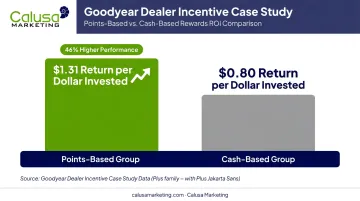
Points don't just drive engagement, they can move revenue directly. In a Goodyear dealer incentive case documented by the Incentive Research Foundation, a points-based group outperformed a cash-based group by 46%. That program generated a reported return of $1.31 for every dollar invested, compared to just $0.80 for the cash group, according to the Incentive Research Foundation's Psychology of Points report.
That's the kind of result that gets a CFO's attention.
Best Practices for Building a Successful Point-Based Reward Program
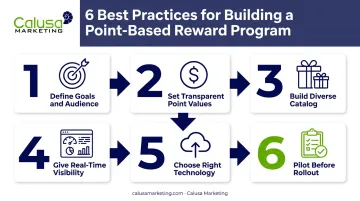
1. Define Goals and Audience First
Before designing point structures, decide who this program is for and what it needs to accomplish. Employee retention, dealer purchase volume, and customer repeat spend all require different earning rules and reward types.
2. Set Transparent Point Values
Pick a conversion rate that's simple to explain and tied to your budget. For example, if your program uses a rate of $0.05 per point, a participant earning 1,000 points knows instantly that's worth $50. This transparency builds trust with participants, while confusing math creates skepticism and support headaches.
3. Build a Diverse, Tiered Catalog
Not everyone wants the same reward, so build variety into your catalog:
- Digital gift cards across multiple retailers
- Branded merchandise
- Travel experiences or certificates
- Charitable donation options
Offering tiers, small redemptions for quick wins and larger ones for saved-up points, keeps both immediate and long-term motivation alive.
4. Give Real-Time Visibility
Participants should always be able to check their balance without asking anyone. A live dashboard keeps the program top of mind and avoids the frustration of surprise expirations. Along the same lines, avoid aggressive expiration policies, such as wiping out points after just 90 days. Nothing kills trust faster than points vanishing before someone gets a chance to redeem them.
5. Choose the Right Technology
Manual tracking doesn't scale. A cloud-based platform that automates earning, redemption, and reporting removes the administrative burden entirely. Calusa Marketing's SaaS platform, for example, requires no integration and no app download, which means clients can roll out a program in weeks rather than months.
6. Pilot Before Full Rollout
Test the point structure and catalog with a smaller group first. Gather feedback, adjust earning rules or reward options, and only then expand company-wide or across your full dealer network.
Choosing the Right Point-Based Rewards Partner
Running a points program in-house sounds manageable until you're the one sourcing rewards, processing redemptions, and fielding support calls at 9 p.m. That's where a full-service partner earns its keep.
Look for a provider that handles:
- Reward sourcing across gift cards, merchandise, and travel
- Redemption processing so your team isn't manually fulfilling requests
- Ongoing support for both program administrators and participants
Variety matters too. A partner offering only one or two reward types won't satisfy a diverse audience, whether that's warehouse employees, retail customers, or regional dealers with different tastes and price points.
Calusa Marketing has spent 11 years building exactly this kind of infrastructure. The St. Petersburg, Florida-based firm manages more than 1,000 incentive programs and serves over 500,000 program members, backed by a 99% client retention rate.

That track record shows up in the details: white-glove customer support seven days a week, so a program member's Saturday question doesn't land on your desk.
Frequently Asked Questions
How much money is 1,000 reward points?
It depends entirely on the program's conversion ratio. Many programs value points somewhere between $0.01 and $0.10 each. At $0.05 per point, 1,000 points would be worth $50.
What is a point-based reward system for employees?
It's a structured recognition model where employees earn digital points for achievements or milestones, then redeem them for rewards of their choice instead of a single, fixed reward.
How do you set point values for different behaviors or actions?
Point values should scale with the action's effort or impact while staying within your program budget. Keep the rules simple and transparent so participants can calculate their rewards easily.
What's the difference between points-based and cash-based reward systems?
Points offer choice and budget control, creating a reward experience that feels like a gift. Cash tends to blend into regular pay and gets forgotten quickly.
Do point-based systems work for customer loyalty programs, not just employees?
Yes. The same mechanics apply to customer and dealer programs, where points are earned through purchases or engagement and redeemed for rewards that encourage repeat business.
How long does it take to implement a point-based reward program?
Timelines vary, but many programs launch within weeks using a pre-built, no-integration SaaS platform, like Calusa Marketing's reward platform. Custom-built solutions typically take months longer to deploy.