Cash incentives get discussed constantly in theory. Fewer conversations focus on what they actually deliver: lower turnover, higher output, stronger sales numbers. In fact, 98% of organizations used at least one bonus program in 2024, up from 93% just three years earlier, according to a WorldatWork report on bonus program adoption. This article breaks down what monetary rewards actually produce, where they backfire, and how to structure a program that holds up over time.
TL;DR
- Monetary rewards like bonuses, points, and gift cards recognize performance and reinforce behavior
- Measurable advantages include stronger motivation, better retention, and clearer behavior alignment
- Without fairness, timeliness, and non-monetary recognition, rewards quickly lose impact
- Points-based platforms are replacing generic bonuses because employees choose their own rewards
What Are Monetary Rewards for Employees?
A monetary reward is a financial incentive given on top of base pay to recognize performance, milestones, or specific behaviors the company wants to see more of.
You'll typically find them inside:
- Sales incentive programs and commission structures
- Distributor and dealer channel reward programs
- Customer service and call center performance plans
- Employee referral programs
- Company-wide recognition initiatives (spot bonuses, milestone awards)
Money is a means, not the end goal. Cash alone rarely sustains engagement without structure around it — clear criteria, timing, and follow-through matter just as much as the dollar amount.
Key Advantages of Monetary Rewards for Employees
The advantages below track back to specific numbers businesses already watch: turnover rate, sales volume, participation rate, productivity per employee. None of this is abstract theory.
Advantage 1: Strengthens Employee Motivation and Performance
Monetary rewards create a direct line between effort and recognition. Spot bonuses, commission payouts, and point-based incentives that hit near real time reinforce the specific action that earned them, not a vague sense of "doing well" months later at a review.
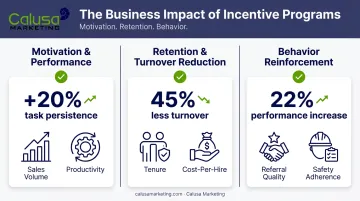
Timing matters more than most companies assume. In a controlled study reported by Cornell, an immediate bonus produced almost a 20% increase in the share of participants who kept working on a task after the reward was removed. Delaying that same bonus by just one month erased the effect. The researchers' takeaway: smaller, frequent bonuses likely motivate more effectively than one large year-end payout.
KPIs impacted:
- Sales volume
- Productivity per employee
- Goal attainment rate
- Quality and error rates
This advantage hits hardest in commission-driven roles, distributor and dealer sales incentive programs, and any team with clear, measurable targets to hit.
Advantage 2: Improves Employee Retention and Reduces Turnover Costs
Consistent recognition tells employees their work matters beyond the job description on paper. Profit sharing, milestone bonuses, and ongoing points-based rewards give people a reason to stay invested instead of browsing job boards.
The cost of getting this wrong is steep. Gallup estimates replacing frontline employees costs roughly 40% of their salary, technical employees closer to 80%, and leaders or managers up to 200%. Those figures exclude the harder-to-measure hit to morale and institutional knowledge.
The retention payoff is documented too. Gallup and Workhuman tracked nearly 3,500 employees from 2022 to 2024 and found that employees who were well recognized in 2022 were 45% less likely to have changed organizations two years later.
KPIs impacted:
- Voluntary turnover rate
- Average tenure
- Cost-per-hire
Industries competing hard for skilled talent feel this benefit most, especially where onboarding is expensive or the workforce is distributed and frontline-heavy, such as dealer networks, distribution centers, and call centers.
Advantage 3: Reinforces Desired Behaviors and Business Objectives
Every reward sends a signal about what the company actually values, whether that's collaboration, safety, customer service, or pure sales growth. Referral bonuses, values-based spot bonuses, and team incentives let you reward specific behaviors instead of generic "good effort."
Structured programs outperform unstructured ones. IRF's meta-analysis of 45 studies found incentive programs using money or tangible awards produced an average 22% performance increase, with team-based incentives pushing gains as high as 44%. The catch: results depend on picking the right design and monitoring it, not just launching a bonus and walking away.
KPIs impacted:
- Referral hire quality
- Participation rate
- Customer satisfaction scores
- Adherence to safety and process standards
Organizational change, new product launches, and multi-location rollouts are where this advantage delivers the most value.
What Happens When Monetary Rewards Are Missing or Ignored
Skip structured financial incentives, and high performers start to feel invisible. Effort becomes inconsistent, and disengagement creeps in quietly, then all at once.
Ad hoc reward programs (the kind announced verbally or handed out without clear criteria) create a different problem: perceptions of favoritism. Once employees suspect rewards go to whoever's closest to leadership rather than whoever earned them, participation drops and trust erodes.
The compounding risk shows up on the business side:
- Unplanned turnover climbs faster than budgets account for
- Recognition becomes impossible to scale as headcount grows
- Companies shift into reactive "fire drill" retention mode instead of proactive engagement
None of this fixes itself; it usually gets worse until someone rebuilds the program from scratch.
How to Get the Most Value from Monetary Rewards
The strongest ROI comes from rewards tied to clearly defined, measurable goals — communicated in advance, not decided after the fact.
A few principles hold up across industries:
- Set transparent criteria. Every eligible employee or channel partner should know exactly how a reward is earned before they start working toward it.
- Pair cash with recognition. Public praise or peer nominations alongside a bonus makes it feel personal rather than purely transactional.
- Build in flexibility. Points redeemable for gift cards, merchandise, or travel tend to feel more valuable than a flat cash bonus, since employees choose what actually matters to them.
- Review the program regularly. Static programs go stale. What motivated a sales team last year might not land the same way now.
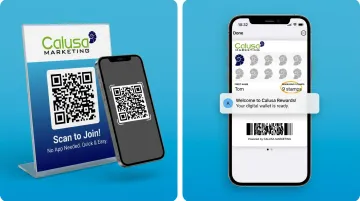
This is also where the platform running the program matters. Calusa Marketing, an incentive marketing firm based in St. Petersburg, Florida, runs cloud-based SaaS reward programs that require no integration and no app download. Employees enroll through a QR code, a link, or a text opt-in, and digital rewards land in a smartphone wallet within seconds.
For a company managing a distributor network or a sales team spread across multiple locations, that setup matters practically. Most programs can launch in less than a week, whether the reward catalog is built around gift cards, merchandise, or incentive travel. That's a meaningfully faster path than building a points system in-house from scratch.
Conclusion
The real value in monetary rewards comes from the clarity, consistency, and trust the program builds when it's tied to goals employees actually understand.
Motivation and retention don't happen from a single bonus cycle. Behavior alignment compounds the same way, growing stronger when a program is managed fairly and reviewed on a regular basis. Treat monetary rewards as an evolving practice, not a once-a-year check-the-box exercise, and the performance gains tend to follow.
Frequently Asked Questions
What is a monetary reward?
A monetary reward is a financial incentive (a bonus, commission, gift card, or profit share) given to recognize performance or a specific achievement beyond regular pay.
What is the difference between monetary and non-monetary rewards?
Monetary rewards carry direct financial value, like cash or redeemable points. Non-monetary rewards focus on recognition, flexibility, or development opportunities that build an emotional connection to the work itself.
What is an example of a monetary reward?
Common examples include a performance bonus, a sales commission, a referral bonus, or points redeemable for a gift card or travel experience.
What are the main types of rewards?
The main categories are performance bonuses, spot bonuses, commissions, profit sharing, referral bonuses, and points-based or flexible rewards programs.
Do monetary rewards actually improve employee motivation?
Yes, when they're timely, fair, and tied to a meaningful achievement. Research shows financial incentives work best combined with regular recognition and clear performance expectations, not as a standalone fix.
How often should employees receive monetary rewards?
There's no universal schedule. Frequent smaller recognitions, like spot bonuses or milestone rewards, paired with larger periodic incentives tend to sustain motivation better than annual-only bonus cycles.