Companies pour budget into acquisition — ads, promotions, sign-up discounts — while loyalty sits unmeasured in the background. That's a costly blind spot. Research from Harvard Business Review shows acquiring a new customer can cost five to 25 times more than retaining an existing one, depending on the industry.
This guide breaks down what brand loyalty actually means, the three stages customers move through, the metrics that prove it's real, and the strategies that build it on purpose.
Key Takeaways
- Brand loyalty progresses through three stages: recognition, preference, and insistence
- Measurement blends hard data (purchases, churn) with soft data (surveys, sentiment)
- Track NPS, retention rate, CLV, and repeat purchase rate together, never in isolation
- Pairing metrics with personalization and structured rewards programs is what actually builds loyalty
What Is Brand Loyalty in Brand Management?
Brand loyalty is two things happening at once: an emotional attachment (trust, satisfaction, willingness to overlook the occasional mistake) and a behavioral pattern (repeat purchases, resistance to switching).
Marketing researchers Dick and Basu framed this decades ago as the relationship between a customer's relative attitude and their repeat patronage. That combination still holds up as the clearest way to define it.
Within brand management, loyalty does three concrete jobs:
- Builds brand equity by turning customers into a stable revenue base
- Creates a defensive moat, making it harder for competitors to poach your best accounts
- Reduces price sensitivity, since loyal customers weigh trust and habit more heavily than cost
Satisfaction Isn't the Same as Loyalty
These three functions depend on a distinction that's easy to miss: loyalty isn't the same as satisfaction. A satisfied customer isn't automatically a loyal one. Marketing scholar Richard Oliver's research frames satisfaction as a necessary stage in building loyalty, but one that matters less once habits and preferences take over.
In plain terms, someone can be happy with your product and still switch the moment a competitor undercuts your price. Loyalty requires sustained behavior over time, not a single good experience.
The Three Levels of Brand Loyalty
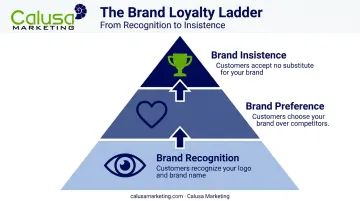
Loyalty builds gradually, like climbing a ladder, and most of your customer base is sitting at a specific rung right now. Knowing which rung matters more than knowing your total customer count, because the strategy that moves someone from rung one to rung two looks nothing like the strategy that locks in rung three.
Level 1: Brand Recognition
This is the entry point. A customer sees your logo, hears your tagline, or spots your packaging and recognizes it, but they haven't formed any preference yet. They'd choose you or a competitor with equal ease.
What moves them forward: consistent visibility. Repeated, recognizable brand presence across channels is what nudges someone from passive awareness into active consideration.
Level 2: Brand Preference
At this stage, customers actively choose you over competitors when the price and access are roughly equal. They might mention you positively to a friend without being asked.
Preference gets built through:
- Delivering consistent product or service quality, visit after visit
- Resolving customer issues quickly through responsive service
- Incorporating customer feedback visibly into business decisions
Level 3: Brand Insistence
This is real loyalty. Customers at this level won't accept a substitute — they'll drive further, pay more, or wait longer to get your product specifically. These are also your highest Customer Lifetime Value accounts and the ones most likely to advocate for you unprompted.
Reaching this stage rarely happens by accident. It's usually reinforced by tangible recognition: rewards, exclusive perks, or an incentive structure that acknowledges the repeat behavior instead of taking it for granted.
How to Measure Brand Loyalty: Frameworks and Key Metrics
You can't manage what you don't measure, and loyalty is easy to assume without ever confirming. Measurement splits into two categories, and you need both.
Objective vs. Subjective Measurement
Objective measurement pulls hard behavioral data straight from your CRM or sales system: purchase history, contract renewals, churn records. It tells you what customers actually did.
Subjective measurement relies on self-reported survey data: likelihood to recommend, likelihood to renew, satisfaction scores. It tells you what customers feel and intend to do next.
Relying on only one gives an incomplete picture. A customer can keep buying out of habit while quietly planning to leave. This combination of weak attitude and high repeat behavior is a pattern researchers call spurious loyalty. Surveys catch that risk before it shows up in your churn numbers.
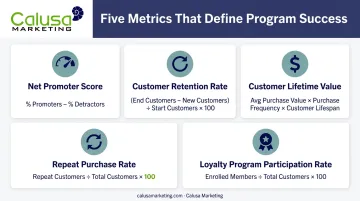
5 Metrics Every Brand Should Track
Net Promoter Score (NPS): Ask customers, "How likely are you to recommend us to a friend or colleague?" on a 0–10 scale. Scores of 9–10 are promoters, 7–8 are passives, 0–6 are detractors. Formula: NPS = % promoters − % detractors, giving a range from -100 to +100.
Customer Retention Rate (CRR): Formula: CRR = [(E − N) / S] × 100, where E is customers at period end, N is new customers gained during the period, and S is customers at period start. Subtracting new sign-ups keeps you from mistaking fresh acquisition for actual retention.
Customer Lifetime Value (CLV): Formula: CLV = average purchase value × purchase frequency × customer lifespan. This ties loyalty directly to revenue, showing what a retained relationship is actually worth over time.
Repeat Purchase Rate (RPR): Formula: RPR = customers with 2+ purchases ÷ total customers × 100. It's one of the clearest signs of habitual, low-effort loyalty, though on its own it can't confirm emotional attachment.
Loyalty Program Participation Rate: Sign-ups mean nothing if customers never engage. Track active participation (redemptions, repeat visits tied to the program, ongoing enrollment) to see who's converting recognition into real repeat behavior.
Brand Loyalty Management Strategies That Drive Results
Measurement tells you where you stand. These strategies are how you actually move the needle.
Personalize the Customer Journey
Use purchase history and behavioral data to tailor offers, emails, and recommendations to what each customer actually wants — not a generic blast to your whole list. Customers notice the difference between a relevant offer and a mass email, and it directly affects whether they open the next one.
Keep the Experience Consistent
Every touchpoint matters, and effort is the hidden variable most brands underestimate. A widely cited HBR study covering more than 75,000 customer interactions found that 94% of customers who reported a low-effort experience said they intended to repurchase, compared with just 1% among those who reported high effort.
High-friction service — repeat contacts, transfers, having to explain the same issue twice — erodes loyalty long before a low score shows up in your data.
Launch a Structured Incentive Program
Preference only becomes trackable loyalty when you give customers a formal reason to keep coming back — digital punch cards, points systems, or gift card rewards that turn repeat behavior into something visible and rewardable.
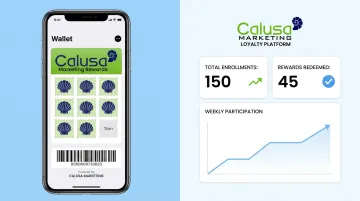
This is where a lot of businesses stall out, because traditional loyalty platforms often demand IT integration work and a branded app customers have to download. Calusa Marketing's cloud-based digital loyalty card platform skips both requirements, deploying without touching a client's existing POS or CRM systems.
Customers enroll via a QR code, link, or text — no app download, no account creation — and the card lands in their existing Apple Wallet or Google Wallet within seconds.
That matters for measurement too: the platform tracks where, when, and by whom every reward is earned, giving businesses real participation data instead of a guess.
Turn Preference into Advocacy
Your most loyal customers are also your cheapest acquisition channel — if you give them a reason to talk. Rewarding referrals and reviews converts quiet brand preference into active recommendation, which costs far less than a traditional ad campaign.
A simple prompt at the right moment — right after a purchase or a five-star support interaction — captures that advocacy while satisfaction is highest.
Extend the Loyalty Mindset Internally
Customer loyalty and employee loyalty aren't separate problems. A motivated employee delivers a more consistent experience, which is exactly what keeps customers at the preference and insistence stages. Pairing a customer loyalty program with employee recognition — sales incentives, onboarding milestones, safety awards — reinforces the same behaviors from both directions.
Common Mistakes to Avoid When Managing Brand Loyalty
Even well-intentioned loyalty efforts fail for predictable reasons.
- Trusting a single metric. NPS alone doesn't confirm loyalty. A 2024 academic review found satisfaction measures explain more outcome variance than NPS by itself. Correlate NPS with actual retention and repeat-purchase data rather than reading it in isolation.
- Treating the program as "set and forget." Rewards, communication timing, and redemption ease need ongoing adjustment based on participation data. A program that launches strong but never gets revisited will lose engagement over time.
- Ignoring emotional signals. Purely transactional data misses early churn warnings. A customer's declining satisfaction score often shows up months before their purchase behavior does.
Frequently Asked Questions
How do you measure brand loyalty?
Combine objective data, like retention rate and repeat purchases, with subjective survey metrics such as NPS and satisfaction scores. Track both consistently over time rather than checking once and moving on.
What is brand loyalty in brand management?
It's the emotional and behavioral commitment a customer shows toward a brand, built through trust and repeat experience. That commitment strengthens brand equity and makes the business more resilient against competitors.
What are the three levels of brand loyalty?
Customers progress from brand recognition (simply knowing the logo) to brand preference (choosing you when options are equal) to brand insistence (refusing substitutes entirely). Most customers sit somewhere in the middle.
What's the difference between brand loyalty and customer loyalty?
Customer loyalty can be transactional, driven by convenience, price, or habit rather than genuine preference. Brand loyalty implies a deeper emotional commitment specific to that brand, regardless of cheaper alternatives.
How can a loyalty or incentive program improve brand loyalty?
A structured program turns vague repeat behavior into trackable engagement. It gives businesses a retention tool and, just as important, a real-time data source showing exactly who's genuinely committed.
What is a good Net Promoter Score for measuring brand loyalty?
NPS benchmarks vary widely by industry: Qualtrics' 2024 benchmark study puts airlines and hotels near 22, while utilities sit closer to 16. Track your own score as a trend over time rather than judging it against a universal cutoff.