Introduction
Picture this: a purchasing manager waits three weeks for a vendor to confirm a shipment date, then the shipment misses that date anyway. No one flagged the delay. No one owned the fix. That's what happens without a strategy: reactive scrambling instead of forward planning.
Many procurement and distribution teams face this exact pattern. Vendors go quiet after the contract is signed. Communication becomes one-directional. Small issues turn into missed deadlines and strained partnerships.
These breakdowns rarely start with bad intentions; they start with vague expectations. The terms "vendor" and "supplier" get used interchangeably in most engagement conversations. What matters more is having a deliberate framework for building alignment with the businesses you depend on.
This guide covers what a vendor engagement strategy actually is, the five vendor types you'll work with, and a seven-step framework for building your strategy. It also outlines a structured selection process and best practices, including incentive-based tactics that turn passive vendors into active partners.
Key Takeaways
- A vendor engagement strategy builds proactive communication, collaboration, and alignment beyond basic contract terms
- Segmenting vendors by type and strategic value is the foundation of effective engagement
- Structured selection, clear communication, and performance incentives turn vendors into long-term partners
- According to McKinsey research, companies with advanced supplier-collaboration capabilities grow roughly 2x faster than peers
What Is a Vendor Engagement Strategy?
A vendor engagement strategy is the structured approach an organization uses to build alignment, motivation, and collaboration with vendors across the entire sourcing-to-performance lifecycle. Rather than a single document or software tool, it combines communication habits, incentive structures, and feedback loops that keep vendors invested in your success, not just your invoice.
Put simply: vendor management keeps the lights on, while vendor engagement gives vendors a reason to make sure they never flicker.
Vendor Engagement vs. Vendor Management vs. Supplier Relationship Management
These three terms overlap, but they aren't identical.
| Concept | Primary Focus |
|---|---|
| Vendor management | Day-to-day contract oversight, delivery tracking, cost and risk control |
| Supplier relationship management (SRM) | Long-term strategic value creation with top-tier suppliers, segmentation, innovation |
| Vendor engagement | The communication and motivation layer that makes both of the above actually work |
Gartner treats supplier segmentation as foundational to SRM. CIPS defines supplier relationship management as "the management and maintenance of the relationship between a buyer and supplier." Vendor engagement sits underneath both, providing the daily interactions that keep contracts and relationships functioning.
Why a Strong Vendor Engagement Strategy Matters
A weak engagement strategy shows up as supply disruptions, missed pricing opportunities, and slow issue resolution. A strong one delivers the opposite.
Deloitte's survey of nearly 350 senior procurement leaders across more than 40 countries found that supplier collaboration ranks among the top value-enabling strategies procurement organizations use. Supplier resilience ranked as their third-highest risk concern.
Strong engagement typically delivers:
- Fewer supply disruptions through early warning and faster communication
- Better pricing and contract terms from vendors who see you as a priority account
- Faster issue resolution, since both sides already have a working relationship
- Stronger vendor loyalty, reducing costly re-sourcing cycles
In distribution-heavy industries like HVAC, electrical, and plumbing, vendor engagement often extends beyond the warehouse. Distributors need to motivate manufacturer reps and channel partners too, typically through rebate and incentive programs. This is a space where firms like Calusa Marketing, an incentive marketing company that holds memberships with HARDI, NAED, and ASA, specialize in helping distributors put these programs into action.
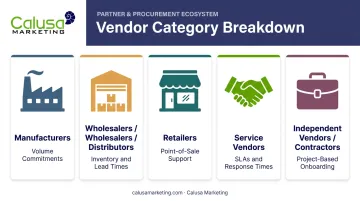
The 5 Types of Vendors You'll Engage With
Not every vendor needs the same engagement approach. Treating a manufacturer like an independent contractor (or the reverse) wastes effort and misses what actually motivates each type.
Manufacturers
Manufacturers are the original producers of the goods moving through your supply chain, and engagement here centers on volume commitments and forecasting accuracy more than day-to-day service issues. Co-op marketing dollars matter too, but predictable order volume remains their top priority.
Wholesalers/Distributors
Wholesalers and distributors buy in bulk and resell without transforming the product. Consistent communication about inventory levels and lead times matters most here. These vendors live and die by turnaround speed.
Retailers
Retail vendors are customer-facing, so engagement tactics shift toward point-of-sale support, merchandising cooperation, and promotional timing. They need help selling through, not just receiving product.
Service Vendors
Service vendors sell expertise or labor rather than physical goods. This category includes consultants, IT providers, logistics partners, and staffing agencies. Engagement here runs through SLAs, meaning response times, uptime guarantees, and quality benchmarks rather than shipment schedules.
Independent Vendors/Contractors
Independent vendors and contractors work on a project basis, often juggling multiple clients at once. The IRS defines independent contractor status by who controls the outcome versus the method. That distinction means these relationships need lightweight but clear onboarding so expectations don't get lost between projects.
How to Build an Effective Vendor Engagement Strategy: 7 Key Steps
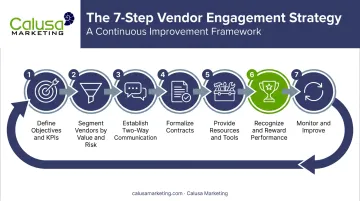
This is the operational framework for moving from ad hoc vendor interactions to a proactive, repeatable strategy.
Step 1: Define Clear Objectives and KPIs
Align vendor engagement goals with broader business objectives, such as cost savings, risk reduction, or innovation, before onboarding a single vendor. CIPS recommends KPIs that are specific, measurable, and tied directly to contract terms, not vague aspirations like "good service."
Step 2: Segment Vendors by Strategic Value and Risk
Not all vendors deserve equal attention. Prioritize engagement effort based on spend volume, criticality to operations, and risk exposure, using the five vendor types above as a starting framework. A single-source manufacturer of a critical component warrants far more attention than a low-spend, easily replaced supplier.
Step 3: Establish Consistent, Two-Way Communication Channels
Set up regular check-ins, assign dedicated points of contact on both sides, and set expectations transparently from day one. Vendors who only hear from you when something's wrong tend to stop volunteering information proactively.
Step 4: Formalize Contracts With Measurable Performance Terms
Build specific deliverables, milestones, and safeguards into contracts so performance can be tracked objectively rather than argued about later. Vague language creates disputes. Specific language creates accountability.
Step 5: Provide Resources, Tools, and Self-Service Support
Vendor portals, knowledge bases, and digital dashboards reduce the administrative burden on both sides and speed up responsiveness. CIPS recommends giving vendors ongoing access to the same performance data you use to evaluate them; shared visibility builds trust.
Step 6: Recognize and Reward Strong Vendor Performance
Incentive-based recognition, such as bonuses, preferred-vendor status, and tiered rewards, tends to motivate stronger performance than penalty-heavy approaches. This is the same logic behind dealer and channel reward programs that incentive marketing firms like Calusa Marketing design for B2B clients.
The Incentive Research Foundation documented an anonymized case where a noncash channel program coincided with a 32% increase in total revenue and market-share gains above 30% in nine of twelve markets. Results like these aren't guaranteed for every program, but they illustrate the upside of structured recognition over pure penalty clauses.
Step 7: Continuously Monitor, Review, and Improve
Set a review cadence, revisit KPIs regularly, and treat the strategy as adaptive rather than fixed. Supplier tiers should determine how often you review: critical vendors need more frequent check-ins than low-risk ones.
The Vendor Selection Process: 7 Steps to Choosing the Right Partners
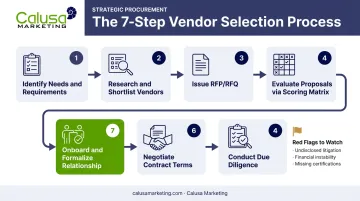
Vendor engagement starts before a vendor is even onboarded, with a structured selection process that sets the tone for everything after. Get these seven steps right, and the partnership runs smoothly for years to come.
- Identify business needs and requirements. Define scope, budget, and service-level expectations upfront, and involve key stakeholders early so requirements don't shift mid-process.
- Research and shortlist potential vendors. Evaluate market options based on reputation, financial stability, and technical capability. Desk research, field research, and third-party appraisals help narrow the field before anyone submits a bid.
- Issue a standardized RFP/RFQ. Use a consistent solicitation format so every vendor response can be compared apples-to-apples, and state mandatory requirements and scoring weights upfront so vendors aren't left guessing what matters most.
- Evaluate proposals against a scoring matrix. Weight criteria beyond price alone. Reliability, compliance history, and cultural fit all belong in the matrix, since price-only evaluations tend to produce the cheapest vendor, not the best one.
- Conduct due diligence and risk assessment. Verify financial health, check references, review compliance history, and confirm business continuity plans exist. Skipping this step is how distributors end up with a vendor that disappears mid-contract.
- Negotiate contract terms. Establish clear deliverables, pricing structures, and performance safeguards during negotiation, not after the contract is signed, and know your walk-away position before sitting down at the table.
- Onboard and formalize the relationship. Set up communication channels, system access, and initial performance benchmarks. This is where the vendor engagement strategy actually begins in practice, not just on paper.
Watch for these red flags during due diligence:
- Unwillingness to share financial statements or references
- Vague or missing business continuity plans
- Inconsistent compliance documentation across business units
Best Practices to Strengthen Vendor Engagement
Communicate With Purpose and Personalization
Segment vendor communications by role, risk profile, or maturity level so messages actually get acted on. A generic monthly newsletter to every vendor gets ignored. A targeted update to your top ten critical suppliers gets read.
Use Technology and Self-Service Platforms
Vendor portals, dashboards, and automated reminders reduce friction on both sides. Giving vendors self-service access to shared data, such as order status, payment timing, and performance scores, cuts down on the back-and-forth emails that eat up procurement teams' weeks.
Motivate Vendors With Incentives and Recognition Programs
Reward-based incentives, including bonus payments, gift cards, travel rewards, and tiered recognition, consistently get more voluntary participation than penalty clauses buried in a contract.
Calusa Marketing's incentive platform gives distributors a practical way to put this into action. A few examples from the field:
- Midstate Tire runs a points-based dealer rewards program tied to purchases and account growth, encouraging dealers to consolidate spend rather than split it across competitors
- Baker Distributing, part of Watsco, uses a points-based program specifically to drive online order adoption across its dealer network
- Hajoca scaled a custom incentive program across 800+ locations and 20-plus entities to drive sales growth across a highly decentralized organization
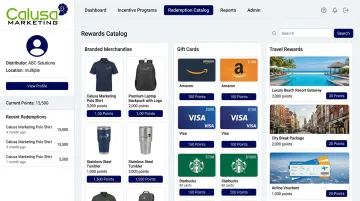
The platform itself is cloud-based, with no app download or system integration required. It includes a redemption catalog of more than 10 million branded items, plus gift cards and travel rewards, with fulfillment support in over 100 countries.
For distributors managing multiple locations, that removes a meaningful chunk of the administrative burden that normally comes with running a rewards program in-house.
Continuously Measure and Review Performance
Set a cadence, quarterly or bi-annual, for reviewing vendor scorecards and adjusting your approach based on data rather than gut feel. Programs that never get revisited tend to drift out of alignment with business goals within a year or two.
Frequently Asked Questions
What is a supplier engagement strategy?
It's a proactive framework for aligning vendor and supplier interactions with business goals through structured communication, incentives, and performance tracking. The term is often used interchangeably with vendor engagement strategy.
What are the 5 types of vendors?
Manufacturers, wholesalers/distributors, retailers, service vendors, and independent vendors/contractors. Each requires a different engagement approach based on how it operates and what motivates it.
What are the 7 steps of the supplier selection process?
Identify needs, research and shortlist vendors, issue an RFP/RFQ, evaluate proposals against a scoring matrix, conduct due diligence, negotiate terms, and onboard the selected partner.
What is the difference between vendor engagement and vendor management?
Vendor management covers day-to-day contract and delivery oversight. Vendor engagement focuses on the communication, motivation, and alignment that keeps vendors invested in the relationship long-term.
How do you measure vendor engagement success?
Track response times, compliance rates, performance scorecards, and direct vendor satisfaction feedback. Reviewing these together, rather than in isolation, gives a clearer picture than any single metric.
What tools can help improve vendor engagement?
Vendor portals, communication and automation platforms, and incentive or reward program platforms work well together. Each addresses a different piece of the engagement puzzle.