Here's the problem: dozens of vendors, three different deployment models, and pricing structures that range from per-seat SaaS fees to full-service program management make it genuinely hard to separate market signal from marketing noise. Business leaders planning 2026 budgets need a clear read on where the money is actually going.
This article breaks down the market size and forecast, how the industry segments by component, deployment, company size, and vertical, the trends reshaping reward delivery, the regional and competitive landscape, and practical guidance for choosing a recognition partner that fits your organization's stage of growth.
Key Takeaways
- The market is forecast to grow at 15.6% CAGR through 2032, though narrower studies cite 10.2%-12.1%.
- Cloud-based, no-download platforms are now the default for hybrid and deskless workforces.
- AI-driven personalization and gamification are making recognition individualized and real-time.
- Large enterprises still generate the most revenue, but SMBs are adopting programs fastest.
Employee Recognition and Reward System Market Size and Growth Forecast for 2026
Market sizing depends heavily on how a research firm defines the category. Allied Market Research's widely cited figure covers recognition and reward solutions and services combined, landing at $15.8 billion in 2022 with a path to $65.3 billion by 2032. Narrower studies focused strictly on social recognition software report an 11.8% to 12.1% CAGR for 2026-2033, while platform-revenue-only forecasts sit closer to 10.2%.
Why the numbers vary:
- Some reports include services (implementation, fulfillment, consulting); others measure software subscriptions only
- Publication years differ, so baseline figures reflect different market conditions
- Scope definitions range from broad "employee engagement software" to narrow "peer recognition systems"
Don't blend these figures into a single number. Instead, use the scope that matches what you're actually budgeting for.
Why Organizations Are Increasing Recognition Budgets
Three forces are driving the spending increase:
- Intensifying competition for talent: companies are fighting harder to retain skilled workers in a tight labor market
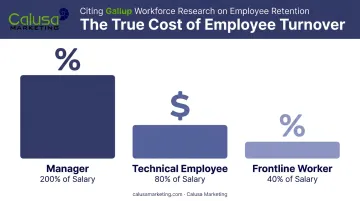
- Rising turnover costs: replacing a manager can cost roughly 200% of salary, a technical employee around 80%, and a frontline worker close to 40%, per Gallup's retention research
- Demand for measurable engagement strategies: leaders want recognition tied to retention data, not just morale surveys
Gallup's 2026 workplace report estimates that low employee engagement costs the global economy roughly $10 trillion, or 9% of global GDP, in lost productivity (per the State of the Global Workplace report). That figure alone explains why recognition has moved from a nice-to-have perk to a line item finance departments scrutinize.
The same Gallup research followed nearly 3,500 employees over two years and found that those who felt genuinely well-recognized were 45% less likely to have left their organization. It functions as a retention lever with a measurable dollar value attached.
The Remote Work Effect
The pandemic didn't just accelerate remote work. It broke the informal recognition habits that used to happen naturally in hallways and break rooms. Gallup notes that only about 1 in 4 employees strongly agreed they'd received recognition in the past week. Raising that number to 6 in 10 could improve recognition quality by 28% and cut absenteeism by 31%. That gap is exactly why digital, asynchronous recognition tools have become essential rather than optional.
Growth by Enterprise Size
| Segment | 2022 Position | 2032 Trajectory |
|---|---|---|
| Large Enterprise | Dominant revenue share (complex, global programs) | Continued leadership, slower relative growth |
| SMB | Smaller current share | Fastest-growing customer segment |
| Market Total | $15.8B (2022) | $65.3B (2032), 15.6% CAGR |
Large enterprises still spend the most because global workforces need multi-currency, multi-language reward infrastructure. But SMBs are catching up fast, largely because personalized recognition delivers an outsized retention impact when teams are smaller and every departure hurts more.
Market Segmentation: How the Industry Breaks Down
By Component: Solutions vs. Services
Software solutions currently hold the largest revenue share, but the services segment (implementation, fulfillment, consulting, and ongoing support) is gaining ground fast. Companies are tired of buying a platform and then handling reward logistics themselves.
This shift is opening a growth path for full-service incentive marketing firms that pair configurable technology with hands-on program management. Rather than choosing between "buy software" or "build a program from scratch," more organizations want both bundled together.
By Deployment Mode: Cloud vs. On-Premise
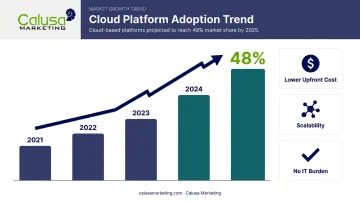
Cloud deployment is winning for straightforward reasons:
- Lower upfront cost compared to on-premise infrastructure
- Scalability across distributed and global teams
- No IT burden: platforms that require no integration and no app download reduce onboarding friction significantly
Future Market Insights projects cloud-based deployment holding roughly 48% of the market by 2025, and that share is expected to keep climbing as hybrid work becomes permanent rather than temporary.
By Enterprise Size: Large Enterprise vs. SMB
Large enterprises need recognition systems that handle complex approval chains, multiple currencies, and global compliance. SMBs need something simpler: a platform that's live in days, not months.
That difference in need is exactly why SMB adoption is accelerating. A 50-person company doesn't need enterprise-grade complexity — it needs fast setup and immediate impact.
By Industry Vertical
Manufacturing generated the highest recognition-market revenue in 2022, but IT and telecom now holds the largest share by industry application, according to Market Research Future. Healthcare is forecast to grow fastest among verticals tracked.
Beyond the headline industries, frontline and distribution-heavy sectors are investing heavily too:
- HVAC and electrical distribution (companies like Johnstone Supply and Baker Distributing rely on incentive programs to motivate distributed sales teams)
- Blood and plasma donation centers, where donor and staff incentive programs support retention
- Call centers and customer service operations, where frontline recognition directly affects turnover
These industries share a common trait: distributed, often deskless workforces where traditional recognition methods simply don't reach everyone.
Key Trends Shaping the Employee Recognition and Reward Market in 2026
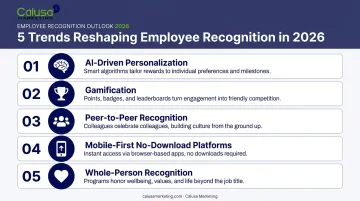
AI-driven personalization is moving from novelty to expectation. Platforms now analyze performance data to recommend specific rewards and recognition moments in real time, rather than relying on generic monthly awards. Industry research from the Incentive Research Foundation found that 31% of incentive professionals view generative AI as a genuine disruptor to how programs get designed.
Beyond personalization, gamification (points, badges, leaderboards) continues to grow as a mechanism for sustained engagement. It connects specific behaviors to earned rewards, which works particularly well for sales teams and distribution partners chasing quarterly targets.
Peer-to-peer recognition extends this momentum beyond manager-to-employee interactions. Making appreciation visible company-wide builds a stronger culture. Yet the Society for Human Resource Management (SHRM) has flagged a real risk: without guardrails, peer programs can create popularity bias or low-value recognition that feels more like a popularity contest than genuine appreciation.
That visibility only matters if the platform reaches everyone. Mobile-first, no-download platforms matter most for deskless and frontline employees who don't have a corporate email address or company laptop. If a recognition tool requires an app install and IT approval, it simply won't reach the warehouse floor or the call center.
Accessibility works best paired with a broader philosophy: whole-person recognition is replacing transactional, one-off rewards. Programs increasingly bundle recognition with wellbeing initiatives and lifestyle spending accounts, reflecting a shift from "here's a gift card for hitting your number" to a broader appreciation strategy woven into daily work life.
Regional Market Trends and Leading Industry Players
North America generated the highest recognition-market revenue in 2022 and continues to lead, driven by sustained investment in workplace culture. Asia-Pacific is expected to see the fastest regional growth through 2032 as peer-recognition platforms gain traction in markets that historically relied on more hierarchical, top-down reward structures.
That regional growth is fueling a crowded field of providers, fragmented across two distinct types of players:
- Pure-play recognition platforms: Achievers, Kudos, Motivosity, O.C. Tanner
- HCM-suite and ecosystem vendors: UKG, Salesforce, Terryberry, BI Worldwide
Neither camp dominates outright. Market Research Future describes the competitive structure as moderately fragmented, meaning no single vendor controls a majority share.
Platform partnerships and integrations have emerged as a defining strategic pattern. Achievers and Workday, for instance, launched an embedded AI-powered recognition offering, and several vendors now list certified integrations with major HR information systems as a core part of their sales pitch. Scaling reach through integration, rather than building every capability in-house, has become a standard growth strategy.
Market Challenges, Opportunities, and What It Means for Your Business
What's Slowing Adoption
- Budget constraints remain the top-cited restraint across market research
- ROI difficulty: many HR teams still struggle to prove recognition spending translates to retention savings
- Data privacy concerns, particularly for global platforms handling employee data across jurisdictions with different regulations
Where the Opportunity Sits
The biggest opportunity right now is data-driven personalization combined with growing SMB and mid-market appetite for cost-effective, fast-to-deploy solutions. As the software-only vendor field gets crowded, more organizations are looking for partners who handle the full picture: platform, fulfillment, and support.
That's exactly the gap a firm like Calusa Marketing fills. Rather than licensing a platform and leaving clients to manage reward logistics alone, Calusa combines a cloud-based, no-integration reward platform with hands-on program design, global fulfillment across more than 100 countries, and support available seven days a week.
Clients including Johnstone Supply, Baker Distributing, and Memorial Blood Centers use this hybrid model to run incentive programs without adding operational overhead: no warehouse to manage, no service team to hire, no fulfillment logistics to untangle.
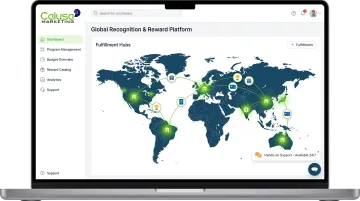
That combination of technology and hands-on management mirrors where the segmentation data points: services and full-program management are gaining share against DIY software.
A Practical Evaluation Framework
Whatever segment your organization falls into, evaluate any recognition provider against these criteria:
- Ease of implementation: can the platform go live in days, or does it require months of IT involvement?
- Reward flexibility: does it offer gift cards, merchandise, and travel, or just one reward type?
- Support model: is customer service in-house and responsive, or outsourced and slow?
- Scalability: can the platform grow from 50 employees to 5,000 without switching vendors?
Getting this evaluation right now sets up your 2026 budget for results, not just software licensing costs.
Frequently Asked Questions
How big is the employee recognition and reward system market expected to be by 2032?
Allied Market Research projects the market will grow from $15.8 billion in 2022 to $65.3 billion by 2032, a 15.6% CAGR. Narrower studies focused on software alone report slightly lower growth rates, between 10.2% and 12.1%.
What factors are driving growth in the employee recognition and reward system market?
Intensifying competition for talent, rising turnover replacement costs (up to 200% of salary for managers), and the permanent shift to remote and hybrid work are the primary drivers. Organizations increasingly treat recognition spending as a retention investment, not a discretionary perk.
Which industries are adopting employee recognition and reward systems fastest?
IT and telecom currently hold the largest market share by vertical, with healthcare forecast to grow fastest. Manufacturing, distribution industries like HVAC and electrical supply, and call center operations are also increasing investment due to frontline workforce needs.
What is the difference between cloud-based and on-premise recognition systems?
Cloud-based systems offer lower upfront costs, faster deployment, and easier scaling across distributed teams. On-premise systems require more IT infrastructure and maintenance but may appeal to organizations with strict internal data-hosting requirements.
How is AI changing employee recognition and rewards technology?
AI analyzes performance and engagement data to recommend personalized rewards and recognition moments in real time, rather than relying on generic, scheduled awards. It also supports predictive analytics for identifying disengagement risk before turnover happens.
Should small and mid-sized businesses invest in a formal recognition and reward system?
Yes. SMBs are currently the fastest-growing customer segment because personalized recognition has an outsized impact on retention when teams are smaller. Early adoption also helps build a stronger culture before rapid growth makes recognition harder to scale informally.