
Introduction
Picture this: a GS-13 cybersecurity specialist gets a private-sector offer with a 30% pay bump. Their agency can't match that salary, but they can't afford to lose someone with that clearance and skill set either.
This is where retention incentives come in.
Yet many federal employees and HR staff misunderstand how these payments actually work. How much do they pay? Do you have to pay it back if you leave? Is accepting one even a smart career move?
This guide breaks down the definition, eligibility rules, payment math, and a decision framework so you can evaluate an offer with confidence.
Key Takeaways
- Individual retention incentives cap at 25% of basic pay, up to 50% with OPM approval
- Group retention incentives cap at 10% of basic pay, up to 50% with approval
- Eligibility requires a Fully Successful performance rating and documented evidence the employee is likely to leave
- Incentives never arrive as an upfront lump sum; they're paid in installments or after a completed service period
- Leaving early can trigger forfeiture of unearned amounts, so read the service agreement closely before signing
What Is a Retention Incentive? (Federal Definition & Context)
Under 5 U.S.C. 5754 and 5 CFR 575 Subpart C, a retention incentive is a monetary payment made to a current federal employee whose skills are essential to the agency's mission and who would otherwise likely leave.
The law recognizes two distinct scenarios:
- Likely to leave federal service entirely: the broad, commonly used standard
- Likely to leave for a different federal position — a narrower rule tied to specific closure or relocation circumstances, requiring written notice that the employee's position is affected
How Retention Fits Into the "3Rs"
Federal agencies have three related tools for competing on talent:
- Recruitment incentives attract new hires
- Relocation incentives support employees moving to a new geographic location
- Retention incentives keep existing talent from walking out the door
One important clarification: a retention incentive is not part of basic pay. It doesn't factor into retirement annuity calculations, and it won't follow the employee into their High-3 or High-5 average salary.
Example scenario: A GS-13 IT specialist with a rare certification receives a competing offer from a defense contractor. Their agency documents the special need for their skills, confirms they'd likely leave without intervention, and authorizes a 20% retention incentive paid in installments over a two-year service agreement.
This flexibility isn't new. The current framework stems from the Federal Workforce Flexibility Act of 2004 (Public Law 108-411), which gave agencies expanded tools to compete for talent against the private sector.
Eligibility, Approval & Payment Amounts
Who Qualifies for a Retention Incentive
Not every federal position is eligible. Coverage generally extends to:
- General Schedule (GS) employees
- Senior Level (SL) and Scientific/Professional (ST) positions
- Senior Executive Service (SES), including FBI/DEA SES
- Law enforcement officers and prevailing rate employees
- Other categories OPM specifically approves
Excluded categories include presidential appointees, noncareer SES appointees, employees in confidential or policy-determining excepted-service roles, and agency heads (or those expected to become one).
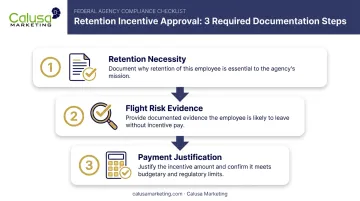
Before authorizing a payment, agencies must document three things in writing:
- Retention necessity: why the employee's qualifications or the agency's special need make retention essential
- Flight risk evidence: proof the employee is likely to leave without the incentive
- Payment justification: reasoning behind the amount, timing, and service period length
Baseline eligibility requires a Fully Successful (or equivalent) rating on the most recent performance review. Many agencies also apply an internal practice of requiring at least 90 days in the current position. This isn't a formal regulatory requirement — it's more of a common-sense administrative standard.
How Much You Can Receive & How It's Paid
| Incentive Type | Standard Cap | Maximum with OPM Approval |
|---|---|---|
| Individual | 25% of basic pay | 50% (critical agency need) |
| Group/Category | 10% of basic pay | 50% (critical agency need) |
Sample calculation: A GS-13, Step 5 employee earning $110,000 in annual basic pay receives a 20% retention incentive. That's $22,000 total, paid out as biweekly installments proportional to completed service, or as one lump sum once the full service period ends.
Here's the part that surprises a lot of employees: payments can only happen in installments after service is completed, or as a lump sum at the end of the full service period. There's no upfront check. Ever.
A few more details worth knowing:
- Payments count toward the aggregate pay limitation under 5 CFR part 530
- Incentives are taxed as supplemental wages, not regular salary
- Exception: under the "likely to leave federal service" authority, agencies can pay full-rate biweekly installments without a formal service agreement — an option unavailable under the different-position authority
Should You Accept a Retention Incentive Offer?
This is the question that actually matters, and here's how to think it through.
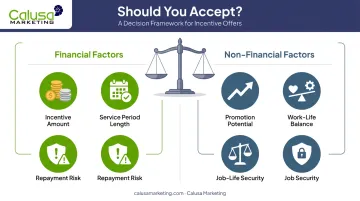
Weighing the total value against the commitment matters most. A 25% incentive sounds great until you realize it's tied to a three-year service agreement, so divide the total incentive by the number of years required and compare that annualized figure to what you'd earn elsewhere.
The Golden Handcuff Trade-Off
Accepting a retention incentive locks you into your current position for the service period. Leave early, and you risk forfeiting unpaid installments or, depending on your agreement's terms, owing repayment on amounts not yet earned.
Before signing anything, review your service agreement for:
- Start and end dates of the required service period
- Payment schedule — installments or lump sum
- Termination conditions and what happens if your agency ends the incentive early
- How the incentive interacts with future promotions or reassignments
Money isn't the whole story; consider these non-monetary factors too:
- Promotion potential in your current role versus the competing offer
- Work-life balance differences between the two paths
- Job security, particularly if your agency faces budget uncertainty
- Whether the incentive is renewable if the retention need continues past year one
One more practical step: talk to your HR office about tax withholding treatment. Supplemental wage withholding isn't your final tax rate, and a surprise at filing time is never fun.
Group Retention Incentives & Termination Rules
Sometimes an agency needs to retain a whole team, not just one specialist. That's where group (or category) retention incentives come in.
Key restrictions:
- Capped at 10% of basic pay (50% with OPM approval)
- Unavailable to SES, SL, ST, or certain Title 42 employee categories
- Requires evidence that a significant number of employees in the group would likely leave without it
These restrictions determine who qualifies, but agencies also need clear rules for when a group incentive can end.
Discretionary vs. Mandatory Termination
| Termination Type | Trigger | Payment Outcome |
|---|---|---|
| Discretionary | Management need changes, funding shifts, retention need disappears | Employee keeps prior payments, plus the accrued unpaid amount for completed service |
| Mandatory | Performance drops below Fully Successful, reassignment, agreement violation | Employee keeps prior earned payments, but receives no additional incentive |
Agencies must notify employees in writing of any reduction or termination. Here's the part that catches people off guard: these decisions are not grievable or appealable. If your agency decides the retention need no longer exists, that's final.
Retention Incentives Beyond the Federal Government
Talent retention pressure isn't unique to government agencies. Private employers face the same problem, and they're throwing real money at it. WorldatWork reported in October 2024 that 66% of organizations now use retention bonuses, a 21% increase compared to pre-pandemic levels.
The difference? Private employers aren't locked into rigid statutory caps or standardized service agreements. They can design programs tailored to their workforce, industry, and budget, without waiting on OPM approval for anything above a fixed percentage.
Calusa Marketing helps private organizations capture that flexibility. We build structured retention and engagement programs without the complex service agreements federal agencies must navigate, using:
- Cloud-based reward platforms for real-time recognition
- Gift card fulfillment across 100+ digital options
- Merchandise rewards from a catalog of 10 million items
- Incentive travel programs for individuals or groups up to 10,000 people
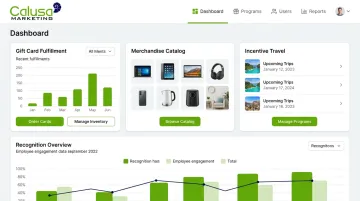
These tools tackle the same core challenge the federal 3Rs framework was built for: keeping essential people from walking out the door when a competitor comes calling.
Frequently Asked Questions
Should I accept a retention offer?
Weigh the total incentive amount against the length of your required service commitment, along with repayment risk if you leave early. Consider whether it meaningfully improves your long-term career trajectory compared to your alternative.
What is a retention incentive?
A retention incentive is a monetary payment under 5 U.S.C. 5754 that agencies give current employees whose skills are essential and who would likely otherwise leave. The goal: keep that expertise in place.
What is an example of a retention bonus?
A specialized employee with a competing job offer receives a percentage-based incentive, paid in installments, to remain through a critical project or agency transition period.
How much can a retention incentive pay?
Individuals can receive up to 25% of basic pay (50% with OPM approval); group incentives top out at 10% (50% with approval). Payment arrives via installments or as a lump sum after service is completed.
Do I have to repay a retention incentive if I leave early?
You generally keep amounts tied to completed service. However, you may forfeit unpaid installments, or owe repayment, depending on the specific terms in your service agreement.
Is a retention incentive taxable?
Yes. The IRS treats it as supplemental wages, subject to federal income tax, Social Security, and Medicare withholding, just like a regular bonus.