Tighter budgets, longer sales cycles, and buyers who do their own research before ever talking to a rep have made consistent performance harder to pull off. Quota attainment isn't declining because reps are lazy. It's declining because the game has changed and many sales organizations haven't.
This article breaks down 10 practical strategies across three areas: team foundation, process and data optimization, and motivation-based tactics. None of it requires a massive budget or a six-month rollout plan.
Key Takeaways
- Clear goals and role-specific training build the foundation for sales success
- Data-driven decisions and automation free up more time for actual selling
- Incentive and recognition programs boost morale, retention, and revenue
- Tracking KPIs together, not in isolation, reveals whether improvements are sticking
Build a Strong Foundation: Goals, Training & Culture
Build a Strong Foundation: Goals, Training, Culture & Hiring
Before you touch your CRM settings or roll out a new incentive plan, your team needs a solid base. Process improvements and technology only amplify what's already there, good or bad.
Set Clear, Measurable Sales Targets
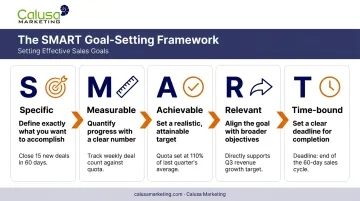
"Sell more" isn't a goal. It's a wish. Compare that to: "Close 15 new deals in 60 days." The second version tells a rep exactly what winning looks like and by when.
This is the SMART framework in action:
- Specific: Name the exact outcome (new deals, not "growth")
- Measurable: Attach a number
- Achievable: Base it on historical data, not hope
- Relevant: Tie it to a broader revenue goal
- Time-bound: Set a deadline
WorldatWork notes that an effective quota system depends on an accurate forecast, proper quota allocation, and consistent quota management practices. Without those pieces, reps are left guessing at what "good" actually means, and guessing rarely leads to hitting targets.
Invest in Tailored Sales Training & Coaching
Generic training sessions rarely stick because they treat every rep's skill gap the same. A rep who struggles with pricing objections needs a different session than one who struggles to get past gatekeepers.
Instead, run targeted role-playing and objection-handling sessions built around actual call recordings or lost deals. The payoff is real: 75% of sales reps say they're more likely to hit their targets when they have a coach or mentor, according to Salesforce's sales statistics research.
Training shouldn't stop after onboarding. Ongoing coaching, even 30 minutes a week, keeps skills sharp as buyer objections evolve.
Foster a Culture of Accountability & Communication
Weekly performance reviews and transparent one-on-ones give reps ownership of their numbers instead of dreading them. One structure that works well: have reps present their own pipeline and metrics during team meetings.
This creates peer accountability naturally. When a rep has to explain why three deals stalled in front of teammates, they tend to dig into the "why" before someone else asks.
Hire and Onboard for Long-Term Success
Before writing a job posting, define what good performance actually looks like on your team. Then prioritize coachability and resilience over years of experience alone, since skills can be taught but grit is harder to build.
A structured onboarding process shortens ramp-up time by weeks, not months. Pairing new hires with top performers for shadowing during their first two to three weeks lets them learn real objection-handling and closing habits, not just theory from a slide deck.
Leverage Data & Streamline Your Sales Process
Even a well-trained, motivated team underperforms if reps spend more time on admin work than selling. Removing that friction is where the real performance gains hide.
Use Data-Driven Insights to Guide Decisions
Win rates and pipeline stage data tell you where deals actually die. If a large share of opportunities stall at the "proposal sent" stage, that's not a coincidence. It's usually a training gap around pricing conversations or a messaging problem in the proposal itself.
Track these regularly:
- Win rate by rep and by deal source
- Average time spent in each pipeline stage
- Drop-off rate between stages
Automate Repetitive Tasks to Free Up Selling Time
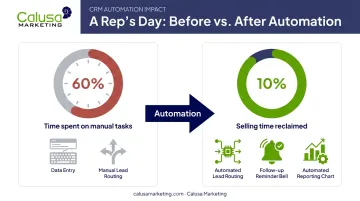
According to Salesforce's State of Sales report, reps spend 60% of their time on non-selling tasks like data entry and hunting for materials. That's a lot of hours that could go toward actual conversations with prospects.
CRM automation closes much of that gap:
- Automated lead routing assigns new leads by territory or industry fit within seconds, not hours
- Follow-up reminders prevent warm leads from going cold while a rep is busy elsewhere
- Automated reporting eliminates the Friday afternoon scramble to build a pipeline update
Optimize Your Sales Pipeline & Forecast Accuracy
Audit each pipeline stage for conversion rates and stalled deals at least quarterly. Look specifically at:
- Which stage has the lowest conversion rate to the next stage
- How long deals sit before going stale
- Whether your forecast consistently overshoots or undershoots actuals
If forecast accuracy is consistently off, the issue usually traces back to inconsistent stage definitions, not bad luck.
Motivate Your Team and Elevate the Customer Experience
Internal motivation and external execution work as one system, not two separate tracks. A motivated rep who delivers a poor buyer experience still loses the deal.
Design Effective Sales Incentives to Motivate Reps
Flat, across-the-board bonuses rarely move the needle because they don't reward specific behavior. Effective incentives tie directly to actions you want more of: upsells, new account wins, or retention saves.
A strong incentive mix blends monetary and non-monetary rewards:
- Gift cards for quick, flexible wins
- Digital punch cards that build toward a bigger reward over time
- Travel incentives for top-tier performance
This is where firms like Calusa Marketing specialize. They build cloud-based incentive and loyalty programs that launch without app downloads or IT integration, which matters when sales leaders want a program running in weeks, not quarters. Their travel incentive formats alone span three tiers:
| Format | Scale/Price | Example Use Case |
|---|---|---|
| Individual high-end trips | $500–$25,000 for two adults | Top performer reward, VIP retention |
| Group travel | 10–10,000 people, worldwide | President's Club trip, executive retreat |
| Hotel/cruise certificates | Weekend to full cruise | Contest prize, flexible reward |
Matching the reward format to the specific behavior you're incentivizing makes the whole program feel purposeful instead of arbitrary.
Recognize and Reward Achievements Consistently
Public recognition, team shoutouts, milestone rewards, and peer nominations sustain motivation between the bigger incentive payouts. A rep who closes a tough deal wants their manager (and teammates) to notice, not just their commission statement. A quarterly bonus check does little for the rep who closed that deal on a Tuesday and hears nothing until the next payout cycle.
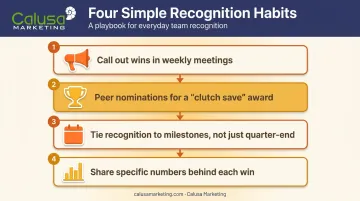
Make recognition a habit, not an afterthought:
- Call out wins in the same weekly meeting where numbers get reviewed
- Let peers nominate each other for a "clutch save" award
- Tie small, frequent recognition to milestones, not just quarter-end results
- Share the specific numbers behind a win, not just praise, so reps see exactly what earned it
Enhance the Customer Experience to Close More Deals
The old product-first pitch is losing ground fast. Buyers expect a consultative approach that starts with their actual pain points, not a feature walkthrough.
This matters more than most reps realize. A 2025 Gartner survey of 632 B2B buyers found that 61% now prefer a rep-free buying experience, largely because generic outreach fails to address their actual needs. One-size-fits-all messaging isn't just ineffective. It pushes buyers toward self-service and away from your reps.
Train reps to ask discovery questions before pitching anything. A needs-first approach uncovers the real problem, which usually leads to a faster, more confident close.
Key KPIs to Measure Sales Performance Improvement
Tracking the right numbers tells you whether your strategies are actually working or just feel productive.
| KPI | What It Measures | How to Calculate |
|---|---|---|
| Quota attainment | Share of assigned target achieved | Actual sales ÷ assigned quota × 100 |
| Win rate | Percentage of opportunities won | Closed-won deals ÷ total opportunities × 100 |
| Sales cycle length | Time from opportunity to close | Total days to close ÷ number of won deals |
| Average deal size | Typical value per closed deal | Total closed deal value ÷ number of closed deals |
| Customer retention rate | Customers kept over a period | (Ending customers − new customers) ÷ starting customers × 100 |
Don't track these in isolation. A rising win rate paired with a shrinking average deal size might mean reps are chasing easy, smaller wins instead of pursuing bigger accounts. Reviewed together, these five KPIs give leaders a holistic view of what's improving and what still needs work.
Common Mistakes That Undermine Sales Performance
Even solid strategies fail when these pitfalls creep in. Use this as a quick checklist while rolling out the tactics above:
- One-size-fits-all incentives that ignore different rep motivations and roles
- Unrealistic quotas set without historical data or rep input
- Neglecting to celebrate wins, letting momentum fade after a strong quarter
- Relying on gut instinct over data when pipeline numbers say otherwise
- Skipping ongoing coaching after onboarding wraps up
Catching these missteps early keeps momentum building instead of losing ground to preventable errors.
Frequently Asked Questions
What are some examples of how to improve sales performance?
Set SMART goals like "close 15 deals in 60 days" instead of vague targets, and tie incentives to specific behaviors such as upsells. Use pipeline data to spot where deals stall so coaching can target the actual gap.
What are the 5 C's of sales?
This framework covers Company, Customers, Competitors, Collaborators, and Context (sometimes labeled Climate). It's a situation-analysis tool for understanding your internal and external selling environment.
How long does it take to see results from sales performance strategies?
Quick wins like new incentives or targeted coaching can show results within a single sales cycle. Structural changes like hiring practices or culture shifts typically take several months to show measurable impact.
What's the difference between sales incentives and bonuses?
Incentives are tied to predetermined performance criteria over a set cycle, motivating specific behaviors in advance. Bonuses are often discretionary, decided after the performance period without a fixed formula.
How do you measure sales team performance?
Track quota attainment, win rate, sales cycle length, average deal size, and customer retention rate together. Reviewing them as a set, not individually, shows the full picture of team health.
What's the most important metric for sales performance?
It depends on your business goals, but win rate and quota attainment are the two most commonly prioritized since they directly reflect whether reps are converting opportunities and hitting assigned targets.