The gap between an engaged dealer network and a disengaged one is measurable. According to a 2018 Forrester Consulting study commissioned by Mediafly of 227 B2B partner-enablement leaders, organizations that extended sales-enablement support to their partners saw 1.4x higher year-over-year revenue growth and were 2.1x more likely to report double-digit growth.
This guide breaks down the communication, training, incentive, and technology strategies that turn a passive dealer list into a network that actually sells and advocates for your brand.
Key Takeaways
- Engaged dealer networks close deals faster and grow revenue more than networks left on their own.
- Communication, training, and incentives work best together, not in isolation.
- Transparent, easy-to-track rewards outperform vague or delayed payouts.
- Technology should reduce friction, not add another login dealers have to remember
- Standardized processes prevent inconsistency that erodes brand trust across a large network.
What Is Dealer Engagement?
Dealer engagement is the ongoing strategy of educating, motivating, and incentivizing third-party sellers so they represent your brand as well as you'd represent it yourself. It goes beyond a one-time onboarding packet, evolving into a continuous relationship built on communication, support, and mutual benefit.
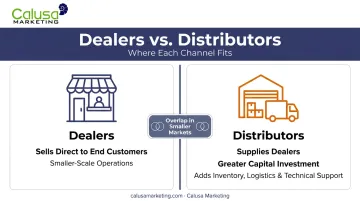
Dealers vs. distributors — the two terms get used interchangeably, but there's a practical distinction:
- Dealers typically sell direct to end customers and operate at a smaller scale
- Distributors often supply dealers, operate with more capital, and add inventory, logistics, and technical support to the channel
- Both roles can overlap in smaller markets, blurring the line between the two
Why does any of this matter? Dealers are your last-mile connection to the customer, and they double as a feedback loop.
They hear what competitors are pitching, what customers are complaining about, and what's actually moving off the shelf. A disengaged dealer shares none of that. An engaged one becomes an extension of your sales team.
Core Strategies for Effective Dealer Engagement
Lasting dealer engagement works both ways. The brand provides support and clarity; the dealer provides sales activity and market intelligence in return.
Establish Regular, Two-Way Communication
Consistency builds trust, and trust is the real answer to a question dealers often ask: "How do we strengthen this relationship?" A workable cadence usually includes:
- Monthly or quarterly check-in calls with regional or account managers
- A shared portal for order status, marketing assets, and program updates
- An annual dealer summit or conference for face-to-face relationship building
Generic blast emails wear dealers out fast. A newsletter tailored to a specific dealer's performance and goals, noting where they're trending versus their targets, keeps them engaged instead of tuning out.
Provide Training & Product Knowledge Resources
Dealers who understand your product sell it with more confidence. That sounds obvious, but the data shows a real gap here. Forrester's 2018 research found partners received in-person training at half the rate of direct sellers (49% vs. 76%) and were given fewer training documents (56% vs. 72%).
Closing that gap doesn't require a massive overhaul. It requires:
- Short online training modules dealers can complete between customer calls
- Quizzes with small completion rewards to encourage follow-through
- Separate content tracks for managers versus front-line reps
Align Goals Between Brand and Dealer
When corporate marketing goals and dealer sales goals point in different directions, friction shows up fast. Mapping shared KPIs, such as tying co-op marketing spend to a specific volume target, turns the relationship into a shared scoreboard instead of two separate agendas.
Equip Dealers with Ready-to-Use Marketing Resources
Most dealers are juggling sales, service, and inventory all at once. Marketing is rarely their top priority. Pre-built marketing packages, co-op advertising funds, and branded materials remove that burden entirely, so the dealer can plug in your assets without building anything from scratch. Firms like Calusa Marketing specialize in this exact niche, supplying the dealer and channel reward programs, gift cards, and co-op incentives that keep partners motivated without adding to their workload.
Incentive Strategies That Drive Dealer Performance
Dealers frequently carry multiple competing brands on their floor or in their truck. Loyalty must be earned, and incentives are one of the most direct levers for earning it.
Types of Dealer Incentive Programs to Consider
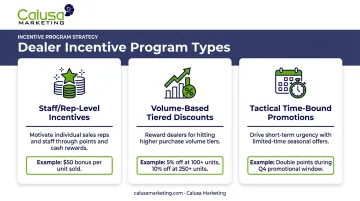
Not every incentive works the same way. The strongest programs usually combine a few different types:
- Staff/rep-level incentives: points, cash bonuses, or rewards tied directly to individual sales data, since it's the counter rep or salesperson actually closing the deal
- Volume-based, tiered discounts: structured rewards that increase as a dealer hits higher sales thresholds
- Tactical, time-bound promotions: short-term bonus incentives for pushing a new product launch or clearing seasonal inventory
Building a Structured, Easy-to-Manage Rewards Program
A great incentive idea falls apart without transparent tracking. If a dealer or rep doesn't know how close they are to hitting a reward, motivation drops fast. Vague or delayed payouts are one of the quickest ways to kill a program's momentum.
This is where a dedicated incentive partner earns its keep. Calusa Marketing, based in St. Petersburg, Florida, works with distribution-heavy brands across HVAC, electrical, and tire industries, including named accounts like Johnstone Supply, Baker Distributing, and Midstate Tire.
The company runs dealer and rep incentive programs built on digital punch cards, gift cards, and travel rewards, handling full fulfillment and customer support so internal teams aren't managing card inventory or fielding redemption calls.
The upside is well-documented. A nine-month distributor incentive case study from the Incentive Research Foundation reported $1.44 million in incremental net sales and gross margin rising from 30.4% to 35% for a hand-tool manufacturer's distributor program. That's one documented case, not a universal guarantee, but it illustrates what's possible when incentive structure and tracking are both done right.
Technology's Role in Scaling Dealer Engagement
Spreadsheets and email chains work fine when you have five dealers. They fall apart at fifty. As a network grows, manual processes become the bottleneck that slows onboarding, delays communication, and buries reward tracking in someone's inbox.
When evaluating dealer or partner management technology, look for:
- Mobile-responsive portals dealers and reps can check from a phone between jobs
- Integrated reward tracking so participants always see where they stand
- Real-time dashboards for program administrators monitoring engagement
- CRM integration to keep sales data and reward data in sync
Technology should support relationship-building rather than replace it. The strongest programs blend digital tools with in-person touchpoints — a regional visit still matters even when the portal is running smoothly.
Platforms like Calusa's cloud-based SaaS reward system reduce setup friction: no integration required, no app for dealers to download, just a straightforward way to track and redeem rewards.
Overcoming Common Dealer Engagement Challenges
Even well-designed programs run into predictable friction points. Here's what tends to trip up dealer engagement efforts and how to work around each one.
Dealer skepticism about marketing ROI. Many dealers have seen co-op programs come and go without clear payoff. Providing upfront education and data on program value, not just a promise, increases buy-in before you ask for participation.
Inconsistent engagement quality across a large network. Rep skill varies, promotions get forgotten, and one region executes differently than another. Standardized, repeatable processes close that gap.
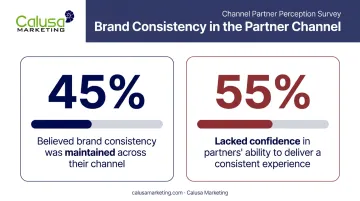
Only 45% of surveyed leaders believed brand consistency was maintained across their channel, and 55% lacked confidence in partners' ability to deliver a consistent sales experience, according to Forrester.
Fragmented communication across email, phone, and text. When updates scatter across channels, dealers miss things. Centralizing communication through one primary portal, such as a shared digital platform, keeps everyone looking at the same information.
Frequently Asked Questions
What is dealer engagement?
Dealer engagement is the strategic effort to educate, motivate, and incentivize dealer or distributor networks so they represent a brand effectively and sell with confidence. It's an ongoing relationship that continues well beyond initial onboarding.
How do you strengthen dealer relationships?
Focus on regular two-way communication, aligned goals, accessible training, and structured incentive programs. Consistency across all four areas builds the trust that keeps dealers engaged long-term.
What is a dealer engagement program?
It's a structured initiative that combines training, communication, and incentives into one cohesive strategy. The goal is keeping dealers informed and equipped to sell without adding to their daily workload.
How do you measure dealer engagement success?
Track sales volume growth, program participation rates, training completion, and incentive redemption rates. Together, these metrics show whether dealers are actually using the resources you've provided.
What incentives work best for dealer networks?
Staff-level rewards tied to individual sales, volume-based tiered discounts, and tactical time-bound promotions each serve a different purpose. The strongest programs combine all three rather than relying on just one.
What's the difference between a dealer and a distributor?
Dealers typically sell direct to end customers and operate at a smaller scale. Distributors usually supply dealers and operate with more capital, often adding logistics or technical support to the channel.