But planning a trip there isn't simple. Companies struggle with picking the right region, setting a budget that won't blow up mid-planning, and avoiding cultural missteps that turn a dream reward into a logistical headache.
This guide covers why Italy works so well for incentive travel, which regions fit which goals, whether $10,000 per person is realistic, the etiquette rules your attendees need to know, and how to actually pull off a seamless program.
Key Takeaways
- Italy's regions, from coastal towns to countryside estates, fit any program size or budget
- A $10,000 per-person budget covers a solid 5-7 day trip in Tuscany or Puglia
- Dodging common American traveler mistakes keeps morale high and the trip feeling like a reward
- An experienced incentive travel partner secures better rates and removes logistical stress
Why Italy Is a Top Choice for Incentive Travel Programs
Few destinations offer the range Italy does. Coastline, countryside, mountains, and historic cities all sit within a few hours of each other, so planners can match the setting to the actual goal of the trip.
Need a leadership retreat that feels collaborative? Tuscany's countryside villas work. Want to reward your top 20 performers with something unforgettable? The Amalfi Coast delivers. That flexibility is rare.
There's also a performance argument here, not just an emotional one. According to IRF's Impact of Incentive Travel study, companies need up to 3x more cash spend to generate the same performance lift as a non-cash reward like travel. Cash gets mentally filed away as salary. A week in Tuscany does not.
Italy also carries genuine bucket-list weight. Sales reps chasing a President's Club trip work harder when the prize is Lake Como instead of a generic beach resort.
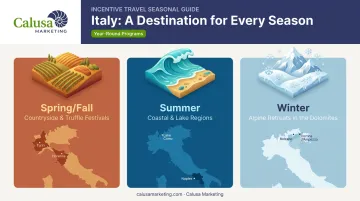
Year-round versatility is another advantage:
- Spring and fall suit countryside and vineyard programs, with mild weather and truffle festivals in places like San Miniato
- Summer favors coastal destinations and lake regions
- Winter opens up alpine retreats in the Dolomites, including dog sledding and ski weekends
Italy's hospitality and DMC infrastructure are mature enough to handle large groups without losing authenticity. You can book a five-star villa buyout and still get a truffle-hunting morning with a family that's done it for three generations. That mix of polish and genuine local texture is hard to find in more commercialized destinations.
Top Italian Regions and Experiences for Incentive Trips
Region choice shapes everything else in the program, from budget to itinerary pacing. Here's how the major options stack up.
Tuscany: Executive Retreats and Culinary Immersion
Tuscany suits leadership retreats and relationship-building better than almost anywhere else in the country. Vineyard estates and agriturismo stays blend work sessions with genuine downtime.
Signature experiences include:
- Private wine tastings at family-run vineyards
- Truffle hunting excursions with local guides
- Cooking classes inside centuries-old farmhouse kitchens
The pacing feels less like a vacation and more like a working retreat that happens to be beautiful.
Amalfi Coast and Lake Como: Luxury Celebration Destinations
These two regions exist for one purpose in the incentive world: rewarding your absolute top performers. Private boat excursions along the Amalfi coastline, cliffside dinners, exclusive spa access, and full villa buyouts on Lake Como create the kind of high-impact memory a cash bonus never will. Locking in a villa buyout during peak season takes negotiating leverage most companies don't have on their own.
Expect higher per-person costs here due to luxury demand. Note that many Amalfi Coast properties, including well-known names like Le Sirenuse, close for winter, so this region works best April through October.
Venice: Cultural Immersion for Creative and Luxury Brands
Venice fits design-driven or creative companies particularly well. After-hours access to museums, private glassblowing demonstrations, and mask-making workshops with local artisans give groups something a typical tourist never gets.
One planning note: Venice now caps organized tourist groups at 25 people and charges access fees for day visitors, so larger programs need advance coordination to split into compliant sub-groups. A full-service travel partner typically handles this paperwork before the group arrives.
Puglia and Other Hidden-Gem Regions: Exclusivity Through Novelty
Puglia's masserie (fortified farmhouses turned luxury hotels, such as Borgo Egnazia) offer something Tuscany and Amalfi can't: near-total exclusivity. Fewer American travelers have been here independently, which makes winning a spot feel more prestigious.
Regions like Puglia also tend to stretch a budget further while still delivering a five-star experience.
Budgeting Your Italy Incentive Trip: Is $10,000 Enough?
Let's answer the question directly: yes, $10,000 per person can absolutely fund a well-planned 5-7 day mid-to-upper-range trip in regions like Tuscany or Puglia. It's tighter for peak-season Amalfi Coast or Lake Como programs loaded with private boats and villa buyouts.
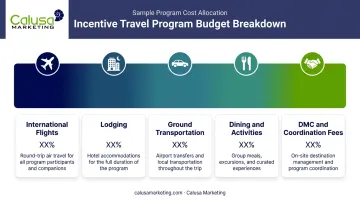
The math depends on five cost components:
- International flights - typically the largest single line item, especially during peak summer travel
- Lodging - ranges widely by region and season
- Ground transportation - private drivers, coaches, or rail transfers between cities
- Dining and activities - private tastings, excursions, and exclusive access experiences
- DMC and coordination fees - the cost of having someone actually manage all of the above
For context, the IRF's 2026 Trends Report puts the global average incentive travel spend at $5,100 per person, though Europe-based programs (and Italy specifically) can run higher depending on inclusions.
Four factors swing the total most:
- Group size - larger groups unlock better negotiated rates
- Season - peak summer months cost significantly more than shoulder-season spring or fall
- Destination - Amalfi and Como run higher than Tuscany or Puglia
- Exclusivity level - private villa buyouts and closed-door experiences add up fast
This is where a partner like Calusa Marketing makes a real difference. Group buying power built through existing hotel and transportation relationships stretches the same budget noticeably further than booking piecemeal.
The smartest approach: set your per-person target first, then work backward to pick the region and activity mix that fits it. Don't fall in love with a destination and hope the numbers work out later.
Cultural Etiquette: What Not to Do in Italy as an American
Small etiquette mistakes can sour an otherwise perfect trip. Brief your attendees before departure on these common missteps.
Dining and social faux pas:
- Ordering a cappuccino after a meal (it's strictly a morning drink in Italy)
- Over-tipping; 5-10% is generous, not the 20%+ Americans default to
- Wearing sleeveless tops, shorts, or hats into churches and Vatican sites, where dress codes are strictly enforced
Practical logistics mistakes:
- Assuming credit cards work everywhere; smaller towns and family-run spots still prefer cash
- Skipping train ticket validation on paper regional tickets, which can result in an on-the-spot fine
- Scheduling activities during midday hours when many shops and restaurants close for a break
Business and group etiquette:
- Greetings tend to be more formal than in the U.S., especially in first meetings
- Punctuality matters more than casual American business culture might suggest
- Business attire also skews more formal, even for casual site visits or vendor meetings
None of this is complicated, but a short pre-trip briefing document keeps your group from learning it the hard way. Full-service incentive travel providers like Calusa Marketing typically build these cultural notes into the program materials attendees receive before departure.
How to Plan and Execute a Seamless Incentive Trip to Italy
Start planning 6-12 months out. This isn't arbitrary. Preferred venues, exclusive experiences, and favorable group rates all depend on booking before the good inventory disappears.
Key logistics that require careful coordination:
- Group flight bookings, often across multiple departure cities
- Cross-region ground transportation if the itinerary spans, say, Tuscany and the Amalfi Coast
- Weather and itinerary contingency planning, particularly for outdoor experiences
This is exactly where full-service program management earns its keep. Calusa Marketing manages travel bookings, confirmations, and fulfillment from initial planning through post-trip follow-up, with white-glove customer support available seven days a week.
If a winner's plans change, Calusa's travel incentives are fully transferable—the reward isn't lost or forfeited.
Before finalizing an itinerary, align the trip format with your business objective:
- Reward celebration for top performers calls for luxury, exclusivity, and minimal structure
- Team-building retreat benefits from a mix of group activities and unstructured time
- Strategic meeting needs dedicated workspace built into an otherwise leisure-focused schedule
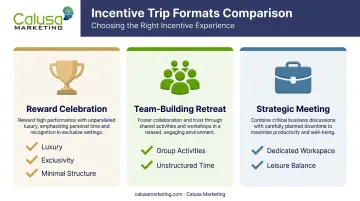
Getting this alignment right before you book anything saves a lot of mid-planning pivots later.
Frequently Asked Questions
What is an incentive travel program?
An incentive travel program is a structured reward system where companies offer trips to top-performing employees, sales reps, or channel partners. The goal: motivate performance and recognize achievement in a way cash bonuses rarely match.
Is $10,000 enough for a trip to Italy?
Yes, for a solid 5-7 day mid-range program in regions like Tuscany. Luxury coastal destinations such as Amalfi or Lake Como may require a higher budget depending on season and inclusions.
What not to do in Italy as an American?
Avoid over-tipping, ordering cappuccino after dinner, and underestimating how afternoon riposo hours affect scheduling. Also respect dress codes at churches and historic sites.
How far in advance should companies plan an incentive trip to Italy?
Plan 6-12 months ahead to secure preferred venues, exclusive experiences, and favorable group rates. Waiting longer often means settling for less desirable inventory.
What is the best time of year for incentive travel to Italy?
Spring and fall offer mild weather and fewer crowds, ideal for countryside programs. Summer suits coastal destinations, while winter works well for alpine retreats.
Can an Italy incentive program be customized for smaller groups or tighter budgets?
Yes. Regions like Puglia or inland Tuscany offer flexible, cost-effective options for smaller groups. Calusa Marketing tailors group size, hotel tier, and itinerary length to fit budgets from small teams to large sales forces.