That choice matters more than it seems. The wrong format can slow down redemption, inflate fulfillment costs, or simply fail to land with the recipient — all of which chip away at program engagement and ROI.
Gift cards made up 30% of incentive-program allocations in North America and 34% in Europe in 2025, according to the Incentive Research Foundation's 2026 industry outlook. With that much budget riding on the format, getting the delivery method right isn't a minor detail — it's a program decision.
Key Takeaways
- Digital and physical gift cards carry identical monetary value, differing only in delivery speed and experience
- Speed and scale make digital cards ideal for large, remote audiences
- Physical cards win on tangibility and ceremony for high-touch, in-person moments
- No format wins universally: the best choice depends on audience, occasion, and program goals
- Hybrid reward platforms let businesses offer both formats without added complexity
Digital vs Physical Gift Cards: Quick Comparison
Before we define each format, here's how the two formats stack up across the factors that matter most to program administrators.
| Factor | Digital Gift Cards | Physical Gift Cards |
|---|---|---|
| Cost & Fees | No shipping cost; may carry a small platform fee | Card cost plus postage; bulk fulfillment adds logistics overhead |
| Delivery Speed | Minutes, via email, text, or app | Days by mail; instant only if purchased in-store |
| Personalization | Custom messages, images, video, scheduled send dates | Custom denominations, printed messages, card designs |
| Security Risk | Phishing and email interception | Card-draining, tampering, and theft in transit |
Where the Real Risk Lives
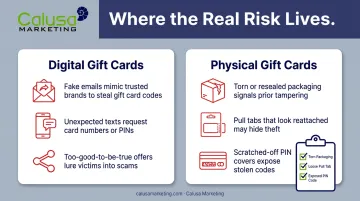
Security concerns differ by format rather than by severity. Digital cards face message-based scams — the FTC notes that gift-card fraud typically starts with a call, text, email, or social media message designed to extract the card number and PIN.
Physical cards face a different threat entirely: retail-rack tampering. Criminals manipulate packaging before purchase, note the card numbers, then drain the balance the moment it's activated.
Watch for these signs a card has already been compromised:
- Damaged zigzag cuts along the packaging edge
- Compromised or resealed pull tabs
- A wrinkled or lifted PIN cover
Neither format is inherently "safer." They're just vulnerable in different places.
What Is a Digital Gift Card?
A digital gift card, also called an eGift card, is a code or barcode delivered electronically through email, text, or an app. For businesses running incentive, loyalty, or recognition programs, that delivery method is the whole point: it turns a physical fulfillment task into an automated one.
Core operational benefits include:
- Instant bulk distribution to hundreds or thousands of recipients at once
- Built-in tracking and analytics for measuring redemption and ROI
- Reduces administrative burden compared to warehousing and mailing physical cards
Digital cards come in a few variations. Closed-loop cards work at a single retailer, while open-loop cards run on Visa or Mastercard networks and work almost anywhere.
Then there are flexible, platform-based options: Calusa Marketing's ANY-Card program falls here, giving recipients a single digital voucher redeemable across 100+ national retailers, restaurants, and a Visa cash-alternative option. No app download or system integration is required on the client's end.
The Cost Structure Advantage
Without shipping, packaging, or card production, digital delivery typically costs less per recipient, and that gap widens as program size grows. For a company issuing rewards to a dispersed sales team or thousands of subscribers, that difference adds up fast.
Where Digital Cards Fit Best
Digital gift cards make the most sense for:
- Spot bonuses that need to reach someone the same day
- Remote or hybrid employee recognition, where mailing a physical card isn't practical
- Scaled customer promotions targeting large or geographically spread audiences
Media and publishing companies are a good example. Subscriber acquisition and retention programs at outlets like the Denver Post and Houston Chronicle rely on gift cards because they need to issue thousands of rewards quickly. Warehousing inventory or tracking down mailing addresses simply isn't practical at that scale.
Call centers with dispersed agent teams face a similar operational reality. E-gift cards were already in use at 58% of medium-sized and 50% of large U.S. enterprises running corporate incentive programs, per an IRF-cited 2016 survey. That adoption curve has only continued upward as remote and distributed teams become the norm.
What Is a Physical Gift Card?
A physical gift card is a plastic card, purchased in-store or mailed to a recipient. Despite the efficiency case for digital, physical cards haven't gone away, and for certain moments, they're still the better tool.
Core benefits include:
- Higher perceived value simply from having something to hold
- Stronger emotional and memory recall tied to the presentation moment
- Better accessibility for recipients who aren't comfortable navigating a digital redemption process
- No dependence on internet access, email deliverability, or app downloads
Physical cards also come in two main formats: closed-loop retail cards and open-loop Visa/Mastercard cards. Custom-branded versions of either format show up often in VIP or donor recognition programs.
Why Tangibility Still Matters
There's real research behind the "holding it makes it feel more valuable" instinct. In an experiment summarized by the Incentive Research Foundation, participants who earned a movie ticket valued it at $11.50 on average — well above its $8.50 market price. A related study found employees pursuing a tangible non-cash reward used an optional training resource twice as often as those chasing a cash reward.
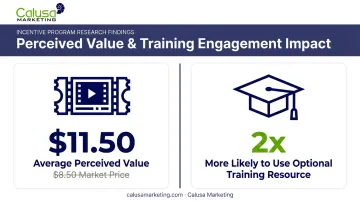
Neither study directly compared physical against digital gift cards. But the underlying mechanism (tangible rewards can inflate perceived value and drive effort) is exactly why a physical card still lands harder at an award ceremony than a text message does.
Where Physical Cards Fit Best
Physical cards make the most sense for:
- Donor appreciation and milestone recognition events
- In-person award ceremonies where handing over something tangible is part of the moment
- Retail point-of-sale gifting, where a customer buys the card in-store
Jewelry retailers, home improvement companies, and timeshare or vacation ownership programs lean heavily on this format. Consider a timeshare company running an in-person sales presentation: handing a prospect a physical card as they walk in the door creates an immediate, visible commitment that a follow-up email simply can't replicate. The operational tradeoff is real, though: production costs and shipping time add up fast, and cards carry higher exposure to loss or theft in transit, a cost that has to be weighed against that ceremonial value.
Digital vs Physical Gift Cards: Which Is Better for Your Program?
There's no universal winner here. The right answer depends on four factors:
- Recipient location and tech comfort: Are you reaching a national or remote audience, or a local, in-person group?
- Speed and scale requirements: Do you need to issue 5 rewards or 5,000?
- Budget: Can the program absorb shipping and production costs, or does it need to stay lean?
- Emotional weight of the occasion: Is this a routine reward, or a milestone moment that calls for ceremony?
Choose digital for national, remote, or high-volume programs that need speed and built-in reporting. Choose physical for VIP recognition, in-person events, or milestone ceremonies where the moment matters as much as the money.
A Quick Decision Checklist
Before locking in a format, run through this:
- Where is your audience located, and how tech-comfortable are they?
- How fast does the reward need to arrive?
- Does the occasion call for a personalized message, a ceremony, or neither?
- How much internal admin bandwidth do you have to manage fulfillment?
Many businesses find the honest answer is "it depends on the recipient," which is exactly why hybrid platforms exist.
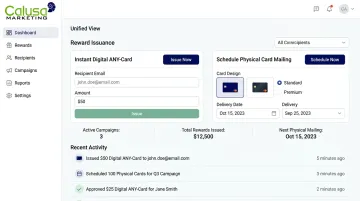
Calusa Marketing's cloud-based SaaS reward platform combines digital punch cards with ANY-Card gift card flexibility, so program administrators aren't forced to pick one format for an entire audience. A national sales team can get instant digital rewards while a VIP donor group gets a physical card mailed for a milestone event, all managed through the same system.
Real-World Example: Choosing the Right Format
Media companies running subscriber acquisition programs offer a useful window into this decision.
The Denver Post, a Calusa Marketing client, had been managing what its team described as a "previously troublesome process of gift card fulfillment." That bottleneck showed up as subscriber complaints and repeat callbacks to customer service.
Switching to a streamlined digital gift card model didn't just speed up delivery. According to the client, it made the process "trouble free," eliminating the complaint volume built up around the old system.
At a sister publication, APG Media of Chesapeake & Florida credited a similar incentive approach with generating millions of dollars in incremental subscriber revenue.
Digital doesn't always win, though. For high-volume, dispersed-audience programs like subscriber acquisition, the operational drag of physical fulfillment often outweighs any ceremonial benefit.
Donor galas and sales awards dinners flip that calculus, favoring the tangible weight of a physical card. If you're unsure which side of that line your program falls on, look for a partner whose platform supports both formats.
Conclusion
There's no single "better" format between digital and physical gift cards. The right choice depends on the recipient, the occasion, and what your program is trying to achieve operationally.
A remote sales team needs speed and reporting. A donor recognition dinner needs ceremony. Both are valid reasons to pick different formats — sometimes within the same organization.
What matters for engagement, retention, and ROI is matching the format to the context, not chasing a universal winner. Calusa Marketing's flexible, technology-driven platform makes that match easy, whether you need instant digital delivery or a physical card for a milestone moment.
Frequently Asked Questions
What is the difference between an eGift card and a physical gift card?
Both hold the same monetary value and work the same way at checkout. An eGift card is delivered electronically as a code, while a physical card is a plastic card you hand over or mail.
Are eGift cards better than physical gift cards?
Neither is universally better. eGift cards are faster and easier to scale, while physical cards carry more ceremonial and tangible value for certain occasions.
Can I use an eGift card to buy a gift card?
eGift card balances typically work like a payment method at checkout and can't usually be used to purchase another gift card directly, though some multi-brand platforms allow balance transfers.
Which type of gift card is more cost-effective for business incentive programs?
Digital gift cards typically save on shipping and fulfillment costs, making them more cost-effective for large-scale or recurring programs.
Do digital gift cards expire faster than physical gift cards?
Expiration depends on the issuing brand and card type (retail versus Visa/Mastercard), not on whether the card is digital or physical.
Can digital gift cards be used for in-person purchases?
Most digital gift cards can be added to a mobile wallet and scanned in-store, though a few older point-of-sale systems may still require a printed code.