Yet pop culture talk of "dopamine hits" leaves most people with a distorted picture. Dopamine isn't a pleasure chemical that fires like a game achievement sound. The system is more layered than that, and understanding it explains why habits stick, why addiction hijacks otherwise healthy people, and why some incentives work far better than others.
This guide breaks down how the reward system actually operates, what happens when it malfunctions, and why the same wiring behind your morning routine also powers well-designed incentive programs.
Key Takeaways
- Dopamine links the VTA, nucleus accumbens, and prefrontal cortex to drive motivation and pleasure
- A stimulus triggers dopamine release, assigns "wanting" value, then reinforces the resulting behavior
- Wanting and liking are separate processes, both routed through the same circuitry
- Overactivation fuels addiction; underactivation shows up in depression and ADHD
- The same principles explain why well-timed incentives and loyalty rewards change behavior
What Is the Brain's Reward System?
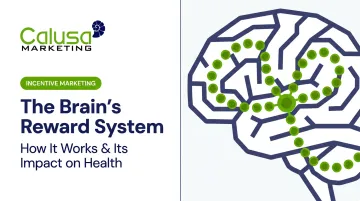
The brain's reward system is a network of interconnected structures, linked by dopamine pathways, that governs motivation, pleasure, and reinforcement learning. Rather than a single switch, it's a circuit spanning the midbrain, limbic system, and prefrontal cortex, with each region handling a distinct job.
This design has deep evolutionary roots: it evolved as a survival tool. Behaviors that kept our ancestors alive, like eating, forming social bonds, seeking safety, and avoiding threats, needed to feel compelling enough to repeat. The reward circuit tags these behaviors with motivational urgency so we keep doing them.
The most common misconception is that this system acts as a "pleasure center." Dopamine actually ties more closely to wanting and motivation than to the direct experience of enjoyment.
You can want something intensely, a snack, a phone check, a scroll through social media, without liking it much once you get it. That gap explains a surprising amount of self-defeating behavior.
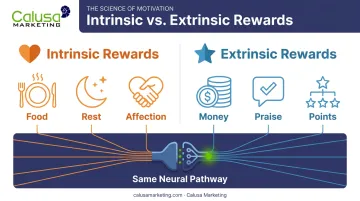
Rewards generally fall into two buckets:
- Intrinsic rewards: Naturally pleasurable experiences, such as food, rest, or affection
- Extrinsic rewards: Learned or conditioned incentives, such as money, praise, or points
Both types route through the same dopamine circuitry. Your brain doesn't process a bonus check any differently than it processes a good meal. It evaluates value and reinforces whatever behavior produced the payoff.
How Does the Reward System Work?
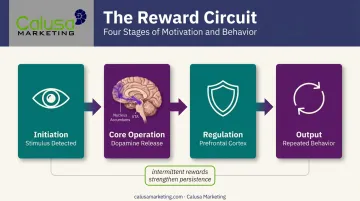
The reward system doesn't fire randomly. It runs through a consistent sequence: detect a stimulus, release dopamine to signal value, generate motivation, then reinforce or adjust behavior based on the outcome.
Initiation
The process starts when a stimulus, food, a compliment, a cue linked to a past reward, gets detected. Initiation can be automatic, driven by biological states like hunger, or learned, like the way a notification sound triggers anticipation before you even look at your phone.
There's a common bottleneck here. Without a stimulus that's novel or salient enough, dopamine neurons in the ventral tegmental area (VTA) simply don't fire strongly enough to generate real motivation. This is part of why the tenth identical email alert barely registers, but an unexpected one does.
Core Operation
Once triggered, the VTA releases dopamine into the nucleus accumbens, creating what researchers call incentive salience: the desire, or "wanting," to pursue the reward. This signal reinforces whatever behavior led to it, strengthening the association through associative learning.
This is where the wanting versus liking distinction matters most. Dopamine drives pursuit, not pleasure itself. Separate opioid and endocannabinoid systems, working in small hedonic "hotspots" within the brain, generate the actual liking response (Berridge and Robinson's incentive-sensitization research). That's why wanting can spike, sometimes dramatically, without a matching rise in enjoyment.
Regulation and Output
The prefrontal cortex acts as a check on impulsive reward-seeking. It evaluates whether pursuing a reward is actually worth the effort, delay, or risk involved, weighing cost against expected benefit before green-lighting behavior.
A built-in brake exists too. An "anti-reward" mechanism, involving a neurochemical called dynorphin, can dampen the circuit to prevent constant overconsumption of rewarding stimuli. Without this regulation, reward-seeking tips into compulsion, which is central to how addiction takes hold.
The end result is a reinforced memory and behavior pattern, one that makes you more likely to seek that reward again in similar contexts. Over time, this output shapes habits, preferences, and decision-making patterns well beyond the original trigger.
Timing matters here more than people assume:
| Reinforcement Type | Effect |
|---|---|
| Continuous (reward every time) | Faster initial learning |
| Partial/intermittent (unpredictable reward) | Greater persistence, harder to break |
This explains why habits built on unpredictable rewards, like checking social media for the occasional interesting post, prove tougher to quit than ones tied to a guaranteed payoff.
The Reward System's Impact on Health
When the reward circuit gets overstimulated repeatedly, it can rewire itself. The brain starts craving the trigger despite negative consequences, and that shift underlies several health conditions.
Addiction Rewires the Circuit
Drugs and compulsive behaviors don't build new pathways. They hijack the ones designed for food, bonding, and safety, flooding the system with dopamine at levels natural rewards rarely match.
This isn't a fringe problem. In 2024, 48.4 million people, or 16.8% of Americans age 12 and older, had a past-year substance use disorder, according to SAMHSA's National Survey on Drug Use and Health.
Mood Disorders and Anhedonia
Reduced activity in reward-related brain regions is linked to anhedonia, the loss of interest or pleasure that defines much of clinical depression.
A meta-analysis of reward processing in major depressive disorder covering 428 participants across 38 studies found consistently reduced striatal activation during reward feedback. Motivation and pleasure both decline together.
ADHD and Adolescent Development
Underactive reward circuitry makes it harder for the ADHD brain to sustain motivation from routine, low-stimulation activities. This can push someone toward higher-stimulation rewards, immediate feedback, novelty, or risk, simply because the baseline circuit isn't generating enough signal on its own.
The reward system also matures gradually through adolescence. Research tracking brain development shows reward-related activity in the nucleus accumbens tends to peak around ages 15 to 17, contributing to the heightened risk-taking commonly seen during this stage.
The takeaway: a healthy reward system supports motivation and learning. Dysfunction in either direction, whether overactive or underactive, disrupts mental health and everyday behavior.
Where the Reward System Shows Up in Everyday Life
You don't need a lab coat to see this circuit in action. It's behind:
- Habit loops, like reaching for your phone the moment you feel bored
- Goal-setting behavior, where progress bars and milestones keep you moving
- Social media engagement, built around unpredictable, intermittent rewards
- Personal productivity systems, like checking off a to-do list for a small hit of satisfaction
Businesses apply the same psychology through structured incentive and loyalty programs. Well-timed, meaningful rewards reinforce the behaviors companies want to see more of, whether that's a customer renewing a subscription or an employee hitting a sales target.
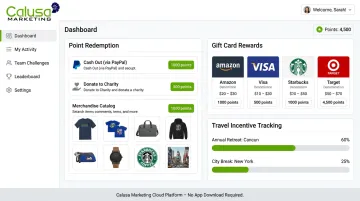
Calusa Marketing designs these programs around that same motivation principle. In one dual-audience setup, employees redeem points for merchandise after hitting performance milestones, while customers on the same platform earn gift cards for renewing subscriptions.
Advertisers also earn travel incentives for increased spend. All three audiences run through one cloud-based system, with no app download and no complex integration required on the client's end.
Conclusion
The reward system is a structured process, not a mysterious pleasure switch: detection, dopamine-driven wanting, regulation, and reinforced behavior. Once you see the mechanics, "dopamine hit" stops being a punchline and starts being a useful framework.
That understanding pays off in practical ways, whether you're trying to build a healthier habit or design a motivation strategy, like the incentive programs Calusa Marketing builds, that actually gets results at work.
Frequently Asked Questions
What is the reward system?
It's the brain's network of structures and dopamine pathways responsible for motivation, pleasure, and reinforcement learning. It runs primarily through the VTA, nucleus accumbens, and prefrontal cortex.
What is an example of a reward system?
Biologically, food or a genuine compliment triggers dopamine release and reinforces the behavior that led to it. Applied examples include a workplace bonus or a loyalty points program built on the same reinforcement logic.
Do reward systems work for ADHD?
Yes, but they often need to be more immediate and frequent. ADHD brains show weaker responses to delayed reward anticipation, so quick, tangible feedback tends to work better than distant payoffs.
What are the four types of reward systems?
In behavioral and business contexts, rewards are commonly grouped as monetary, non-monetary, assistance-based, and recognition-based. Most workplace programs blend several of these categories rather than relying on just one.
How does dopamine affect the reward system?
Dopamine mainly drives motivation and "wanting" rather than pleasure itself. It fuels the pursuit of a reward, while separate brain systems generate the actual enjoyment once you get it.
Can the reward system be damaged or reset?
Chronic overstimulation, such as addiction, can alter the circuit's sensitivity over time. Behavior change, therapy, and sustained abstinence can help restore healthier reward responses, though recovery tends to be gradual rather than instant.