Yet the traditional marketing funnel still treats the sale as the finish line. The customer loyalty loop flips that script. Instead of a one-way path that ends at checkout, it's a continuous cycle designed to keep customers engaged, satisfied, and coming back.
This article breaks down what the loyalty loop actually is, how it works stage by stage, why it matters more now than ever, and the specific strategies businesses use to build one.
Key Takeaways
- The loyalty loop replaces the sales funnel with an ongoing, post-purchase engagement cycle
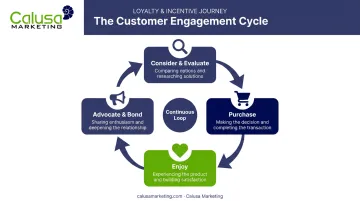
- Four core stages drive it: Consider, Evaluate, Purchase, and Enjoy/Advocate/Bond
- A strong loop lowers churn, lifts customer lifetime value, and turns buyers into advocates
- Digital punch cards and points systems reinforce the loop with minimal setup effort
What Is a Customer Loyalty Loop?
A customer loyalty loop is an ongoing, circular model of engagement where the relationship with a customer continues indefinitely after the sale, rather than stopping once payment clears. Instead of exiting the journey at purchase, the customer cycles back through consideration, evaluation, and repurchase, often skipping steps entirely because trust has already been established.
The concept traces back to McKinsey's 2009 Consumer Decision Journey research, which studied purchase decisions across nearly 20,000 consumers on three continents. McKinsey found that the traditional funnel missed most of what actually happens after a sale.
Post-purchase experience shapes every future decision a customer makes, and a strong enough bond lets that customer bypass active evaluation next time. That's the loop.
This represents a real philosophy shift. Businesses used to operate acquisition-first: spend to win a customer, then move on to the next prospect.
A retention-first mindset asks a different question: what's this customer worth over the entire relationship, not just this one transaction? Given how expensive acquisition has become and how thoroughly informed today's review-driven shoppers are, that question matters more than it used to.
Customer Loyalty Loop vs. Traditional Marketing Funnel
The funnel is linear. Awareness leads to consideration, consideration leads to purchase, and then the model has nothing left to say. The customer walks out the door, and if they come back, that's treated as a bonus rather than a built-in outcome.
The loop is circular and self-reinforcing. Post-purchase experience feeds directly back into the next consideration phase, creating a repeat cycle instead of a dead end. Here's how the two models compare:
| Dimension | Traditional Funnel | Customer Loyalty Loop |
|---|---|---|
| Journey shape | Linear, ends at purchase | Circular, continues after purchase |
| Primary focus | Narrowing prospects toward conversion | Full relationship, including advocacy |
| Marketing cost | Continuous new-customer spend | Retention-focused, more cost-efficient |
| End goal | Purchase/conversion | Repeat purchase and active loyalty |
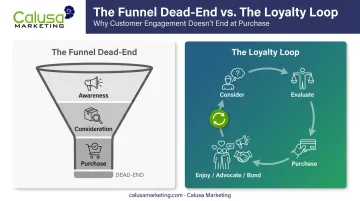
The funnel's core limitation is structural: it has no built-in mechanism to re-engage a customer once they've bought. Everything after checkout becomes an afterthought instead of a strategy.
The Key Stages of the Customer Loyalty Loop
Naming conventions vary slightly depending on the source, but the loop generally moves through four connected phases. Each phase needs its own deliberate touchpoint strategy, or the customer simply drifts out of the cycle.
Consider and Evaluate
This is the trigger phase. A prospect becomes aware of a brand through an ad, a referral, or a search, and starts researching independently.
This research phase is longer and more thorough than most businesses assume. In a GE Capital Retail Bank study, 81% of shoppers researched online before visiting a store for a major purchase, spending an average of 79 days gathering information beforehand.
Strategies that work here:
- Build trust with visible reviews and testimonials at the point of consideration
- Tailor messaging to what the prospect has specifically viewed or clicked on
- Answer objections proactively before the prospect has to ask
Purchase
The purchase moment is peak engagement. It's also the point most businesses treat as a finish line, which is exactly the mistake the loop is designed to fix. What happens in the days immediately following the sale determines whether the customer stays in the loop or exits it quietly.
Effective tactics include:
- Thank the customer directly - a simple, timely acknowledgment sets the tone for everything after
- Provide onboarding or support content - help them get value from the purchase fast
- Recommend complementary products - based on what they just bought, not generic upsells
Enjoy, Advocate, and Bond
This is where lasting loyalty gets created or lost. Rewards, personalized recognition (an anniversary message, a milestone acknowledgment), and consistent value delivery keep the customer emotionally invested rather than just transactionally satisfied.
This phase is also where advocacy happens. Satisfied customers talk, and people listen to them more than they listen to ads. Nielsen's global trust study found that 88% of consumers most trust recommendations from people they know. This is exactly why encouraging reviews and referrals at this stage compounds the loop's value instead of just closing it out.
Benefits of Building a Strong Customer Loyalty Loop
A well-designed loop doesn't just feel good on paper. It changes the underlying economics of the business.
- Reduced churn: Customers stay actively engaged instead of drifting away silently after the sale
- Higher customer lifetime value: Personalized post-purchase engagement keeps customers coming back more often and spending more per visit
- Stronger word-of-mouth growth: Loyal customers become informal ambassadors, referring new business without being asked
- Lower overall marketing spend: Retention-focused budgets go further than constant new-acquisition campaigns
- Greater competitive differentiation: Loyal customers become less price-sensitive and harder for competitors to poach
None of these benefits show up overnight. They compound the longer the loop stays intact, which is why the strategies below focus on consistency over one-time gestures.
Proven Strategies to Strengthen Your Customer Loyalty Loop
Building the loop isn't theoretical. It comes down to a handful of concrete moves, applied consistently.
- Personalize post-purchase communications. Use purchase history and behavioral data so every message feels relevant, not generic
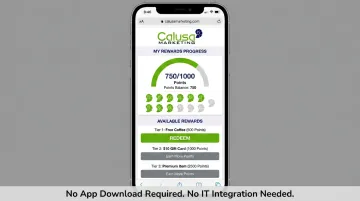
- Implement a structured rewards program. Tiered points, digital punch cards, or gift card incentives give customers a tangible reason to return. Calusa Marketing's cloud-based platform requires no app download or IT integration, letting programs launch in days, not months
- Prioritize fast, empathetic customer service. A slow or dismissive response after a sale is one of the quickest ways to break the loop entirely
- Monitor engagement metrics. Track NPS and direct feedback to catch a lapsing customer before they disengage completely
- Formalize advocacy. Referral incentives, early access perks, or ambassador programs reward customers for bringing in new business
For businesses without the internal bandwidth to manage fulfillment, gift card inventory, or day-to-day member support, partnering with a specialized incentive marketing firm removes that burden without sacrificing consistency. Calusa Marketing, for example, handles:
- Global merchandise fulfillment across 100+ countries
- Gift card inventory and program management
- Customer support seven days a week, so client teams aren't fielding calls about a lost reward or shipping delay
Frequently Asked Questions
What are the three types of customer loyalty?
Marketers typically describe three types: transactional (price-driven repeat buying), experiential or emotional (attachment to the brand), and advocacy-based (actively recommending it). Each maps to a different stage of the loyalty loop, from purchase through bonding.
What is the difference between the customer loyalty loop and the marketing funnel?
The funnel is linear and ends at purchase. The loop is circular, continuing through post-purchase engagement, repeat buying, and advocacy rather than treating the sale as the finish line.
How many stages does the customer loyalty loop have?
Most frameworks describe three to four core stages: Consider, Evaluate, Purchase, and Enjoy/Advocate/Bond. Exact naming varies slightly depending on the source, but the underlying cycle stays consistent.
What industries benefit most from implementing a loyalty loop strategy?
Retention-heavy industries see the strongest results, including retail, distribution, media and subscription businesses, and membership-based organizations, where repeat engagement directly drives revenue.
How can small businesses build a loyalty loop on a limited budget?
Start small: a digital punch card, personalized email follow-ups, and simple review requests cover most of the loop without major investment. Scale to tiered rewards or referral programs once the basics are running.
What metrics should I track to measure loyalty loop success?
Focus on repeat purchase rate, customer lifetime value, Net Promoter Score, and referral or advocacy rates. Together, these show whether customers are staying in the loop or dropping out of it.