Dedicated retention software exists to catch the warning signs before a customer walks: declining product usage, a frustrated support ticket, a lapsed loyalty member. The best platforms surface those churn signals, automate win-back actions, and run loyalty programs without manual babysitting. Qualtrics estimates that poor experiences put $2.94 trillion in global consumer spending at risk in 2026 alone, a figure that puts real financial weight behind "customer experience" as a business priority (Qualtrics, 2026).
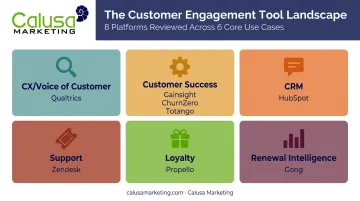
This guide ranks the 8 best customer retention software tools for 2026, spanning CX analytics, customer success, CRM, support, and loyalty use cases.
TL;DR
- Customer retention software combines feedback analysis, behavioral tracking, and churn prediction to grow lifetime value.
- Match tools to your bottleneck: Qualtrics for CX/VoC, Gainsight, ChurnZero, or Totango for customer success.
- HubSpot covers CRM, Zendesk covers support, Propello handles loyalty, and Gong adds renewal intelligence.
- Prioritize ease of implementation and integration over brand recognition alone.
- Brands wanting fully managed loyalty programs, not self-built ones, should weigh dedicated incentive marketing partners.
Overview of Customer Retention Software in 2026
Customer retention software refers to tools that mine structured and unstructured customer data to explain why people churn, what makes them stay, and how to intervene before it's too late. Some platforms track product usage and support interactions; others analyze survey responses, call transcripts, or purchase behavior. All aim to turn scattered signals into a single, actionable churn score.
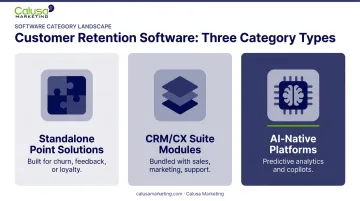
These platforms exist in two forms:
- Standalone point solutions built specifically for churn prediction, feedback analysis, or loyalty
- Modules inside larger CRM or CX suites, bundled with sales, marketing, or support tools
- AI-native retention platforms that layer predictive analytics and copilots directly onto existing customer data streams
Forrester notes that customer-success vendors are shifting from scattered point tools toward strategic systems, layering in AI agents, predictive analytics, and copilots as they consolidate customer data (Forrester, Q4 2025). That consolidation trend shapes every tool on this list. Below, we rank the top 8 spanning CX analytics, customer success, CRM, support, and loyalty.
Top 8 Customer Retention Software Tools for 2026
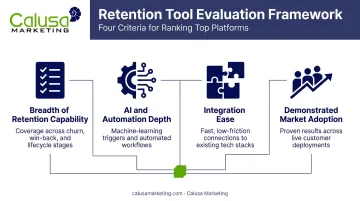
Each tool below was evaluated on breadth of retention-specific features, AI and predictive capability, ease of integration, and demonstrated adoption across industries.
1. Qualtrics Customer Experience Software
Qualtrics unifies feedback from calls, emails, social channels, and behavioral data into a single customer profile, using predictive analytics and natural language processing to spot patterns humans would miss. It's purpose-built to surface emerging trends and close experience gaps that directly correlate with retention and loyalty.
| Category | Details |
|---|---|
| Best For | Enterprise CX and VoC-driven retention programs |
| Key Feature | Predictive analytics + NLP across omnichannel feedback |
| Pricing Model | Custom enterprise pricing; request a quote |
2. Gainsight
Gainsight is a customer success platform built around digital product experiences, with a stated mission to help brands 'treat every customer like your best customer.' Its AI models track adoption, renewal likelihood, and now support agentic workflows that automate key touchpoints without a CSM lifting a finger.
| Category | Details |
|---|---|
| Best For | SaaS companies managing renewal and expansion motions |
| Key Feature | Agentic automation for adoption and renewal workflows |
| Pricing Model | Custom/quote-based; both Essentials and Enterprise tiers require sales contact |
G2 reports Gainsight's implementation time runs around 5 months, so budget for a longer runway before insights start flowing.
3. ChurnZero
ChurnZero is built specifically to identify and act on churn risk for digital product businesses, using embedded AI agents rather than bolt-on analytics. Its sliding-scale urgency flags help CS teams prioritize the accounts most likely to churn instead of treating every account equally.
| Category | Details |
|---|---|
| Best For | Mid-market SaaS customer success teams |
| Key Feature | Embedded AI agents for automated churn prevention |
| Pricing Model | Custom/quote-based; no public plan pricing listed |
One documented customer, Once For All, saw monthly churn drop from 15% in 2020 to 9.5% by 2024, with net revenue retention climbing from 100% to 102% over the same window (ChurnZero case study) — a useful data point, though it reflects one company's results, not a guaranteed outcome.
4. Totango
Totango is a customer-led growth platform that surfaces leading indicators of churn, upsell, and expansion through pre-built playbooks. Rather than forcing teams to build workflows from scratch, it ships with templates tied to common retention triggers.
| Category | Details |
|---|---|
| Best For | Cross-functional teams needing unified account health data |
| Key Feature | Playbook-driven action triggers |
| Pricing Model | Custom/quote-based; no fixed public dollars |
Its differentiator is breadth: unified insights span multiple departments, paired with AI-driven voice-of-customer tracking that keeps sales, support, and success looking at the same data.
5. HubSpot
HubSpot is an all-in-one CRM combining marketing, sales, and support tools with retention-relevant automation baked in. Helpdesk automation, AI support agents, and real-time feedback tools sit on top of CRM data you're likely already collecting.
| Category | Details |
|---|---|
| Best For | SMBs wanting one platform for CRM plus retention |
| Key Feature | Automated marketing/support workflows tied to CRM data |
| Pricing Model | Free tier for up to 2 users; Starter from $7/seat/month, Professional from $90/seat/month, Enterprise from $150/seat/month (billed annually) |
HubSpot's biggest advantage over the rest of this list: it's the only tool here with fully public pricing, making budget planning far less of a guessing game.
6. Zendesk
Zendesk is a contact-center-first customer service platform built to deliver churn-proof support interactions at scale. Its omnichannel workflows are designed to maximize agent efficiency without sacrificing response quality.
| Category | Details |
|---|---|
| Best For | Support-heavy businesses prioritizing service quality |
| Key Feature | Omnichannel ticketing with automation and self-service |
| Pricing Model | Support Team from $19/agent/month; Suite Team $55; Suite Professional $115 (annual billing) |
Like HubSpot, Zendesk offers transparent published pricing, which makes it easier to compare against competitors before requesting a custom enterprise quote.
7. Propello
Propello is a loyalty-focused platform that lets brands whitelabel a rewards and referrals experience without building one from scratch. It automatically delivers offers based on behavioral triggers, spending milestones, or personal dates like birthdays.
| Category | Details |
|---|---|
| Best For | Brands wanting a self-serve, whitelabeled loyalty program |
| Key Feature | Automated, trigger-based reward delivery |
| Pricing Model | Custom/quote-based; tiers require a pricing request |
Propello works well for teams that want to own program design and configuration themselves. But not every business wants to run point on strategy, fulfillment, and customer service internally. For those that prefer a fully managed loyalty and incentive program instead of a self-serve platform, an established incentive marketing partner like Calusa Marketing is worth considering.
The St. Petersburg, FL-based firm has managed 1,000+ reward and loyalty programs with a 99% client retention rate, handling program design, fulfillment, and customer service so the client's team doesn't have to.
8. Gong
Gong is an AI-enabled customer success platform that tracks renewal likelihood and churn risk through engagement and pricing signals pulled from actual sales conversations. It's designed to close gaps across onboarding, support, and renewals using conversation and behavioral intelligence.
| Category | Details |
|---|---|
| Best For | Revenue teams tracking renewal and expansion risk |
| Key Feature | Signal-based churn risk scoring from engagement trends |
| Pricing Model | Custom quote combining per-user licenses with a platform fee |
Gong's edge is that it mines data most retention tools ignore entirely: what's actually said on sales and success calls, not just what's clicked or logged.
How We Chose the Best Customer Retention Software
Buyers make a few predictable mistakes when shortlisting retention tools. The most common: picking a platform based on brand recognition alone, or ignoring how long it takes to see results.
Gainsight reports a 5-month average implementation window for its platform. That gap between buying the tool and seeing value from it should factor into any shortlist.
We weighed four factors for every entry on this list:
- Breadth of retention-specific capability: feedback analysis, churn prediction, loyalty, and support coverage
- AI and automation depth: automation built into workflows your team already uses
- Integration ease with existing tech stacks
- Demonstrated market adoption and client feedback
Budget pressure shapes these criteria too. ChurnZero's benchmark research found 55% of CS teams reduced or maintained headcount in the past year, while 63% of leaders held flat or cut non-headcount budgets.
Under those constraints, faster churn detection, higher lifetime value, and lower cost-to-serve become the metrics that determine whether a tool pays for itself or sits half-implemented.
Conclusion
There's no single "best" customer retention tool. The right choice depends on matching software capability to your specific bottleneck, whether that's feedback collection, churn prediction, support quality, or loyalty programming. Don't just pick whichever brand shows up first in search results.
Before committing budget, pilot-test your shortlist against real customer data. Check how long implementation actually takes, not just what the sales deck promises, and confirm the integrations work with your existing stack.
That same due diligence applies if your core retention lever is a loyalty, rewards, or incentive program: running it yourself isn't the only option. Calusa Marketing offers a fully managed platform with no integration needed. Its white-glove service backs a 99% client retention track record across digital punch cards, gift card fulfillment, merchandise rewards, and incentive travel programs.
Frequently Asked Questions
What is the 80/20 rule in customer retention?
The Pareto Principle suggests roughly 20% of customers generate 80% of sales (Forbes). In practice, segment and protect your top-tier customers instead of treating every account the same.
Is CRM the same as customer retention software?
Not quite. CRM manages the full customer relationship lifecycle broadly, while retention software focuses specifically on churn prediction, behavioral analytics, and win-back automation. Many modern tools overlap both functions.
What is an example of a customer retention program?
A tiered loyalty program with automated birthday or milestone offers is one common example. Another: an automated win-back email triggered the moment product usage starts declining.
What are the 8 C's of customer retention?
A commonly referenced framework includes Clarity, Consistency, Communication, Customization, Care, Community, Convenience, and Commitment. Treat this as a practical checklist rather than an academically established standard.
What features should I look for in customer retention software?
Prioritize churn prediction, behavioral analytics, segmentation, automated engagement workflows, and integrations with your existing tech stack. Without these, you're stuck reacting to churn instead of preventing it.
How much does customer retention software cost?
Free tiers exist for basic tools like HubSpot's starter plan. Mid-market solutions commonly run $50 to $200 per seat per month. Enterprise platforms typically use custom, quote-based pricing.