Introduction
Chasing new customers is expensive. Keeping the ones you already have is not.
A frequently cited Harvard Business Review analysis found that acquiring a new customer can cost 5 to 25 times more than retaining an existing one, depending on the industry. That gap hasn't closed.
Yet many businesses still pour their budgets into acquisition-first campaigns, treating every sale as a one-off transaction. Meanwhile, customers now expect something different: personalized attention, consistent service, and a brand that remembers who they are.
This article breaks down what relationship marketing means, how it builds loyalty in practice, the measurable business impact, and the strategies (including loyalty and incentive programs) that turn relationships into revenue.
Key Takeaways
- Relationship marketing prioritizes long-term engagement over one-time sales.
- Trust, reputation, and service consistency turn relationships into loyalty.
- Loyal customers cost less to retain, spend more, and refer better customers.
- Personalization and loyalty programs make relationship marketing measurable.
What Is Relationship Marketing?
Relationship marketing is a strategic approach built on nurturing long-term customer connections instead of pursuing isolated sales. A foundational framework from Journal of Business Research (2005) defines it through six dimensions: trust, bonding, communication, shared value, empathy, and reciprocity.
That framework still holds up because these dimensions describe behavior, not tactics that expire with the next platform update.
Relationship Marketing vs. Traditional Marketing
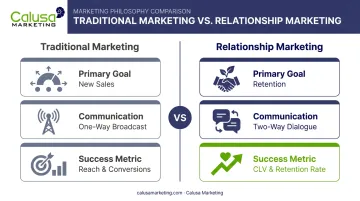
The differences show up in three places:
| Dimension | Traditional Marketing | Relationship Marketing |
|---|---|---|
| Primary goal | New sales, market reach | Retention, long-term value |
| Communication | One-way, broadcast | Two-way, ongoing dialogue |
| Success metric | Reach, immediate conversions | CLV (customer lifetime value), retention rate, satisfaction |
In practice, relationship marketing shows up as personalized communications, loyalty programs, proactive customer service, and consistent engagement across channels. Each of those tactics gets its own deeper look later in this article.
How Relationship Marketing Directly Builds Customer Loyalty
Loyalty results directly from three interconnected forces: trust, reputation, and service consistency.
The Trust-Satisfaction-Loyalty Chain
Trust is the mechanism researchers most consistently point to when explaining why relationship marketing works. When a brand communicates transparently and delivers consistently, customers perceive less risk in choosing them again.
Satisfaction reinforces that trust. When customers feel heard through responsive service and active feedback loops, they're far more likely to return. This isn't abstract:
- Consistent service reduces the perceived risk of a repeat purchase
- Feedback loops signal that the business is listening, not just selling
- Satisfied customers require less persuasion on their next decision
The chain runs in one direction: trust reduces risk, satisfaction reinforces trust, and both drive repeat behavior.
Corporate Image, Reputation & Referral Behavior
A brand's reputation does more than attract new customers. It creates emotional attachment that survives the occasional service misstep.
Referrals prove this in hard numbers. A widely cited field study of nearly 10,000 accounts at a German bank tracked referred customers against those acquired through other channels. Referred customers showed 18% lower churn and 16% higher customer lifetime value over six years.
That's the compounding effect of reputation. Satisfied customers don't just stay. They bring others who behave the same way.
Service Quality & Consistent Experience
Consistency across every touchpoint, in-store, online, and support, is one of the strongest predictors of continued loyalty. A customer who gets a great answer from a support rep but a confusing checkout experience online doesn't feel like they're dealing with one brand.
This matters because inconsistency doesn't just annoy customers. It resets the trust that took months to build.
The Business Case: ROI and Benefits of Relationship-Driven Loyalty
Relationship marketing produces a measurable financial return. The numbers below show exactly how much it affects the bottom line.
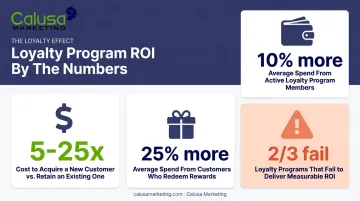
Acquisition costs stay high. As noted earlier, acquiring a new customer can run 5 to 25 times more than retaining one, per the HBR benchmark. That gap alone justifies shifting budget toward retention.
Engaged loyalty members spend more. McKinsey's research on loyalty programs found that active loyalty members spend 10% more than enrolled-but-inactive members, and members who actually redeem rewards spend 25% more. Top-performing programs increase redeemer revenue by 15% to 25% through higher purchase frequency and bigger baskets.
Beyond the direct spend numbers, relationship-driven loyalty delivers:
- Lower marketing spend over time: loyal customers need less persuasion to convert again
- Stability during downturns: repeat customers are slower to defect when budgets tighten
- A harder-to-copy competitive edge: in commoditized markets, a strong customer relationship is difficult for competitors to poach
One important caveat: the same McKinsey research notes that roughly two-thirds of established loyalty programs fail to deliver value. Enrollment numbers alone don't prove ROI. Engagement does.
Proven Relationship Marketing Strategies to Strengthen Loyalty
Knowing the theory is one thing. Executing it is another. Here's what actually moves the needle.
Personalization & Data-Driven Engagement
Businesses that use first-party data (purchase history, preferences, past interactions) to tailor offers and communications create a sense of individual recognition. Customers who feel recognized, not just marketed to, build emotional loyalty faster than those who receive generic blasts. A customer who gets a discount on the product they browsed last week feels seen, not sold to.
Structured Loyalty & Incentive Programs
Formal rewards programs reinforce repeat behavior by increasing the perceived value of every dollar a customer spends. This is where operational execution matters as much as strategy.
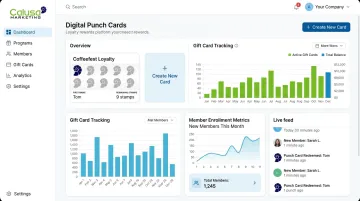
Calusa Marketing, a St. Petersburg, Florida-based incentive marketing firm, builds cloud-based SaaS reward platforms that let businesses launch and manage loyalty programs without app downloads or complex system integrations. Their portfolio spans:
- Digital punch cards for retail and service businesses
- Gift card programs (ANY-Card flexibility) for acquisition and retention
- Merchandise rewards through global drop-ship fulfillment
- Incentive travel, from individual high-end trips to group travel for up to 10,000 people
Clients across distribution (Johnstone Supply, Baker Distributing), media (Houston Chronicle, Postmedia), and timeshare (Capital Vacations, Travel Resorts of America) use these tools to turn one-time buyers into repeat customers.
Calusa currently manages 1,000+ programs with 500,000+ members, backed by a 99% client retention rate.
Omnichannel Engagement & Continuous Feedback
Customers expect the same experience whether they're on your website, in your app, or talking to support. Pairing that consistency with active feedback collection (surveys, reviews, direct outreach) shows customers you're listening and adjusting, not just collecting data for its own sake. A quick survey that leads to a visible product tweak tells customers their feedback matters.
Community & Shared-Value Initiatives
Online customer communities and CSR initiatives deepen loyalty by aligning brand values with customer identity. When customers see their own values reflected in a brand, advocacy follows naturally, without needing to be asked. A branded community where customers share tips and wins turns casual buyers into vocal advocates.
Common Challenges When Implementing Relationship Marketing
Relationship marketing isn't automatic once you flip a switch. Businesses regularly run into several recurring obstacles:
- Inconsistent service erodes trust fast. A single confusing interaction, especially right after a personalized campaign, can undo months of relationship building.
- Data privacy missteps carry outsized risk. Since RM depends on first-party data, mishandling it damages the exact trust the strategy is built on.
- Scale breaks personalization. What feels personal at 500 customers can feel robotic at 50,000 unless systems and processes scale with the customer base.
- Success raises the bar. Once customers experience great service, anything less feels like a step backward, making consistency essential as programs grow.
Frequently Asked Questions
What are the key components of relationship marketing?
The core dimensions are trust, communication, bonding, reciprocity, shared value, and empathy. These form the foundation researchers use to measure how relationship-oriented a business actually is.
How is relationship marketing different from traditional marketing?
Traditional marketing focuses on one-way messaging and short-term conversions. Relationship marketing prioritizes ongoing, two-way dialogue aimed at long-term retention and lifetime value.
What industries benefit most from relationship marketing?
Subscription services, retail, hospitality, and B2B distribution industries with repeat purchase cycles tend to see the strongest results. Customers in these sectors interact with the brand regularly, giving relationship-building efforts more opportunities to take hold.
How can a business measure the success of its relationship marketing efforts?
Track customer lifetime value, retention or churn rate, repeat purchase rate, and Net Promoter Score. These metrics reveal whether relationships are genuinely translating into loyalty.
Can a loyalty program alone build customer loyalty without broader relationship marketing?
Not reliably. Loyalty programs work best when paired with personalization, consistent service quality, and trust-building, not as a standalone tactic bolted onto an otherwise transactional relationship.
How much more does it cost to acquire a new customer versus retaining one?
A widely cited Harvard Business Review study puts acquisition at 5 to 25 times more expensive than retention, though the exact multiple varies by industry and study. Either way, retention remains the cheaper path.