Introduction
Retailers have known for years that keeping a customer costs less than chasing a new one. What's changed is the stakes: as third-party cookies disappear and ad costs climb, first-party data from loyal shoppers has become one of a retail brand's most valuable assets.
Yet many retailers still treat loyalty like a coupon strategy — a punch card here, a percentage-off email there. 54% of US online adults say loyalty programs directly influence what they buy, according to Forrester's 2025 research.
But a program built on discounts alone rarely creates the kind of relationship that keeps someone coming back for years.
Launching a loyalty program is easy. Building one that creates lasting, profitable relationships instead of training customers to wait for the next markdown is the real challenge.
This article covers what retail loyalty actually means, the five-stage journey customers move through, and strategies that work. It also breaks down program types worth considering and the metrics that separate a thriving program from a forgotten app on someone's phone.
Key Takeaways
- Loyalty is an emotional, trust-based relationship, not just repeat purchases
- Personalized offers and consistent omnichannel service raise spend per customer
- Points, tiers, and punch cards all work; fit matters more than complexity
- Repeat purchase rate, CLV, and redemption rate show whether a program pays off
- Partnering with a specialist can get a program live in days, not months
What Is Customer Loyalty in Retail?
Retailers often define customer loyalty narrowly, as repeat purchases. Real loyalty runs deeper: it's a relationship built on trust, consistent satisfaction, and enough emotional connection that a customer chooses your store even when a competitor is cheaper or more convenient.
A loyal customer doesn't just repeat-purchase. They refer friends, forgive an occasional bad experience, and stick around after a price increase that would send a first-time buyer elsewhere.
Loyalty tends to show up in three ways:
- Repeat purchases without needing a discount to trigger them
- Advocacy: reviews, referrals, and social mentions
- Resilience: tolerance for the occasional stockout or price change
Why Loyalty Is a Bottom-Line Issue
The financial case is straightforward. Returning customers spend meaningfully more than first-time buyers. One analysis found repeat customers spend 67% more than new customers once they move past their first few purchases, and that gap widens the longer the relationship continues.
Loyal customers also generate something retailers can't buy: honest, first-party behavioral data. That data does double duty:
- Personalization fuel: purchase history reveals which products and offers actually drive repeat visits
- Merchandising insight: buying patterns inform inventory and category decisions
- Reduced ad dependency: first-party data lessens reliance on costly third-party targeting as cookies phase out
A loyalty program is the mechanism for capturing and rewarding these behaviors. But the loyalty itself is earned through service quality and consistency, not just at checkout.
The 5 Stages of the Customer Loyalty Journey
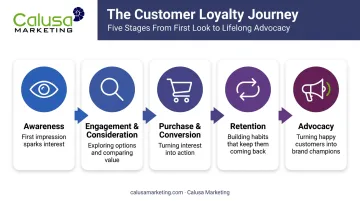
Loyalty doesn't start with a rewards sign-up. It builds across five stages, and missing any one of them weakens everything that follows.
Stage 1: Awareness
The customer discovers your brand, whether through a friend's recommendation, a social ad, or simply walking past your storefront. Nothing has been purchased yet, but first impressions here shape whether they investigate further.
Stage 2: Engagement and Consideration
Before buying, the customer explores your content: browsing the site, comparing prices, and perhaps noticing your loyalty program's sign-up offer along the way. A clear, low-friction incentive at this stage, like 10% off for joining, can tip the decision your way.
Stage 3: Purchase and Conversion
The first transaction happens. This is the moment to reinforce the relationship, whether through an easy loyalty sign-up at checkout or a genuine "thank you" that feels personal rather than automated.
Stage 4: Retention
Repeat purchases start here, driven by personalized offers and a program that actually delivers value. This is where most retailers lose customers. The first purchase rarely disappoints; the real problem is nothing afterward gives them a reason to return.
Stage 5: Advocacy
The customer now refers friends and leaves positive reviews, often defending your brand in everyday conversation. This stage completes the loyalty lifecycle and, for many retailers, becomes the cheapest acquisition channel they have.
Proven Strategies to Build Customer Loyalty That Lasts
Generic discounts might drive a single transaction, but they rarely build loyalty that survives a price war. These strategies consistently move the needle for retailers of every size.
Personalize Every Interaction
Generic marketing is easy to ignore. Personalization is not. Personalization typically drives a 10% to 15% revenue lift for retailers who use it well, with fast-growing companies generating considerably more revenue from it than slower peers. Use purchase history and browsing behavior to tailor offers and product recommendations, not just first names in a subject line.
Launch a Structured Rewards Program
Points, tiers, or cash-back — pick the model that fits your margins and customer base, then commit to it. Building this in-house takes real bandwidth: platform selection, reward economics, fulfillment logistics, ongoing support.
Many retailers instead partner with an incentive marketing firm to design and manage the program day to day. Calusa Marketing, for instance, handles platform setup and reward fulfillment for retail clients, using a configurable platform built for quick setup and easy ongoing management.
Other strategies that consistently work:
- Deliver consistent service everywhere: a slow return process or unhelpful associate erodes trust faster than any reward can rebuild it
- Build emotional loyalty through community: local events, cause partnerships, and in-person moments create connections a coupon can't replicate
- Keep loyalty consistent across channels: points and rewards should follow the shopper whether they're in-store, on the app, or browsing online at midnight
- Recommend across categories: a customer who buys running shoes is a reasonable candidate for socks and fitness gear; personalized cross-sells extend lifetime value beyond the original purchase
Types of Retail Loyalty Programs (With Real-World Examples)
Not every retailer needs the same structure. The right fit depends on your margins, purchase frequency, and how much complexity customers will tolerate.
| Program Type | How It Works | Real-World Example |
|---|---|---|
| Points-based | Customers earn points per dollar spent, redeemable for discounts or products | Starbucks Rewards, which engages roughly 35.5 million active US members through simple earn-and-redeem points |
| Tiered | Escalating benefits unlock as spending rises, encouraging continued engagement | Sephora's Beauty Insider program, with VIB and Rouge tiers rewarding higher spenders with bigger perks and status |
| Paid/subscription | Customers pay a membership fee for guaranteed perks like free shipping or exclusive access | Amazon Prime, which retains subscribers through free shipping, exclusive deals, and entertainment perks |
Paid programs behave differently than free ones, with membership models growing 25% to 50% annually across retail. Members who've made a financial commitment tend to spend more than free-tier participants, since they're motivated to get their money's worth from day one.
Value-based programs take a different approach, tying rewards to causes such as donating a percentage of purchases to sustainability initiatives. This resonates with customers who choose brands based on values as much as price, like Patagonia's Worn Wear program.
Loyalty Doesn't Require Enterprise Budgets
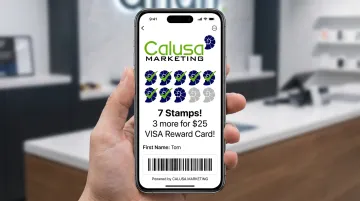
Small retailers don't need a points engine to build loyalty. A digital "buy 9, get the 10th free" punch card, the kind coffee shops like Caffè Nero have used for years, proves the mechanic scales down as easily as it scales up.
Modern digital punch cards deliver enterprise-style engagement without enterprise overhead:
- Live directly in a customer's phone wallet, no app required
- Launch in days rather than months
- Skip complex POS or CRM integrations entirely
Calusa Marketing's Digital Loyalty Card follows this exact model, giving retailers a simple loyalty program without connecting it to existing systems.
Measuring Loyalty Program Success: Key Metrics to Track
A loyalty program without measurement is just a cost center. Track these five numbers to see if yours is actually working:
- Repeat purchase rate: the percentage of customers who buy more than once; a flat or declining rate signals the program isn't changing behavior
- Reward redemption rate: how many earned rewards actually get used; low redemption usually means rewards aren't compelling or the rules are confusing
- Average order value (AOV): whether program members spend more per transaction than shoppers who aren't enrolled
- Customer lifetime value (CLV): total revenue a customer generates over the full relationship, showing whether the program pays for itself
- Member vs. non-member retention rate: comparing how long enrolled customers stay active versus those outside the program, which isolates the program's real contribution
Review these numbers quarterly. Programs that looked strong at launch can lose relevance fast as expectations shift and competitors improve their own offers. Retailers who keep programs performing revisit these metrics every quarter instead of checking them once after launch.
Overcoming Common Retail Loyalty Challenges
Three obstacles come up again and again when retailers try to build loyalty, and each has a practical fix.
Price competition and deal-seeking customers. Most shoppers today are cost-conscious and deal-driven, making price alone a losing battle. Compete instead on what's harder to copy: personalized service, exclusive access, and experiences a discount code can't replicate.
Limited data and internal bandwidth. Many retail teams don't have the staff to build and manage a reward platform on top of running the store.
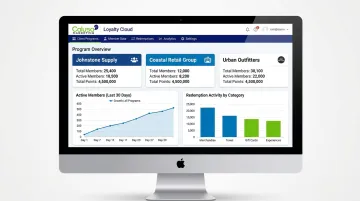
Partnering with an experienced incentive marketing firm solves this without adding headcount. Calusa Marketing, for example, manages more than 1,000 loyalty and reward programs with a 99% client retention rate. Its ready-to-deploy, cloud-based platform includes white-glove fulfillment support, so retailers get a working program without added IT integration work.
Program fatigue. Customers join far more programs than they actively use. Keep earn-and-redeem rules simple and communicate them consistently. If a customer has to think hard about how points convert to rewards, they'll disengage before ever redeeming one.
Frequently Asked Questions
What is customer loyalty in retail?
Customer loyalty in retail is repeat, trust-based purchasing behavior driven by satisfaction, perceived value, and emotional connection to a brand. It goes beyond a single transaction — loyal customers keep choosing you even when a cheaper option exists.
What are the 5 stages of customer loyalty?
The five stages are awareness, engagement/consideration, purchase/conversion, retention, and advocacy. Customers move from discovering a brand to becoming vocal promoters who refer others and leave positive reviews.
What are some examples of customer loyalty?
Examples include points-based programs like Starbucks Rewards, tiered programs like Sephora's Beauty Insider, and simple small-business mechanics like a digital "buy 9, get one free" punch card. All three prove loyalty tactics scale to any retailer size.
What's the difference between customer loyalty and customer retention?
Retention measures whether customers keep coming back; loyalty explains why. A customer can be retained by convenience or lack of alternatives without ever feeling loyal, while true loyalty reflects genuine preference and trust.
How do I start a customer loyalty program for my retail store?
Start by defining the behavior you want to encourage, then choose a program type and tracking platform that fits your customers and budget. Many retailers partner with an incentive marketing firm to handle platform setup and fulfillment from day one.
What is the ROI of a retail customer loyalty program?
ROI comes from higher repeat purchase rates, stronger average order value, and improved customer lifetime value compared to non-members. Track those metrics against program costs to see the real return over time.