That gap matters. A poorly structured commission plan can quietly encourage reps to sandbag deals. A confusing loyalty program can sit unused. Incentive mechanism design is the discipline that fixes this: it's rooted in economics and game theory, and it's about building rules and rewards so self-interested people naturally choose behaviors that also serve the organization's goals.
This guide breaks the theory down into a practical framework for building sales, loyalty, and retention programs that actually work.
Key Takeaways
- Incentive mechanism design aligns self-interest with organizational goals, even when effort isn't observable
- Effective mechanisms balance incentive compatibility, participation constraints, and information asymmetry
- Used across sales compensation, loyalty programs, employee recognition, and distributor incentives
- Overly complex rules and misaligned metrics undermine participation and invite gaming
What Is Incentive Mechanism Design?
Mechanism design is sometimes called "reverse game theory." Traditional game theory studies an existing system and predicts how players will behave. Mechanism design flips that: you start with the outcome you want and work backward to build rules that produce it, even without knowing what participants privately want or how hard they're truly working.
This isn't a fringe idea. The 2007 Nobel Memorial Prize in Economic Sciences was awarded jointly to Leonid Hurwicz, Eric Maskin, and Roger Myerson "for having laid the foundations of mechanism design theory." Their work built on earlier research by William Vickrey and James Mirrlees on auctions and taxation under hidden information.
Mechanism Design vs. Incentive Design
These terms get used interchangeably, but they're not identical:
- Mechanism design refers to the system-level rules — how outcomes and payoffs are structured overall
- Incentive design refers to the specific rewards and triggers offered to participants within that system
In business, the two work together. You need both the architecture and the rewards inside it.
A Business Example
Picture a tiered sales commission structure. If payout rates are calculated so reps earn less per dollar once they cross a quota threshold, some will hold back deals until next quarter rather than get "punished" for overachieving. A well-designed mechanism removes that penalty entirely, so hitting or exceeding the goal is simply the smartest move available.
That's incentive compatibility in plain terms: a mechanism is incentive-compatible when honest effort and desired behavior are each participant's most personally rewarding option. No temptation to game it, because gaming it doesn't pay better than playing straight.
Core Principles of Effective Incentive Mechanism Design
Building a mechanism that holds up under real-world pressure means accounting for a handful of interlocking principles.
Structural Principles
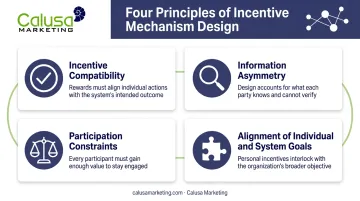
- Incentive compatibility: Structure rewards so self-interest leads naturally to the outcome you want. A sales tier that avoids punishing reps for exceeding quota removes the incentive to sandbag.
- Information asymmetry: You rarely know a customer's true loyalty potential or an employee's true effort level upfront. Mechanisms need to work despite that hidden-information problem, not assume perfect visibility.
- Participation constraints: Rewards must beat a participant's "outside options," or they simply won't opt in. If a competitor's loyalty program is more generous, yours needs a reason to compete beyond just existing.
- Alignment of individual and system goals: This is the essence of incentive-centered design: blending what participants want with what the organization needs so both sides genuinely benefit.
Human and Data Factors
Two more principles round this out:
- Verification and feedback loops: You need reliable tracking to confirm the desired behavior actually happened, then adjust the reward structure as conditions change.
- Behavioral and psychological motivators: Cash and points aren't the whole story. A 2014 meta-analysis of 183 studies covering 212,468 respondents found intrinsic motivation predicts performance quality, while extrinsic incentives drive performance quantity. The two work together rather than substitute for each other (Cerasoli et al., Psychological Bulletin).
Recognition backs this up in practice. Gallup's longitudinal study of nearly 3,500 US employees found that well-recognized workers were 45% less likely to have changed organizations two years later (Gallup, 2024). That retention gap turns recognition into a measurable business lever.
Types of Incentive Mechanisms in Business Practice
Mechanism design shows up across nearly every corner of a business. Here's where it matters most:
- Sales incentive programs: Tiered commissions, SPIFFs, and quota-based bonuses built to motivate teams without inviting deal manipulation
- Customer loyalty and rewards programs: Point systems and digital punch cards that keep redemption simple enough to drive repeat spend
- Employee recognition and retention programs: Point-based recognition and milestone rewards that reduce turnover
- Channel and distributor incentive programs: Rebate structures and travel rewards that motivate partner performance in industries like HVAC and electrical distribution
- Referral and advocacy programs: Rewards structured so the payoff clearly outweighs the effort of referring someone
How Calusa Marketing's Clients Put These Mechanisms to Work
Calusa Marketing's client work illustrates several of these mechanisms in action. Johnstone Supply and Baker Distributing (Watsco) both run points-based loyalty programs that tie earned points directly to online orders. This keeps distributor behavior easy to track and easy to reward.
Midstate Tire's dealer program ties points to purchases and account growth, layering a tiered earning model on top of routine buying activity.
On the employee side, call center operators Alorica and Inktel use structured rewards programs to drive agent recruitment, retention, and KPI achievement. The same design logic applies whether the "customer" is a shopper or a staff member.
Media companies like iHeart Media and Audacy take a similar approach with travel incentives, motivating advertisers toward incremental spend. This shows how travel-based mechanisms extend well beyond consumer loyalty.
How to Design an Effective Incentive Program
Step-by-Step Framework
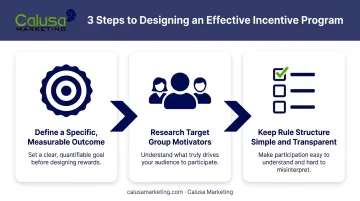
- Define a specific, measurable outcome: Increased average order value, reduced attrition, more qualified referrals. Vague goals produce vague mechanisms.
- Research what actually motivates your target group: Cash, travel, recognition, or some mix, before you lock in reward types.
- Keep the rule structure simple and transparent: Participants should be able to calculate, in seconds, how their actions translate into rewards.
Common Mistakes to Avoid
Even well-intentioned programs fail when they trip over these:
- Overcomplicating the mechanism: Participants who can't easily calculate their rewards disengage. A 2016 survey of 246 organizations found 71% used three or fewer sales-performance measures for this reason (SHRM survey on sales compensation simplicity).
- Rewarding the wrong metric: This invites gaming instead of genuine improvement. Delaying deals or fabricating customers to hit thresholds, a tactic known as sandbagging, is estimated to shave 4-6% off revenue (HBR, 2025).
- Underestimating fulfillment burden: Delayed payouts erode trust in the program fast, even when the underlying design is sound.
Why Partner with an Incentive Marketing Expert
Sound mechanism design is only half the battle. Executing it in-house means ongoing data tracking, reward fulfillment logistics, and customer support infrastructure — resources many internal teams simply don't have room for.
This is where a dedicated partner earns its keep. Calusa Marketing operates a cloud-based SaaS reward platform that requires no integration and no app download, paired with white-glove fulfillment and 7-day customer support. That combination lets businesses apply the mechanism design principles covered above without building the operational machinery themselves.
In practice, that support looks like this:
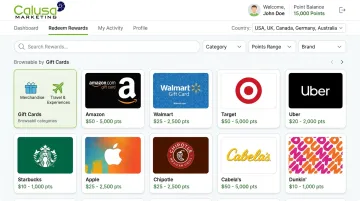
- The platform gives clients access to 10 million+ branded reward items across merchandise, gift cards, and travel, with fulfillment to over 100 countries in 20 languages
- Group travel incentives scale from 10 people to 10,000, with Calusa handling every booking, confirmation, and guest need directly
- A "Top Up" option lets participants pay the difference when they're short on points, a small design detail that keeps redemption friction low
None of this matters without a track record. Calusa Marketing currently manages 1,000+ programs serving 500,000+ members, with a 99% client retention rate. That retention reflects mechanisms and fulfillment processes that keep participants engaged long after the first reward is claimed.
Frequently Asked Questions
What is incentive design?
Incentive design is the process of creating specific rewards and triggers meant to motivate a desired behavior. It's narrower than mechanism design, which focuses on the broader rule structure a system runs on.
What is an example of a mechanism design?
A tiered sales commission structure built so reps have no reason to hold back deals near a quota threshold is a classic example. Sealed-bid auctions and loyalty point systems work the same way — honest participation is simply the best available strategy.
What is the difference between incentive design and mechanism design?
Mechanism design refers to the overall rule structure of a system: how outcomes and payoffs get determined. Incentive design refers to the specific rewards used within that structure to trigger behavior.
Why is incentive mechanism design important for businesses?
It ensures reward programs actually change behavior in the intended direction instead of being gamed, ignored, or misunderstood. Without deliberate design, incentives often produce the opposite of what leaders intended.
What is incentive compatibility?
Incentive compatibility means a mechanism is designed so participants' own best interest aligns with truthful, desired behavior. When a system is incentive-compatible, gaming it simply isn't worth the effort.
How do you measure the success of an incentive mechanism?
Track participation rate, behavior change against the target objective, and retention or repeat engagement over time. A mechanism that drives one-time compliance but no lasting change hasn't really succeeded.