Introduction
Picture two teams tackling the same quarterly targets. One shows up early, swaps ideas in the hallway, and treats deadlines like personal wins.
The other clocks in, does the minimum, and counts down to Friday. Same market, same resources, wildly different results.
That gap comes down to motivation, not personality, and it shows up directly on the balance sheet.
Many leaders still file motivation under "nice to have," a soft HR topic separate from hard numbers like revenue or churn. That assumption is expensive. More than 9 in 10 professionals say they'd trade a portion of future earnings for more meaningful work, an average of 23% of lifetime pay. This data proves motivation is a core business driver, not a fringe benefit.
This article breaks down how motivation moves the needle on productivity, profit, and retention, what actually fuels it, and which strategies deliver results without draining your budget or your HR team's time.
Key Takeaways
- Motivated teams show measurably higher productivity, profitability, and retention than disengaged ones
- Intrinsic motivators (purpose, growth, autonomy) and extrinsic rewards (pay, recognition) succeed only together, not alone
- Structured recognition and incentive programs scale motivation across large, distributed teams
- Reliable measurement blends employee sentiment surveys with hard data like turnover and absenteeism
What Is Employee Motivation?
Employee motivation is the combination of internal and external forces that shape how much effort people put in, where they direct that effort, and how long they sustain it toward organizational goals.
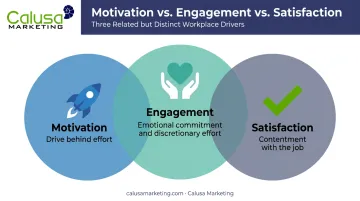
It's related to, but distinct from, engagement and satisfaction. Motivation is the drive behind action. Engagement is the emotional commitment that produces discretionary effort. Satisfaction is simply how content someone feels with their job. You can be satisfied and still not motivated to go above and beyond.
Intrinsic Motivation
Intrinsic motivation comes from within. It's the pull toward work that feels meaningful, challenging, or personally rewarding, independent of any external payoff.
Common examples:
- A developer who loses track of time solving a tough bug
- Nurses who feel personal ownership over patient outcomes
- Technicians who take pride in mastering a new product line
This isn't a fringe preference. In McKinsey's 2020 survey of 1,021 U.S. workers, 70% said work largely defines their sense of purpose, yet only 18% felt their job gave them as much purpose as they wanted. That gap between desire and reality is where motivation drains out of an organization.
Extrinsic Motivation
Extrinsic motivation comes from outside rewards: pay, bonuses, promotions, recognition, job security. It's fast and effective for short-term pushes: think end-of-quarter sales contests or hitting a launch deadline.
The catch: extrinsic rewards alone lose power over time. Pay someone more and motivation spikes briefly, then resets to baseline. Pair extrinsic incentives with intrinsic drivers like purpose and growth, and the effect compounds instead of fading.
The most resilient workforces treat motivation as both, not either-or. A bonus tells someone their results matter. A sense of purpose tells them their work matters. Organizations need both signals running at once.
The Impact of Employee Motivation on Organizational Performance
Motivation isn't a feel-good metric buried in an annual engagement report. It shows up directly in performance numbers, from sales figures to customer churn. Here's where the effect is most measurable:
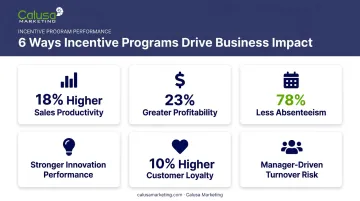
- Higher productivity and work quality. Motivated employees do more with the same hours and take on responsibility without waiting to be asked. Gallup's meta-analysis of 183,000+ business units and 3.3 million employees found top-quartile engagement teams post 18% higher sales productivity than bottom-quartile teams.
- Greater profitability. The same Gallup analysis found top-quartile units are 23% more profitable than bottom-quartile units, as motivated employees waste less time and make fewer costly errors.
- Reduced turnover and absenteeism. Top-quartile units see 78% less absenteeism, per Gallup, and turnover typically costs 0.5 to 2 times an employee's annual salary, meaning $30,000 to $120,000 for a $60,000 role.
- Increased innovation and creativity. A 2019 study of 90 knowledge workers found intrinsic motivation correlates strongly with self-reported innovation performance, while psychological safety, a byproduct of trust and motivation, boosts creative risk-taking.
- Stronger customer satisfaction and brand reputation. Gallup's data shows highly engaged units see 10% higher customer loyalty scores, as invested employees pass that energy directly to customers, acting as unpaid brand ambassadors.
- Better manager-employee relationships. Motivation and leadership quality are closely linked: Gallup found roughly 1 in 2 employees have left a job specifically to get away from a manager.
Key Drivers That Fuel Employee Motivation
Motivation doesn't happen by accident. It's built, or broken, by specific, controllable factors inside the workplace.
- Clarity of expectations and purpose. Vague goals breed anxiety, not effort. When employees know exactly what success looks like and why it matters, commitment follows naturally.
- Recognition and appreciation. Being acknowledged triggers a real psychological response. A SHRM and Workhuman survey of 738 HR professionals found 84% say recognition boosts employee engagement.
- Growth and career advancement. Training, mentorship, and a visible path upward keep ambitious employees invested. Pew Research found 63% of 2021 job quitters cited limited advancement as a reason, and 37% called it a major factor.
- Autonomy and trust. Control over how work gets done fuels ownership. The SCARF model (Status, Certainty, Autonomy, Relatedness, Fairness) identifies autonomy as one of five core drivers behind approach or avoidance behavior at work.
- Sense of belonging and inclusive culture. Belonging isn't a nice extra. Qualtrics found 91% of employees who felt they belonged were engaged, compared with just 20% of those who didn't, a 71-point swing tied to one factor.
- Work-life balance and well-being. Burned-out employees don't go the extra mile — they just survive the day. Qualtrics found 63% of employees with good work-life balance go above and beyond, versus 29% with poor balance.
Proven Strategies to Boost Employee Motivation
Knowing what drives motivation is only half the equation. Here's how organizations turn that insight into practice.
Build structured recognition and incentive programs. Ad hoc "great job" comments fade fast. Structured, consistent recognition tied to specific milestones, delivered through a system that scales, sustains motivation across hundreds or thousands of employees.
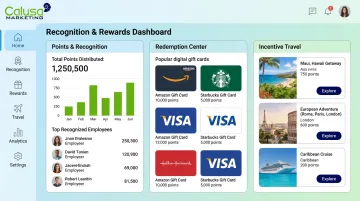
This is where technology-based platforms earn their keep. Calusa Marketing's cloud-based reward system lets companies launch points-based recognition, digital gift cards, merchandise rewards, or incentive travel without building anything from scratch or looping in IT. Most programs deploy in about a week, since there's no app to download and nothing to integrate.
Clients such as Alorica and Inktel use this model to support agent recruitment, retention, and KPI achievement, tying recognition directly to measurable workforce results.
Additional strategies worth building into any motivation plan:
- Offer professional development and clear career paths. Training, mentorships, and transparent promotion criteria fuel intrinsic motivation by showing employees where they're headed, not just what they're doing today.
- Enable flexible work arrangements. Letting employees choose hybrid or remote schedules gives them genuine control over their calendars and daily routines.
- Strengthen communication and feedback loops. Regular one-on-ones and pulse surveys keep motivation visible instead of guessed at, so problems surface while they're still small.
- Empower employees through strengths-based assignments. Matching tasks to individual strengths, and giving people latitude in how they execute, turns compliance into genuine investment.
- Invest in supportive leadership and manager training. Leadership style is one of the biggest motivation levers in any organization. Training managers to build trust reduces the exact turnover risk covered earlier.
How to Measure Employee Motivation
Numbers and instinct both matter here. Relying on either alone leaves blind spots.
- Use structured surveys and pulse checks. Annual engagement surveys establish a baseline, while short, frequent pulse surveys catch shifts in real time. Gallup's Q12 framework is a widely used starting point.
- Track performance and HR KPIs. Watch turnover rate (especially voluntary turnover), absenteeism rate, internal promotion and mobility rate, and time-to-productivity for new hires.
- Combine data with qualitative observation. Surveys and KPIs show what's happening, while manager conversations and informal check-ins reveal why, together painting a complete picture of motivation on the ground.
Frequently Asked Questions
What is the difference between employee motivation and employee engagement?
Motivation is the internal and external drive behind effort and behavior. Engagement is the emotional commitment and discretionary effort that follows from it. They're complementary, but not the same thing.
How does employee motivation affect productivity?
Motivated employees work more efficiently, take on more responsibility, and sustain higher-quality output over time. That combination directly boosts organizational productivity, as Gallup's engagement research consistently shows.
What are the main types of employee motivation?
Intrinsic motivation comes from purpose, growth, and autonomy. Extrinsic motivation comes from tangible rewards like pay, bonuses, gift cards, or recognition programs. Lasting results require addressing both, not just one.
How can employers measure employee motivation?
Combine structured surveys and pulse checks with HR KPIs like turnover, absenteeism, and internal promotion rates. Add manager observation to fill in the "why" behind the numbers.
What role does recognition play in motivating employees?
Recognition is one of the most powerful, cost-effective motivators available. Delivered consistently, it builds trust, morale, and retention, which is why 84% of HR professionals in one SHRM survey linked it directly to engagement.
What are quick, low-cost ways to boost employee motivation?
Verbal recognition, clear goal-setting, flexible scheduling, and regular feedback all require minimal budget but drive meaningful motivation gains. Small, consistent actions often outperform occasional big gestures.