Introduction
Two employees sit three cubicles apart. Same job title, same training, same tools. One consistently delivers, chases new accounts, and stays late without being asked. The other does the bare minimum and watches the clock.
Ability isn't the difference, and neither is opportunity. The missing variable is motivation.
This gap shows up across entire workforces, not just individual desks. Gallup found that only 31% of U.S. employees were engaged in 2024, tying the lowest annual figure recorded in a decade. That means most workers are showing up without full investment in their work.
Organizational behavior (OB) researchers have spent decades explaining why some employees bring full effort and others coast. This guide breaks down what motivation means in OB, the psychological theories behind it, the factors that shape it, and strategies managers can use this week.
Let's start with the basics.
Key Takeaways
- Motivation reflects the intensity, direction, and persistence of effort toward a goal.
- Intrinsic (internal) and extrinsic (external) drivers both shape behavior; strong programs use both.
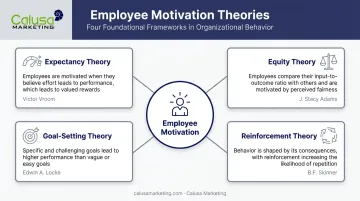
- Expectancy, Equity, Goal-Setting, and Reinforcement Theory explain why tactics land differently.
- Individual traits, job design, and culture interact, so there's no universal motivation fix.
- Structured recognition and incentive programs turn theory into measurable retention and revenue gains.
What Is Motivation in Organizational Behavior?
In OB terms, motivation is the set of psychological forces that determine the direction, intensity, and persistence of a person's effort toward organizational goals.
- Direction: where the effort goes
- Intensity: how hard someone pushes
- Persistence: whether they keep pushing when things get difficult
Researchers have long framed workplace performance as an interaction of three components. An early model described performance as a product of capacity, willingness, and opportunity, a concept most managers know today in its shorthand form: Performance = Ability × Motivation × Opportunity.
That formula matters because it isolates the one lever managers can move fastest. Hiring changes ability. Removing roadblocks changes opportunity. Motivation is the variable that shifts week to week, based largely on how a manager engages with their team.
Here's the part easy to miss: motivation isn't a fixed trait. What drove someone to over-deliver in January might mean nothing by June. A promotion, a frustrating manager change, a new baby at home, any of it can reset what a person values. Treating motivation as "set it and forget it" is one of the most common mistakes in people management.
Intrinsic vs. Extrinsic Motivation
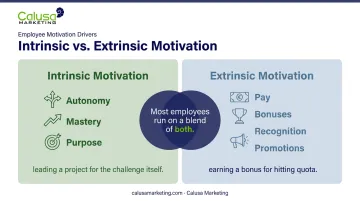
Intrinsic motivation comes from within: autonomy, mastery, and purpose. Picture an employee who volunteers to lead a cross-functional project not for a bonus, but because solving the problem itself is satisfying.
Extrinsic motivation comes from outside the task: pay, bonuses, recognition, promotions. It's straightforward and often necessary, but it carries a known risk. When a tangible reward is added on top of a task someone already found interesting, it can sometimes dull their original enthusiasm for it, an effect researchers call overjustification.
Most employees run on a blend of both. The best-designed programs don't try to replace intrinsic drive with a bigger paycheck. They use extrinsic rewards to reinforce the behaviors intrinsic motivation already points toward.
Key Theories of Motivation in Organizational Behavior
No single theory fully explains why one employee pushes harder than another. Decades of OB research have produced several frameworks that work together, each illuminating a different piece of the puzzle.
Expectancy Theory
Victor Vroom's model breaks motivation into three linked judgments:
- Expectancy: the belief that effort will actually lead to the required performance level
- Instrumentality: the belief that hitting that performance will produce a specific reward
- Valence: how much the individual actually wants that reward
Because these three multiply rather than add, a weak link anywhere collapses the whole chain. Consider a sales incentive tied to a stretch quota. If reps doubt the quota is achievable, distrust the payout, or simply don't want the reward, the incentive fails no matter how generous it looks on paper.
Equity Theory & Organizational Justice
Employees constantly, if unconsciously, compare their input-to-output ratio against a coworker's. When someone perceives that balance as unfair, tension follows, and that tension often shows up as reduced effort, quiet disengagement, or turnover.
Organizational justice research splits fairness perceptions into three categories:
- Distributive justice: is the outcome itself fair?
- Procedural justice: was the process used to reach that outcome fair?
- Interactional justice: were people treated respectfully and given a clear explanation along the way?
A raise that's fair in amount but delivered without explanation, or announced unevenly across a team, can trigger the same disengagement as an unfair paycheck.
Goal-Setting Theory
Decades of research from Locke and Latham found that specific, difficult goals consistently outperform vague "do your best" targets, provided the employee accepts the goal and gets feedback on progress.
That said, goal-setting isn't foolproof. Overprescribed or poorly designed goals can narrow focus onto a single metric, encourage unhealthy internal competition, or push people toward shortcuts that look good on a dashboard but hurt the business. A goal without guardrails quickly becomes a liability instead of a driver of performance.
Reinforcement Theory
Skinner's operant conditioning framework treats behavior as a product of its consequences. Four mechanisms shape recurring workplace behavior:
- Positive reinforcement: adding something valued after good behavior, like a shoutout in a team meeting
- Negative reinforcement: removing something unpleasant after good behavior, like lifting a reporting requirement once accuracy improves
- Punishment: adding something unwanted, or removing something valued, to reduce bad behavior
- Extinction: withholding the reward that used to reinforce a behavior, letting it fade out
In practice, consistent public recognition of a desired behavior, such as a rep hitting call quality targets, tends to increase how often that behavior shows up across the whole team. The effect isn't limited to the person being recognized.
Factors That Influence Employee Motivation
Theories explain the mechanics; this section covers what actually moves the needle day to day. Three categories interact constantly: the individual, the job itself, and the organization surrounding both.
Individual Factors
Personality shapes how someone responds to identical management styles. Employees with an internal locus of control believe their own actions drive outcomes and tend to respond well to autonomy and stretch assignments. Those with a more external locus, who attribute results to luck or circumstance, often need tighter feedback loops to stay engaged.
Autonomy itself can shift someone toward a more internal locus over time. Give people real ownership, and their mindset can change to match it.
Career stage and background matter too. Recent workforce research shows that among remote-capable employees, only 23% of Gen Z workers preferred fully remote work, compared with 35% of every older generation, with Gen Z leaning more toward hybrid arrangements.
That's a preference difference, not proof of weaker loyalty, but it means a one-size-fits-all flexibility policy lands differently across a multigenerational team.
Job and Work Design Factors
The Hackman-Oldham Job Characteristics Model identifies five dimensions that make work motivating:
- Skill variety
- Task identity
- Task significance
- Autonomy
- Feedback
In the original formula, autonomy and feedback act as multipliers rather than simple additions. A job rich in variety and meaning can still fall flat if employees have no control over how they do the work and no sense of how they're performing.
Organizational Factors
Culture, leadership trust, and perceived equity operate at scale, reinforcing or undermining everything above. At top-ranked small and medium workplaces studied by Great Place to Work:
- 86% of employees said they received a fair share of company profits
- 93% said promotions were awarded fairly
- 91% said managers avoided favoritism
Culture isn't a soft add-on. It's the environment that decides whether individual and job-level motivators actually take hold. Recognition and incentive programs that are seen as fair and consistently applied reinforce this sense of equity, keeping motivation compounding across teams.
Why Motivation Matters: The Business Case
Motivation isn't just an HR concern. It shows up directly on the balance sheet.
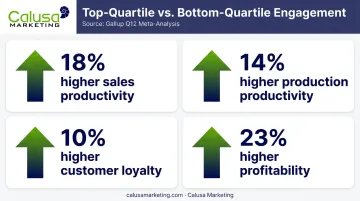
Gallup's 11th Q12 meta-analysis, covering more than 3.3 million employees across 183,000-plus business units, found that top-quartile engagement units outperform bottom-quartile units by wide margins:
- 18% higher sales productivity
- 14% higher production productivity
- 10% higher customer loyalty and engagement
- 23% higher profitability
Retention tells a similar story. Great Place to Work's analysis of 1.3 million employee responses found that employees who found their work meaningful were 2.7 times more likely to intend to stay.
Replacing an employee can cost 50% to 200% of their annual salary, depending on seniority. Keeping motivated people in their seats is far cheaper than restarting the hiring process.
The pattern holds up: motivated employees sell more, produce more, stay longer, and make customers more loyal. Those outcomes translate directly into revenue.
Practical Strategies to Strengthen Motivation in the Workplace
Theory only helps if it changes what happens Monday morning. Here's how to put these frameworks to work.
Pair goal-setting with regular check-ins. Specific, difficult goals only work if they stay specific. A quarterly goal set in January and never revisited quietly becomes irrelevant by March. Weekly or biweekly one-on-ones keep goals accepted, adjusted, and tied to real feedback, exactly what Goal-Setting Theory calls for.
Build recognition into daily workflows. Reinforcement Theory shows that behavior repeats when it's rewarded. Small, frequent gestures reinforce exactly the behaviors a manager wants to see more of:
- Public praise in a team channel
- A milestone bonus at the 90-day mark
- A shoutout in a sales meeting
These cost little to implement but compound over time.
Use structured incentive programs to scale extrinsic motivation. One-off gestures work for a moment; structured programs work for years. This is where a partner like Calusa Marketing fits in.
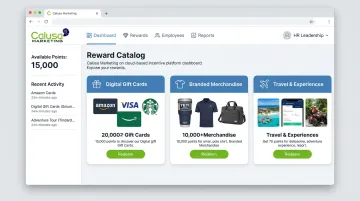
Companies can deploy a cloud-based platform instead of building reward infrastructure in-house. The platform typically covers:
- Digital gift cards, with 100+ options available
- Branded merchandise fulfillment
- Incentive travel booking and logistics
No app download or systems integration project is required for HR or sales leadership to manage it.
Calusa's work with distributors like Baker Distributing shows the model in practice. The program ties points to a specific behavior, online ordering, rather than a vague "do better" ask. Once live, the platform runs on its own.
Audit perceived equity on a regular schedule. Equity Theory predicts that unfair comparisons drain motivation fast. Benchmark pay against market data annually. Publish promotion criteria so employees know what's actually being evaluated. A transparent process prevents the quiet resentment that shows up as disengagement long before anyone files a complaint.
None of these tactics work in isolation. A recognition program without fair pay underneath it just highlights the inequity. A generous incentive tied to an impossible goal fails Expectancy Theory before it starts.
If you want to explore what a structured program could look like for your team, Calusa Marketing's team works through program design based on the specific behavior you're trying to drive, not a generic template.
Frequently Asked Questions
What is motivation in organizational behavior?
Motivation in OB is the intensity, direction, and persistence of effort an employee applies toward a goal. It's one of three factors, alongside ability and opportunity, that determine performance.
What are the main theories of motivation in the workplace?
The most widely applied frameworks are Expectancy Theory, Equity Theory, Goal-Setting Theory, and Reinforcement Theory. Each explains a different piece of why certain approaches motivate some employees and not others.
What is the difference between intrinsic and extrinsic motivation?
Intrinsic motivation comes from within, driven by autonomy, mastery, or purpose. Extrinsic motivation comes from external rewards like pay, bonuses, or recognition, and most employees respond to a blend of both.
How do you measure employee motivation?
Common methods include regular one-on-one check-ins, engagement surveys, and tracking performance and retention metrics over time. No single measure tells the full story, so most organizations combine several.
Why is motivation important for organizational success?
Motivated employees drive higher productivity, stronger retention, and better customer-facing outcomes like loyalty and profitability. Gallup's research ties top-quartile engagement to double-digit gains across all three.
What are some effective employee motivation strategies?
Effective strategies include specific goal-setting paired with regular check-ins, consistent recognition, and equitable pay and promotion practices. Structured incentive and reward platforms, like those Calusa Marketing builds for clients, turn these strategies into consistent, day-to-day motivation programs.