
Project managers spend years training on Gantt charts, budgets, and risk registers. Few ever study why people actually try hard, or why they stop. That blind spot becomes obvious the moment enthusiasm dips mid-project.
The stakes are real. PMI's research found that one in five projects is unsuccessful due to ineffective communication, a people-side breakdown that shares many of the same root causes as low morale and quiet disengagement.
This article covers what motivation actually means in a project context, the psychological frameworks behind it, the warning signs your team is checking out, and the strategies (plus common mistakes) that keep momentum alive through a long project.
Key Takeaways
- Demotivated teams miss deadlines, blow budgets, and cut corners on quality, hurting your triple constraint
- Maslow, Herzberg, McGregor, and McClelland offer proven frameworks for what actually drives each team member
- Personalized, timely recognition beats generic perks or one-size-fits-all rewards, every time
- Top PMs pair tactical structure (plans, milestones, risk management) with genuine motivational leadership
What Is Motivation in Project Management?
Motivation in project management is the internal drive that shapes how much effort, persistence, and care a team member brings to their assigned work. It isn't a fixed personality trait. It shifts by project phase, by task, and by how supported someone feels in the moment.
Two types drive it, and they carry different weight at different times:
- Intrinsic motivation: pride in the work, a sense of purpose, room to grow. This matters most during creative or problem-solving phases.
- Extrinsic motivation: pay, bonuses, formal recognition. This carries more weight during repetitive, high-pressure crunch periods.
A PM who leans on only one type will eventually lose engagement during the phase where the other one is needed most.
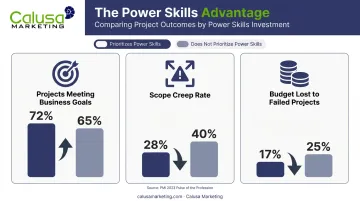
Motivation connects directly to the triple constraint. PMI's 2023 Pulse of the Profession found that organizations prioritizing "power skills" (communication, collaborative leadership, problem-solving) saw 72% of projects meet business goals, versus 65% at organizations that didn't prioritize them.
Scope creep dropped to 28% from 40%, and budget lost on failed projects fell to 17% from 25%, according to PMI's Pulse of the Profession 2023 report. Well-led, engaged teams simply execute better against scope, schedule, and cost.
Why This Matters More With Distributed Teams
Unlike scope or budget, motivation can't be assigned. You can hand someone a task list. You can't hand them enthusiasm. The classic management idea of "achieving results through others" applies directly here: a PM's real job is creating conditions where people choose to bring their best effort.
That's harder than it used to be. Hybrid schedules, cross-functional stakeholders, and contract-based project staff mean PMs can't always read the room the way they could when everyone sat in the same office.
A contractor splitting time across three projects and a full-time employee sitting three desks away don't disengage the same way, and they don't show it the same way either. Informally sensing morale from body language mostly disappeared with distributed work, which is exactly why deliberate frameworks and check-ins matter more now.
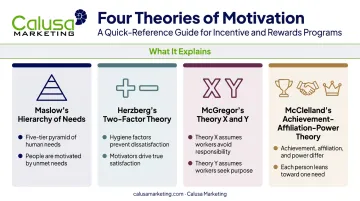
Common Motivation Frameworks in Project Management
Several established psychology theories give project managers diagnostic tools instead of guesswork for reading what drives their team. None predicts outcomes on its own, but together they build a working vocabulary for common team situations.
Maslow's Hierarchy of Needs
Maslow's five-tier model (physiological, safety, belonging, esteem, self-actualization) maps onto a project team surprisingly well:
- Physiological/safety: sustainable workload, job security, safe working conditions
- Belonging: feeling part of the team, not just a name on an assignment list
- Esteem: visible recognition for contributions
- Self-actualization: growth opportunities and stretch responsibilities within the project role
The practical takeaway: address the lower tiers first. Someone worried about their contract ending won't respond to talk of "ownership" or "innovation." Fix the foundation before expecting anyone to build on it.
Herzberg's Two-Factor Theory
Herzberg split workplace factors into two categories. Hygiene factors (salary, policies, working conditions) prevent dissatisfaction but don't create lasting motivation. Motivators (achievement, recognition, meaningful work) drive genuine engagement.
The insight PMs often miss: raising pay or improving conditions removes complaints, but it doesn't manufacture drive. A well-paid, comfortable team member stuck on meaningless busywork will still coast. Real motivation comes from designing work with achievement and recognition built in, not just from removing friction.
McGregor's Theory X and Theory Y
Theory X assumes people need oversight and control to perform. Theory Y assumes they're self-driven and want responsibility. Neither is universally correct; the useful move is flexing your leadership style to the person in front of you.
- A senior engineer who's shipped a dozen similar projects wants autonomy over their piece: that's a Theory Y fit.
- A new hire still learning the domain benefits from structured check-ins and clearer guardrails: closer to Theory X support.
Apply the same style to both, and you'll waste the senior person's experience while leaving the newer one adrift.
McClelland's Achievement, Affiliation & Power Theory
McClelland's model sorts people by which need dominates:
- Achievers want challenging, measurable stretch goals
- Affiliators want collaborative, team-based roles
- Power-driven individuals want ownership and leadership responsibility
Matching assignments to these patterns, rather than assuming everyone wants the same thing, is often the fastest way to get more from the same team without adding headcount.
Signs Your Project Team's Motivation Is Slipping
Motivation problems rarely announce themselves. They show up as small behavior shifts that are easy to explain away individually.
Watch for:
- Missed or late-to-join meetings that didn't used to be an issue
- Declining quality in deliverables from someone who used to be meticulous
- Reduced voluntary communication: no more flagging risks early, no more sharing ideas
- Rising interpersonal friction, or its opposite: withdrawal and going quiet
Quiet quitting is the harder version to catch. It isn't complaining or conflict; it's doing exactly what's assigned and nothing more, with no outward sign anything is wrong. Gallup's national research found that at least half of U.S. workers fall into this "not engaged" category, and project teams aren't exempt. Because there's no friction to notice, it often goes undetected until a deadline slips.
The fix is a lightweight, recurring pulse-check rather than an annual survey:
- Short 1:1 check-ins at each milestone, focused on "how are you doing," not status updates
- Brief anonymous pulse surveys (three to five questions) tied to project phases
- Treating sudden silence as a signal, especially from someone who used to speak up often
Catch it here, and you fix a morale dip; catch it three weeks later, and you're fixing a missed deadline instead.
Best Practices & Strategies to Motivate Your Project Team
Knowing the frameworks is diagnostic. Here's what to actually do with that knowledge.
Ask, don't assume. Hold an informal 1:1 with each team member early, before problems start. Ask what they actually want from this project: career growth, flexibility, recognition, or straightforward compensation. One motivational approach applied to a whole team ignores that people want genuinely different things.
Involve the team in planning. Let team members contribute to the work breakdown structure and estimates instead of handing them a finished plan. People commit more fully to goals when they understand the reasoning behind them, and participation builds that shared understanding.
Set shared, visible milestones. Break long projects into checkpoints tied to personal objectives, not just project phases. Visible progress, even a simple shared tracker, builds the momentum that carries a team through a slow middle stretch.
Personalize recognition and rewards. Generic praise falls flat because people value different things. This is where structured incentive platforms earn their keep.
Firms like Calusa Marketing run configurable digital reward programs spanning gift cards, merchandise catalogs stocked with millions of branded items, and full incentive travel. A PM can recognize a top performer with something personal instead of a generic shout-out at a status meeting.
Reward scale can match the achievement, from an individual travel package after a big delivery to group travel or transferable hotel and cruise certificates for a full-team milestone. None of it requires building a rewards program from scratch.
Foster open communication and psychological safety. Team members need to feel safe raising concerns before they become problems. Build peer relationships deliberately, not just PM-to-team ones, so motivation survives a leadership change or a mid-project rotation.
Balance Motivation With Tactical Structure
Motivation without a plan is just enthusiasm with nowhere to go. The PMs who get the best results pair these practices with disciplined execution: clear schedules, risk plans, and quality checkpoints that give momentum somewhere to land.
Alan Mulally's Ford turnaround is the textbook case. He paired a single unifying vision, "One Ford," with a weekly Business Plan Review built on shared, transparent performance data. The vision gave people a reason to care. The weekly review gave that motivation a structure to act inside. Neither alone would have turned the company around.
Common Motivation Mistakes Project Managers Make
Even well-intentioned PMs fall into predictable traps.
Common mistakes include:
- Assuming money is the primary motivator for everyone. Non-monetary factors, such as autonomy, growth, and meaningful work, often matter just as much; a PM who only reaches for bonuses misses most of the toolkit.
- Treating all team members identically. Motivational drivers differ by individual, experience, and role, so the senior developer and the new hire need different approaches from you.
- Waiting until problems surface to invest in motivation. A pizza party after a rough sprint rarely undoes damage already done; proactive, continuous engagement costs far less over time.
Frequently Asked Questions
What is motivation in project management?
It's the internal drive that determines how much effort, persistence, and quality a team member brings to their project tasks. It fluctuates by phase and directly influences whether projects hit scope, schedule, and budget targets.
What are common motivation frameworks in project management?
The four most cited are Maslow's Hierarchy of Needs, Herzberg's Two-Factor Theory, McGregor's Theory X and Theory Y, and McClelland's Achievement, Affiliation, and Power framework. Each offers a different lens on what drives individual team members.
How do you keep a project team motivated during a long project?
Break the timeline into shared, visible milestones, hold regular 1:1 check-ins, and personalize recognition instead of relying on generic praise. Consistency across the full project matters more than any single gesture.
What is the difference between motivation and morale in project management?
Motivation is an individual's internal drive to put in effort on their tasks. Morale is the collective mood or sentiment of the team as a whole, shaped by how motivated (or demotivated) individuals feel together.
Can incentive or reward programs improve project team motivation?
Yes, when personalized appropriately. Structured recognition programs reinforce intrinsic motivators like achievement and growth rather than replacing them, so tailored rewards consistently outperform one-size-fits-all perks.
What role does a project manager play in team motivation?
A PM can't force motivation, since it's internal to each person. What they can do is create the conditions for it: involvement in planning, timely recognition, and open communication that lets people bring their best effort.