Yet most businesses still pour their budgets into PPC and social ads, chasing clicks from strangers who've never heard of them. Customer acquisition costs keep climbing, and conversion rates on cold traffic keep shrinking.
A well-built brand referral bonus program flips that equation. It turns your existing customers into your most credible sales force, and it typically costs far less than traditional advertising to acquire a new buyer.
This article covers what makes a referral program actually work: the core components, seven strategies to boost participation and ROI, and the metrics that tell you whether it's paying off.
Key Takeaways
- Referred customers show lower churn and higher lifetime value than customers acquired through ads.
- A strong program needs four things: clear goals, a two-sided incentive, simple rules, and frictionless sharing.
- Promotion, timing, and closing the loop on rewards matter as much as the incentive itself.
- Track participation rate, share rate, conversion rate, and cost per acquisition to spot funnel breaks.
Why a Brand Referral Bonus Program is a Growth Superpower
Lower Acquisition Costs, Higher-Value Customers
Paid advertising charges you for attention, whether or not that attention converts. A referral bonus only pays out when a real transaction happens. That structure alone makes referral programs one of the more predictable line items in a marketing budget.
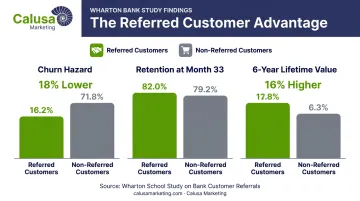
The data on referred customer value backs this up. A study published in the Journal of Marketing tracked 5,181 referred customers against 4,633 non-referred customers at a German bank over 33 months. The Wharton-led research found:
- 18% lower churn hazard among referred customers
- 82.0% retention at month 33, versus 79.2% for non-referred customers
- 16% higher estimated lifetime value over six years
That's one industry study, not a universal guarantee, but the pattern makes intuitive sense once you understand why it happens.
The Trust Transfer Effect
A referral doesn't arrive cold; it arrives pre-vetted by someone the recipient already trusts. That's a fundamentally different starting point than an ad interrupting someone's scroll.
This "trust transfer" means referred leads typically walk into the relationship with fewer objections and less price sensitivity, the same way you'd trust a friend's restaurant recommendation over a random ad. They've already heard the pitch from a friend, not a marketer.
Turning Customers Into Advocates
There's a second-order benefit too: the act of referring can strengthen the referrer's own relationship with your brand. Once someone puts their name behind a recommendation, they have a reason to stay engaged and see it through. Rewarding that behavior (whether through cash, credit, or public recognition) reinforces loyalty on both sides of the transaction.
The Anatomy of a High-Performing Referral Program
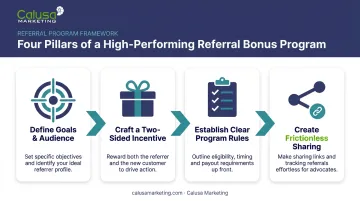
A referral bonus program isn't just "give people a discount code and hope." The programs that actually move revenue share four structural elements.
Defining Your Goals and Target Audience
Before you touch reward amounts or software, decide what success looks like. Is the goal:
- Lead generation for a B2B sales pipeline?
- Direct sales for a B2C storefront?
- Brand awareness in a new market?
Each goal shapes everything downstream, from who you target to how you measure results. A B2B distributor chasing qualified leads needs a very different program than a retailer chasing checkout conversions.
Crafting an Irresistible Two-Sided Incentive
The strongest programs reward both sides of the transaction. The referrer gets something for their effort; the new customer gets a welcome offer that removes friction from trying the brand.
Research from impact.com's 2024 review of more than 120 B2B and B2C referral programs found that over 78% used a double-sided structure.
Reward types vary widely depending on audience and margin:
- Cash bonuses or account credit
- Percentage discounts on future purchases
- Store credit or gift cards
- Branded merchandise
- Travel incentives for high-value referrals
At Calusa Marketing, clients structure these incentives through an ANY-Card gift card catalog with 100+ retail options, a merchandise platform with more than 10 million branded items, or tiered travel certificates for top-performing referrers. The right format depends on your audience, not a generic template.
Establishing Clear and Simple Program Rules
Ambiguity kills participation. Spell out:
- Who is eligible to refer (all customers, or only certain tiers?)
- What counts as a successful referral (a completed purchase, a signed contract, a booked appointment)
- Whether there's a cap on total rewards per person
The qualifying action should match your business model. A home improvement company might reward a completed in-home estimate, while a subscription business rewards a paid signup. Keep the rule short enough to fit in a sentence.
Creating a Frictionless Sharing Experience
If sharing takes more than a click, most people won't bother. Effective programs rely on unique referral links, personalized codes, and pre-written messages participants can drop straight into a text or email. The fewer steps between "I want to refer a friend" and "done," the higher your participation rate climbs.
7 Actionable Strategies to Maximize Your Referral Program's ROI
Launching a program is step one. Getting people to actually use it requires ongoing effort.
1. Promote the Program Proactively and Continuously
A referral program buried on a footer page gets ignored. Put it in front of customers everywhere they already look:
- Your homepage or a dedicated landing page
- Email signatures across your team
- Post-purchase confirmation screens
- Dedicated campaigns to your best customers
Repetition matters more than clever copy here.
2. Make Your Ask at the Right Moment
Timing beats volume. The best moment to ask for a referral is right after a positive experience, such as a five-star review, a repeat purchase, or a glowing support interaction. Catch customers when their goodwill toward the brand is highest.
3. Equip Your Advocates with the Right Tools
Don't just hand someone a link and walk away. Give top advocates a short referral kit that removes the guesswork of "what do I even say?":
- A one-line company blurb they can copy and paste
- Three or four key selling points
- A handful of shareable images or graphics
4. Gamify the Experience with Tiers and Leaderboards
Adding a competitive layer, such as bronze, silver, and gold reward tiers or a public leaderboard, can motivate your most active referrers to keep going. Platforms like Calusa Marketing's configurable reward system make it simple to automate tier upgrades and leaderboard updates as referral volume grows. Not every program needs this layer, but for audiences that respond to status and recognition, it's worth testing.
5. Personalize the Outreach for B2B Referrals
Automated referral emails rarely work for high-value B2B accounts. Peer referrals are so influential in B2B buying that Harvard Business Review reports 84% of B2B buyers start their purchase process with a referral. That level of influence deserves a personal ask from an account manager, not a mass email blast requesting an introduction to a specific contact.
6. Run Time-Sensitive Referral Campaigns
A flat, always-on reward can fade into the background. Running a "double bonus" month or a seasonal referral contest creates urgency and re-engages participants who'd otherwise forgotten the program exists.
7. Communicate Success and Reinforce Value
Silence kills trust. Send automated updates when a referred friend signs up, and confirm the moment the reward gets issued. This closes the loop and gives referrers confidence to keep referring.
Measuring What Matters: Key Metrics for Referral Program Success
You can't improve what you don't track. Four metrics matter most:
- Participation Rate – the percentage of customers who've signed up as advocates
- Share Rate – the percentage of participants actively sharing their referral links
- Referral Conversion Rate – the percentage of referred leads who become paying customers
- Cost Per Acquisition (CPA) from Referrals – total reward spend divided by new customers acquired
Platforms like Calusa Marketing's SaaS dashboard track all four metrics automatically, so you see the full picture without building custom reports.
These numbers work together to diagnose problems. A high share rate paired with a low conversion rate usually points to friction elsewhere, maybe a confusing landing page, or a welcome offer that isn't compelling enough to seal the deal.
Don't stop at short-term conversion numbers either.
Track the lifetime value of referred customers against non-referred customers. This is the metric that proves whether the program pays for itself over time, not just at the point of sale.
A program can look expensive on a per-acquisition basis and still deliver strong ROI once you factor in retention.
Partner with the Experts to Launch a Seamless Program
Running a referral program well means tracking every conversion, fulfilling every reward, and answering every participant question. That's a real operational lift for a team that's also trying to run the core business.
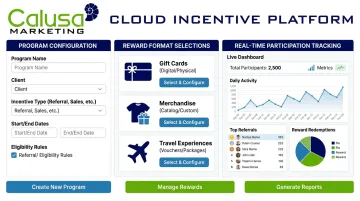
This is where a dedicated incentive partner earns its keep. Calusa Marketing built its cloud-based platform specifically to take that burden off client teams:
- Configurable program setup that requires no integration with your existing POS, CRM, or e-commerce systems
- Multiple reward formats, from ANY-Card digital gift cards and CM Rewards merchandise to individual and group incentive travel
- Fast deployment, with programs going live in under a week
- White-glove customer service, available seven days a week to handle participant questions and reward fulfillment directly
Since 2015, Calusa Marketing has managed more than 1,000 incentive programs for over 500,000 members, holding a 99% client retention rate along the way. That track record comes from letting clients focus on their core operations while the fulfillment, tracking, and support run in the background.
Frequently Asked Questions
What is a brand referral bonus?
A brand referral bonus is a reward system that incentivizes existing customers to recommend a company's products or services to their network. It typically pays out once the referred contact completes a defined action, like a purchase.
What is a typical brand referral bonus?
It varies by industry, but most programs pair a cash bonus, discount, or gift card for the referrer with a welcome offer for the new customer. Reward value typically scales with average order size or contract value.
How do you track referrals accurately?
Most programs rely on unique referral links, personalized discount codes, or dedicated software platforms that automatically attribute new signups or purchases back to the correct referrer.
Can referral programs work for B2B companies?
Yes, and often quite well. B2B programs tend to use higher-value rewards and more personalized, human-led outreach, since B2B buying decisions are heavily influenced by peer recommendations.
How do you prevent referral program fraud?
Common safeguards include requiring a completed purchase before releasing any reward, monitoring for self-referrals or duplicate accounts, and setting clear terms and conditions that cap reward amounts per participant.