Introduction
In April 2025, TikTok launched something called the Specialized Rewards Program, an invite-only bonus layer for creators making standout content in niches like Film & TV and Sports.
The timing wasn't random.
Meta had spent months courting TikTok's top talent with cash bonuses and content deals, and TikTok needed a way to keep its best creators from jumping ship.
But here's where things get confusing. Search "specialized rewards program" and you'll find TikTok headlines mixed with generic loyalty marketing content. Is this a TikTok-only feature, or a business strategy any company can use?
It's both. TikTok's SRP is a real, current example of a much older incentive tactic. This guide breaks down what a specialized rewards program actually is, walks through TikTok's version as a case study, and shows how businesses of any size can apply the same logic to retain their best customers, distributors, or sales reps.
Key Takeaways
- Specialized rewards programs add invite-only incentives for your top-tier customers or creators.
- TikTok's SRP offers bonus payouts up to $7,500 per video across four content niches.
- Segmented incentives can lift margins by 2 to 4 percentage points over generic offers, according to McKinsey.
- Any business can build a similar tiered structure without major tech investment.
What Is a Specialized Rewards Program?
A specialized rewards program is a targeted incentive layer. Instead of offering the same reward to every participant, it singles out a specific behavior, performance tier, or content category and pays that group extra for excelling.
This is different from a standard loyalty program. A typical rewards program is open enrollment: anyone who signs up gets points for purchases. A specialized program sits on top of that baseline and adds an exclusive tier for the people who matter most to your bottom line.
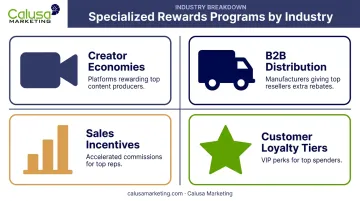
You'll find this pattern across several industries:
- Creator economies: platforms rewarding top content producers in specific niches
- B2B distribution: manufacturers giving top-tier resellers extra rebates or bonuses
- Sales incentive programs: companies paying accelerated commissions to top-quartile reps
- Customer loyalty tiers: retailers offering VIP perks to their highest-spending customers
Eligibility Is Data-Driven, Not Open Enrollment
Here's the key distinction: qualification isn't self-selected. It's based on measurable metrics: engagement rate, sales volume, content quality scores, or purchase frequency. You don't sign up for the specialized tier. You earn your way into it.
The business logic is simple. Rather than spreading incentive budget evenly across every participant, you concentrate it on the people generating the most value. That's the entire point of segmenting rewards in the first place: retaining and motivating your highest performers instead of treating everyone the same.
TikTok's Specialized Rewards Program: A Real-World Case Study
TikTok's official creator account announced the Specialized Rewards Program on April 8, 2025. Social Media Today reported the launch the next day, describing it as an invite-only expansion designed to reward "stand-out, high-quality content" in select categories.
The Four Targeted Niches
TikTok didn't open this to every creator. It focused on four specific content areas:
- Film & TV
- Auto
- Learning
- Sports
Creators in these categories who already meet a quality bar receive an invitation, not an application form. TikTok's landing page for the program is even coded as page_type=invitation, and invitees are told to scan a QR code to join. There's no public button to apply.
Why Now? Competitive Pressure From Meta
The timing tracks closely with pressure from a rival platform. Just months earlier, TechCrunch reported that Meta was aggressively courting TikTok creators with cash bonuses, content deals, and free verification, capitalizing on the uncertainty surrounding TikTok's U.S. status under the divest-or-ban law. Some invitation-only deals reportedly reached as much as $50,000 per month for select creators posting Reels.
TikTok's SRP is a direct response: give top creators a reason to stay by rewarding them beyond the standard formula.
How SRP Stacks on the Base Program
SRP doesn't replace TikTok's existing Creator Rewards Program. It adds to it. The base program already pays creators using a formula weighing four factors:
| Factor | What It Measures |
|---|---|
| Originality | Distinctive creator perspective and original production |
| Play duration | Watch time and completion behavior |
| Search value | Whether content answers what people are actively searching for |
| Audience engagement | Likes, comments, shares, and other response signals |
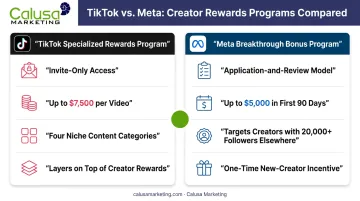
To even qualify for the base Creator Rewards Program, a creator generally needs at least 10,000 followers, 100,000 video views in the trailing 30 days, and an account in good standing. SRP invitees are told they can earn up to $7,500 per video on top of those base earnings, though TikTok hasn't published the exact scoring formula behind who gets invited.
Instagram runs a similar play. Meta's Breakthrough Bonus Program offered new creators up to $5,000 in their first 90 days, targeting applicants with an existing following on another platform (Meta says it prioritizes review for those with 20,000+ followers elsewhere). The mechanics differ: Meta uses an application-and-review model rather than pure invitation. Yet the underlying strategy is identical: segment your incentive budget toward the creators worth fighting for.
Why Specialized Rewards Programs Matter Beyond Social Media
TikTok's problem isn't unique to social platforms. Every business with high-value customers, top distributors, or star sales reps faces the same retention math: your best performers have options, and a flat, one-size-fits-all reward doesn't give them a reason to stay loyal.
Segmenting rewards toward your top tier typically outperforms spreading the budget evenly. McKinsey found that companies running personalized loyalty and pricing pilots — including deeper discounts and offers for higher loyalty tiers — saw a 2 to 4 percentage-point improvement in margin compared to standard mass offers.
That's the same principle behind Calusa Marketing's work with distributor clients across HVAC, electrical, and plumbing supply chains. Top-tier resellers who move the most volume respond to different incentives than the general dealer base, and treating them identically often leaves value on the table.
The takeaway holds across industries:
- Flat rewards programs are easy to administer but rarely move your best people
- A specialized tier costs more per participant, but it targets the people generating outsized value
- The ROI is measurable, showing up directly in margin, retention, and engagement data
Key Elements of an Effective Specialized Rewards Program
Building a specialized tier isn't complicated, but skipping any of these elements tends to undercut the results.
1. Clear, measurable eligibility criteria. Define exactly what earns someone a spot: a sales threshold, an engagement score, a volume tier. Vague qualification breeds resentment among people who feel they should have made the cut.
2. A layered structure, not a replacement. The specialized tier should sit on top of your existing program, the same way TikTok's SRP adds to Creator Rewards rather than replacing it. Nobody should lose baseline benefits by qualifying for more.
3. Flexible reward types. Not everyone wants the same thing. A strong program offers options such as:
- Cash or gift cards for immediate gratification
- Travel incentives for milestone achievements
- Points-based merchandise for ongoing engagement
4. A platform that tracks activity without heavy lift. Manually tracking who qualifies for a specialized tier across hundreds or thousands of participants isn't sustainable. You need a system that flags qualifying activity automatically, similar to how Calusa Marketing's cloud-based SaaS platforms operate without requiring app downloads or IT integration on your end.
5. Transparent communication. Explain how the program works, how people get selected, and what they can expect. Creator forums are already full of debates over TikTok's opaque SRP invite criteria, and that kind of confusion erodes trust fast.
6. Ongoing data review. Qualifying criteria shouldn't be static. Revisit thresholds regularly so the tier stays both achievable and motivating as performance benchmarks shift.
How to Launch a Specialized Rewards Program for Your Business
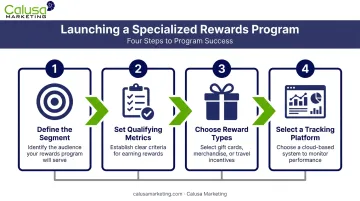
Getting started doesn't require rebuilding your entire incentive structure. The basic setup follows four steps:
- Define the segment you want to reward: top sales reps, high-volume distributors, or your most engaged customers.
- Set qualifying metrics: a specific sales number, engagement threshold, or purchase frequency.
- Choose reward types that fit your audience: gift cards, travel, merchandise, or a combination.
- Select a platform to track qualifying activity and manage fulfillment without manual spreadsheets.
That last step is usually where businesses get stuck. Building custom tracking and redemption infrastructure in-house takes time and engineering resources most companies don't have lying around.
This is where working with an incentive marketing firm changes the math. Calusa Marketing runs its programs on a cloud-based SaaS platform that requires no integration and no app download, whether for the client or the program members. That means a specialized tier can go live in weeks, not quarters.
Once it's running, the operational burden of managing a tiered program shifts off your team:
- White-glove fulfillment handles travel bookings, gift card delivery, and redemption logistics directly with participants
- Seven-day customer support covers questions from top performers, so your internal staff isn't fielding calls about a missing gift card
- Flexible reward layering lets you stack digital punch cards, ANY-Card gift cards, or travel certificates on top of an existing program, mirroring the same layered approach TikTok uses with SRP on Creator Rewards
Whether you're rewarding a top-tier reseller network or your highest-spending customers, the structure works the same way: baseline program stays intact, specialized tier sits on top.
Best Practices for Managing a Specialized Rewards Program
Launching the program is the easy part. Keeping it effective takes ongoing attention.
- Revisit qualifying criteria regularly. Thresholds that felt aggressive last year may now be too easy, or too hard, to hit. Adjust so the tier stays both attainable and worth chasing.
- Communicate the rules clearly. TikTok's SRP has drawn confusion on creator forums because the invite criteria aren't fully public — spell out exactly how your program selects and rewards participants to avoid the same problem.
- Track performance data continuously. Confirm the tier is driving the retention or sales lift you expected, and refine reward levels as the data comes in.
A specialized tier that never evolves stops being special. The businesses that get the most out of this strategy treat it as a living program, not a one-time launch.
Frequently Asked Questions
What is a specialized rewards program?
A specialized rewards program is a targeted incentive layer that rewards a specific segment's behavior or performance (think top creators, top sellers, top customers) on top of any baseline rewards program already in place.
How does TikTok's Specialized Rewards Program work?
It's an invite-only program that adds extra rewards, up to $7,500 per video, for high-quality content in select niches like Film/TV, Auto, Learning, and Sports. It layers on top of TikTok's existing Creator Rewards Program.
Who is eligible for TikTok's Specialized Rewards Program?
Eligibility is currently invite-only, based on content quality and engagement in the four covered niches. Check TikTok's Creator Academy for the most current criteria, since TikTok hasn't published a fixed scoring threshold.
What's the difference between a rewards program and a specialized rewards program?
A standard rewards program is open to all participants who enroll. A specialized rewards program targets a defined high-value segment and adds incentives beyond what the general program offers.
Can small and mid-sized businesses build a specialized rewards program?
Yes. Platforms like Calusa Marketing's cloud-based SaaS system make it feasible to launch a tiered incentive program without a major tech investment or long implementation timeline.
How do I get invited to TikTok's Specialized Rewards Program?
There's no application process. TikTok extends invites based on content performance, so creators should focus on originality, engagement, and consistency within the eligible niches.