
In-person gatherings are also making a real comeback. After years of remote and hybrid defaults, teams are craving face-to-face time, and leaders are noticing that thoughtful design matters more than the venue or the swag bag.
This guide covers seven fresh retreat ideas, how to pick the right one for your team, and the mistakes that turn a promising offsite into a wasted budget line.
Key Takeaways
- Retreats work best when tied to one clear purpose: alignment, wellness, innovation, or recognition
- No single format fits every team — goals, budget, and culture should drive the choice
- Structured activities need to be balanced with real free time to avoid retreat fatigue
- Pairing a retreat with recognition or incentive travel extends its impact beyond the trip itself
What Is a Corporate Retreat and Why Does It Matter for Team Offsites?
A corporate retreat is a planned gathering away from the normal workplace, built to strengthen alignment, connection, wellness, or skills. It can be as simple as a single-day local offsite or as involved as a multi-day destination trip with flights, hotel blocks, and group logistics.
The format matters less than the intent behind it.
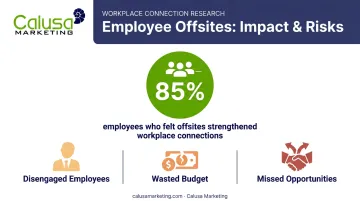
The numbers back up why companies keep investing in these gatherings. A 2025 survey of 2,000 U.S. employees found that 85% said offsites strengthened their connections to coworkers and the organization. That's a self-reported figure, not proof of causation. Still, it lines up with what most people already sense: distributed and hybrid teams need dedicated time together to rebuild the informal networks that remote work erodes.
Without intentional planning, though, retreats can backfire:
- Disengaged employees who see the trip as mandatory "forced fun"
- Wasted budget on activities nobody wanted to do
- A missed chance to actually move the needle on culture or morale
The difference between a retreat people talk about for years and one they tolerate comes down to design, not budget size.
7 Corporate Retreat Ideas for Your Next Team Offsite
Forget generic trust falls and ropes courses for a second. These seven ideas move toward purposeful, memorable experiences built around specific team goals.
Idea 1: The Purpose-Driven Strategic Offsite
What it is: Take vision-setting or strategic planning sessions out of the conference room and into an inspiring, distraction-free setting.
Best for: Leadership teams needing alignment on goals, roadmaps, or major decisions.
Why it works: A change of scenery, paired with built-in unstructured time, tends to produce more candid conversation than another Tuesday-morning meeting ever will. People loosen up outside their usual four walls, and ideas that never make it into a status update suddenly surface over dinner.
Idea 2: The Wellness & Recharge Retreat
What it is: A schedule built around mindfulness, movement, and nature — yoga, guided hikes, meditation — designed to counter burnout.
Best for: Teams showing signs of fatigue or stress, or as an annual reset before a busy quarter.
Why it works: A 2019 field study of 36 urban adults found that spending at least 20 minutes in nature significantly lowered cortisol levels, with the most efficient stress reduction happening between 20 and 30 minutes. That doesn't guarantee a lasting productivity boost from one retreat, but it does support building accessible outdoor time into the agenda instead of a full day indoors.
Idea 3: The Collaborative Problem-Solving Challenge
What it is: Hackathon- or escape-room-style challenges where cross-functional teams solve a real or simulated business problem together.
Best for: Breaking down silos and seeing how people communicate and make decisions under time pressure.
Why it works: Shared accomplishment often reveals natural leaders who never stand out in a normal org chart. Microsoft's global Hackathon, which has involved tens of thousands of employees across dozens of venues, shows how a time-boxed challenge can connect people across departments who'd otherwise never work together.
Idea 4: The Adventure & Trust-Building Retreat
What it is: Physical challenges that require mutual support to complete, such as ropes courses, kayaking, and guided hikes.
Best for: Teams needing to rebuild trust after a reorg, merger, or hybrid transition.
Why it works: Coordinating a physical task with colleagues builds camaraderie in a way that pure conversation often can't replicate. Business research links these shared outdoor challenges to stronger trust and resilience, though there's no solid evidence they work faster than talk-based team building, just that they build it differently.
Idea 5: The Recognition & Incentive Rewards Retreat
What it is: A retreat built specifically to celebrate top performers or milestone achievements, often paired with travel incentives.
Best for: Sales teams, distributors, or customer-facing teams where performance-based recognition drives motivation.
Why it works: Pairing recognition with a memorable travel experience reinforces loyalty in a way a cash bonus rarely matches. Money gets spent and forgotten. A trip becomes a story people tell for years, and that story keeps them motivated for the next cycle.
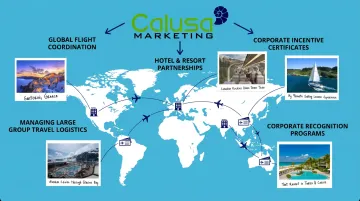
This is where the logistics can get complicated fast: flights, hotel blocks, guest questions, upgrades. Companies running President's Club trips or top-performer travel often bring in an incentive marketing partner to handle it. Calusa Marketing, for example, manages group travel bookings for anywhere from 10 to 10,000 people, along with fully transferable hotel and cruise certificates, so program leaders can focus on the impact of the recognition instead of chasing confirmation emails.
Idea 6: The Skills & Creativity Workshop Retreat
What it is: Hands-on workshops, such as cooking classes, art sessions, or storytelling coaching, that teach a new skill together.
Best for: Creative or marketing teams wanting fresh thinking outside the usual brainstorm format.
Why it works: A 2025 arts-based workplace study involving 16 staff members across five workshops reported stronger communication, stress awareness, and self-confidence after just a few sessions. Making something together, then talking about it, builds a different kind of trust than sitting in a meeting ever could.
Idea 7: The Community & Volunteer Impact Retreat
What it is: Dedicate a day, or the whole retreat, to a local volunteer project, such as a park cleanup or community build day.
Best for: Companies wanting to reinforce shared purpose beyond profit.
Why it works: Deloitte's 2017 survey of 1,000 employed U.S. adults found that 89% believed employer-sponsored volunteering creates a better work environment, and 74% linked it to a stronger sense of purpose. It's also one of the lower-cost options on this list, which makes it easy to combine with another idea, like pairing a morning volunteer project with an afternoon of unstructured time.
How to Choose the Right Retreat Idea for Your Team
The "right" idea depends on your team's specific goals and constraints, not whatever format is trending on LinkedIn this quarter. Before booking anything, work through these factors:
- Primary goal: alignment, wellness, innovation, recognition, or bonding. Pick one and design around it.
- Team size, location, and travel budget: a 12-person leadership team has very different logistics than a 200-person sales force.
- Group energy and physical ability: make sure the activity works for everyone, not just the most athletic third of the room.
- Time available: a half-day local offsite calls for a tighter format than a multi-day destination trip.
- Recognition component: decide upfront whether the retreat should include an incentive-travel element tied to specific achievements, since that changes the planning timeline significantly.
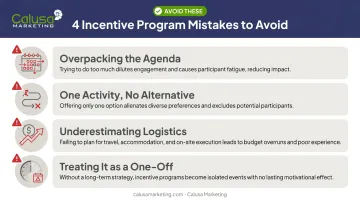
Mistakes to Avoid When Planning Your Retreat
Even a well-intentioned retreat can fall flat if the planning skips a few basics.
- Overpacking the agenda. Wall-to-wall mandatory activities leave no room for the organic conversations that make retreats memorable.
- One activity, no alternative. Choosing a single activity type without an inclusive option excludes people with different abilities or interests.
- Underestimating logistics. Travel costs and coordination time balloon fast for larger groups or multi-destination trips — factor in lost work time, not just the venue invoice.
- Treating it as a one-off. A retreat disconnected from any ongoing recognition or engagement strategy fades from memory within weeks.
Conclusion
A great retreat is intentional. It's tied to a clear purpose and built around what your team actually needs, not what tradition says you're supposed to do. The seven ideas above are starting points, and many teams find the best results by combining two, like a strategic offsite with a volunteer afternoon, or an adventure challenge with a recognition dinner.
Whatever combination you choose, pairing it with a broader recognition or incentive travel strategy, like the ones Calusa Marketing builds for clients, keeps the impact going long after everyone's back at their desks.
Frequently Asked Questions
What should you do at a corporate retreat?
A well-balanced retreat mixes goal-setting sessions, team activities, shared meals, and genuine free time. The schedule should feel structured enough to be productive but loose enough to breathe.
How long should a corporate retreat last?
Single-day formats work well for local offsites, while destination retreats typically run 2 to 5 days depending on goals and budget. Capping out-of-office retreats at two days keeps work backlog manageable while still giving teams time to reset.
How do you make a corporate retreat feel inclusive for everyone?
Offer optional or alternative activities for different physical abilities and personality types. Avoid making alcohol-centric events mandatory, and give people a way to opt out of high-intensity activities without feeling singled out.
What's the difference between a corporate retreat and a regular team-building event?
Retreats are typically longer, often involve travel, and blend business objectives with connection or wellness goals. A team-building event is usually a single afternoon activity focused on one narrow objective.
How much should a company budget for a corporate retreat?
Costs vary widely by location, duration, and group size. Research per-person benchmarks for your industry and region, and prioritize a meaningful experience over lavish extras that don't serve the retreat's actual purpose.
How can incentive travel rewards be incorporated into a retreat?
Layer a recognition component on top of the retreat by rewarding top performers with travel incentives tied to specific achievements. A partner like Calusa Marketing can manage the booking, confirmations, and guest support so the recognition lands without added logistical strain on your team.