
Introduction
Your team feels disconnected. Meetings run long, engagement scores are slipping, and someone on the leadership team just said the word "retreat" out loud.
Staff retreats have become the go-to fix for burnout and disconnection, and there's data behind the trend. 85% of employees who attended a recent corporate offsite said it strengthened their connection to their organization, according to a 2025 Emburse survey of 2,000 U.S. employees.
But here's the catch: a retreat planned in a hurry, on a shoestring budget, with forced trust falls, doesn't build connection. It builds resentment.
This guide walks through everything you need to plan a retreat that works:
- The exact steps to plan a retreat that delivers results
- Creative activity ideas that go beyond the usual icebreakers
- Realistic cost and duration ranges for different retreat formats
- Common mistakes that turn a good idea into a wasted budget line
Key Takeaways
- One goal—bonding, strategy, recognition, or skill-building—should drive every planning decision
- Overpacked agendas exhaust employees; too little structure wastes the budget
- Duration and spend should match your objective, not the other way around
- Personalized activities beat generic icebreakers for real engagement
- Communication before and after the retreat determines if the momentum sticks
How to Plan a Staff Retreat: Step-by-Step Guide
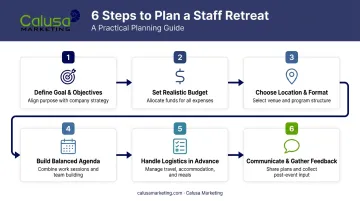
Step 1: Define Your Retreat's Goal and Objectives
Before booking anything, answer one question: what problem or opportunity is driving this retreat?
- Team bonding after a merger, reorg, or stretch of remote work
- Strategic planning for the next quarter or fiscal year
- Employee recognition to celebrate wins and reset morale
- Skill-building to close gaps in leadership or technical ability
Vague goals turn into "a paid vacation for the bosses" in employees' minds. Specific objectives justify the time and cost.
Write the goal down. Share it with a small planning committee early, so every downstream decision (venue, agenda, activities) stays anchored to it instead of drifting toward whatever sounds fun.
Step 2: Set a Realistic Budget
Split your budget across categories before you book a single vendor:
- Venue and meeting space
- Travel and transportation
- Lodging
- Food and beverage, including dietary accommodations
- Activities and facilitators
- Contingency fund
Get quotes from multiple vendors for lodging, catering, and transportation, and negotiate group rates wherever volume gives you the upper hand. Set aside 10-15% as a contingency fund for the inevitable surprise, whether that's a weather delay or a last-minute headcount change.
Step 3: Choose the Right Location and Format
In-person retreats build the informal, face-to-face connection that distributed teams often miss. Virtual or hybrid formats make sense when travel budgets are tight or your staff is spread across time zones.
When scouting an in-person venue, prioritize:
- Accessibility for all attendees, including mobility, dietary, and sensory needs
- On-site meeting and recreation space so you're not shuttling groups around
- A genuine wow factor, whether that's a lakeside deck or a rooftop with a skyline view
A forgettable venue produces forgettable engagement. It's often worth stretching the budget here rather than trimming it.
Step 4: Build a Balanced Agenda
Map out your retreat hour by hour, but don't fill every slot. SHRM's guidance on executive retreats is blunt on this point: avoid over-planning and leave enough time for genuine, unscheduled exchange.
A few tactics that help:
- Use a "parking lot" for tangents during strategy sessions, so good ideas get captured without derailing the schedule
- Build in white space between sessions for informal conversation, not just bathroom breaks
- Tie every activity back to Step 1's goal instead of filling time because it "seemed fun"
Step 5: Handle Logistics Well in Advance
This is where most retreats fall apart. Transportation, lodging, AV equipment, flip charts, catering with dietary options: none of it is glamorous, but all of it needs to be locked down weeks ahead, not days.
For a full staff retreat, coordinating flights, hotel blocks, and ground transportation for dozens or hundreds of people internally can eat up an entire planning team's bandwidth. This is where a dedicated group travel partner earns its keep.
Calusa Marketing, for example, manages group travel programs for anywhere from 10 to 10,000 people, using its buying power to negotiate rates while handling bookings, confirmations, and changes directly with vendors. That frees your internal team from chasing hotel confirmations the week before departure.
Whoever manages logistics should designate one point person and outline a basic emergency plan for the duration of the event.
Step 6: Communicate Early and Gather Feedback
Share dates, agenda, expectations, and attendance or compensation policy as early as possible. Silence before a retreat breeds anxiety; clarity kills it.
- Send a short pre-retreat survey to learn what activities employees actually want
- Run a post-retreat anonymous survey to capture honest feedback
- Debrief with your planning committee while details are still fresh
The retreats that improve year over year are the ones that treat feedback as a required step, not an afterthought.
Creative Staff Retreat Ideas & Activities
Trust falls and rope courses have their place, but they don't fit every team. The strongest retreats mix activity types so different personalities and energy levels all find something that clicks.
Team-Building and Problem-Solving Activities
Escape rooms, scavenger hunts, and design-thinking workshops ask groups to solve a real problem together, not just perform trust exercises. Structured debriefs after these activities matter more than the activity itself. Research reviewed by the American Psychological Association found that well-run team debriefs improve performance by roughly 20-25%.
Wellness and Relaxation Activities
Not every employee wants nonstop socializing. Offer:
- Morning yoga or guided nature walks
- Meditation sessions
- A quiet zone where people can recharge alone
Social and Fun Activities
These build the organic bonding that structured sessions can't manufacture:
- Game nights and group bike rides or hikes
- Local city tours
- Wine or cooking classes
- Bonfires or informal dinners
Recognition and Reward-Based Activities
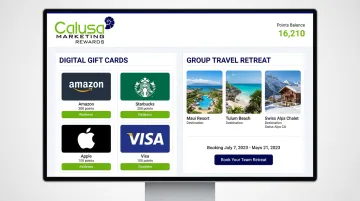
Weave recognition directly into the retreat itself: shout-outs, awards, or a surprise reward moment during dinner. Digital gift cards work well here because they're instant and personal. Calusa Marketing's ANY-Card platform, for instance, offers 100+ digital gift card options covering US and international brands, so recipients pick a reward that actually fits their life.
Beyond gift cards, travel-based incentives extend the retreat's impact past the closing session. Calusa Marketing's group travel programs, which can accommodate up to 10,000 people, give top performers something to look forward to long after the event weekend ends.
Retreat Duration and Cost: What to Expect
Typical Staff Retreat Duration
Most staff retreats run 1 to 5 days, depending on the goal. A single-day "away day" suits a focused workshop or planning session.
Multi-day offsites give room for deeper strategy work or team bonding that a single day can't accommodate. SHRM recommends capping out-of-office retreats around two days to limit time away from personal obligations.
Typical Staff Retreat Costs
Costs scale with group size, destination, and how luxe you go. The main drivers are:
- Venue and meeting space
- Travel and transportation
- Lodging
- Food and beverage
- Facilitators and activities
There's no universal dollar figure that fits every company; a 20-person local day retreat and a 200-person multi-day offsite live in entirely different budget worlds. Working with a group travel or incentive specialist can stretch whatever budget you set, since negotiated group rates and bundled fulfillment often beat piecing bookings together yourself.
Common Mistakes to Avoid When Planning a Staff Retreat
Even well-intentioned retreats can backfire when a few avoidable missteps creep into the planning process. Watch for these common pitfalls:
- Skipping goal-setting. Without a clear "why," the agenda feels like a mandatory chore rather than a purposeful investment
- Overpacking the schedule. Back-to-back sessions with no rest or exploration time leave employees more drained than when they arrived
- Choosing one-size-fits-all activities. Ignoring dietary, physical, or introvert/extrovert differences alienates part of your team before the retreat even starts
- Failing to communicate expectations. Silence around compensation, attendance, or agenda details breeds anxiety and resentment well before day one
Conclusion
A staff retreat succeeds when it starts with a clear goal, a realistic budget, and a location and agenda built around that goal, not the other way around. Creative, varied activities and honest communication are what separate a retreat people talk about for months from one they forget by Monday.
Beyond the event itself, treat feedback and post-retreat follow-through as part of the process, not a box to check. That's what makes the investment pay off long after everyone's back at their desks.
Frequently Asked Questions
What makes a good staff retreat?
A good retreat has one clear objective, a balanced mix of work and downtime, and activities chosen for your team's actual interests rather than generic exercises. Everything else follows from those three pieces.
What activities do you do at a staff retreat?
Activities typically span team-building challenges, wellness sessions, social events, and recognition moments. The right mix depends on whether your goal is bonding, skill-building, or a combination of both.
How long is a staff retreat?
Most staff retreats run between 1 and 5 days. Duration depends mostly on your budget and how far the team needs to travel to get there.
What is the typical cost of a staff retreat?
Costs vary widely based on group size, destination, luxury level, and retreat length. Venue, travel, and catering are consistently the biggest cost drivers, regardless of retreat size.
Do employees get paid to attend a staff retreat?
Under U.S. Department of Labor guidance, mandatory attendance generally counts as compensable work time for nonexempt employees. Most companies compensate staff for retreat attendance, especially when it's required.
How far in advance should you plan a staff retreat?
Start planning at least 2-3 months ahead, longer for larger groups or peak travel seasons. Earlier planning secures better venue and travel rates and gives your team time to prepare.