Telling your team to "upsell more" rarely works on its own. Staff need a reason to care in the moment, not just a directive from a staff meeting. When there's nothing in it for them beyond doing their job, upselling is the first thing that slips during a busy shift.
The fix isn't more scripts or more pressure. It's building fun, low-cost incentives into the day-to-day culture so upselling feels like a game, not a chore.
This guide breaks down 12 creative incentive ideas you can launch this week, plus how to structure, run, and measure a program that actually moves the needle.
Key Takeaways
- Upsell incentives don't need big budgets: leaderboards, spin wheels, and shoutout walls drive real engagement
- Mixing individual and team contests keeps competitive and collaborative staff equally motivated
- Field research links gamified sales training to sales gains of 27% to 36%
- Track average transaction value, participation, and ROI, not just whether the contest ran
Why Motivating Staff to Upsell Matters
Upselling and cross-selling get lumped together, but they're different moves. Salesforce defines upselling as moving a customer toward a pricier version of what they already want, and cross-selling as adding a complementary item alongside it.
In practice, that looks like:
- Suggesting a large size instead of a medium at checkout
- Recommending a premium service tier with added features
- Offering a protection plan or accessory alongside the main purchase
The financial upside is real, even if it's easy to underestimate. A field study covering 2,160 transactions at an Austrian fast-food chain found that a simple employee verbal prompt raised the share of transactions with a side-dish add-on from 61% to 78%, a 17-percentage-point increase that held up across different prompt wordings.
That's one prompt, one extra sentence, moving nearly one in five transactions.
Getting staff to consistently deliver that sentence is the actual challenge. That's where incentives come in, and they don't have to be complicated:
- Cash bonuses for hitting upsell targets (monetary)
- Commission boosts on qualifying transactions (monetary)
- Gift cards as instant, tangible rewards (monetary)
- Public recognition through shoutouts or leaderboards (non-monetary)
- Extra time off for top performers (non-monetary)
- Experience-based rewards like event tickets or team outings (non-monetary)
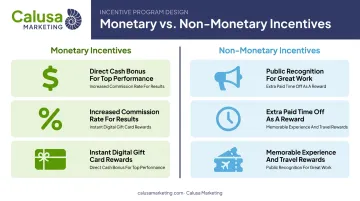
The next section covers 12 ways to mix and match both types.
12 Fun Ways to Motivate Your Staff to Upsell
These ideas work across industries, from retail counters and distributor sales floors to call centers and service desks, and they scale up or down depending on your budget. Start with one or two and build from there.
Leaderboard Contests
Nothing sparks friendly competition like seeing your name climb a ranked list, or slip down one. A visible leaderboard, updated daily or weekly, taps into a basic urge to keep score. Field research on gamified training platforms found sales gains of 27.1% to 35.8% when leaderboards were paired with training and recognition tools across 24 offices of one firm.
A simple structure to try:
- Post a weekly leaderboard tracking upsell count or dollar value per staff member
- Reward the top 3 with fast, small prizes: a gift card, a preferred shift, or first pick on breaks
- Reset weekly so everyone gets a fresh shot at the top
Spin-to-Win Prize Wheel
Hit an upsell threshold during a shift, and staff earn a spin on a prize wheel. That's the whole mechanic, and it works because instant gratification beats a distant quarterly bonus.
Keep the prize tiers cheap and varied:
- Small gift card
- Extra 15-minute break
- $5 cash
- First choice of shift next week
- "Skip a task" pass
Rotate the prizes monthly so the wheel doesn't go stale.
Team vs. Team Sales Battles
Split the floor into two or three small teams instead of pitting individuals against each other. Group competition spreads the pressure around, so one slow day for a quieter team member doesn't tank morale; it just becomes a team stat.
Reward the winning team with something shared, like a group lunch, a half-day off, or first pick of next month's schedule.
Upsell Bingo Board
Give each staff member a bingo card where every square is a different product or service to sell, instead of one single target. This stops staff from fixating on the easiest upsell and ignoring everything else.
Put the harder-to-sell items in the middle squares. That keeps the game running longer and forces staff to practice pitches they'd normally avoid.
Mystery Envelope Spiffs
Slip a few sealed envelopes with cash or reward amounts into the shift, then hand one out at random each time someone lands a successful upsell. Nobody knows what's inside until they open it, and that unpredictability is the point.
This borrows the "surprise and delight" concept retailers use on customers, applied internally. It keeps staff checking in on their own performance shift after shift, since the next upsell might be the one that pays off.
Digital Punch Card & Points Contest
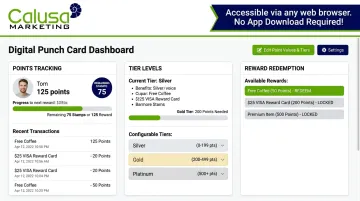
A points-per-upsell system gives staff a running tally they can watch grow, then redeem once they hit a threshold. The usual sticking point is tracking, since managers already have enough to manage without maintaining spreadsheets by hand.
A digital punch card platform that skips the app download and IT setup removes that friction. A basic tier structure might look like:
- 10 points → small reward (coffee gift card)
- 25 points → mid-tier reward (dinner for two)
- 50 points → bigger reward (merchandise or gift card of choice)
Calusa Marketing's cloud-based punch card platform runs on this model, letting managers configure point values and tiers around their own goals rather than forcing a fixed template.
Best-Pitch Role-Play Contest
Have staff prepare and deliver their best upsell pitch in front of peers or a manager, then vote on a winner. It works as a training exercise disguised as a game.
The side benefit matters more than the contest itself: staff build product knowledge and pitch confidence without sitting through a formal training session. They pick up skills through competition rather than a one-way lecture.
Manager vs. Team Challenge
Have a manager publicly commit to beating last month's upsell number, then challenge the team to outsell them. It's a small stunt, but it builds trust, since staff see leadership stepping into the same pressure they face every shift.
Keep the stakes simple: if the team wins, the manager buys treats or covers a task everyone hates. If the manager wins, staff cover it instead.
Countdown Jar Challenge
Every time someone lands a targeted upsell, they drop a token into a jar on the counter. When the jar fills, the team gets a surprise payout, split however feels fair.
Rotate the target item or service monthly. If the jar always tracks the same product, staff tune it out after a few weeks. A fresh target keeps the visual cue meaningful.
Peer Recognition Shoutout Wall
Set up a physical or digital board where top upsellers get called out by name in front of the whole team. Gallup and Workhuman tracked nearly 3,500 employees over two years and found that well-recognized staff were 45% less likely to leave their organization within that window.
The catch: recognition has to feel fair. A wall that always spotlights the same one or two people can backfire. Rotate categories, such as "most improved" or "best save," so more people get a turn.
Milestone Travel & Experience Rewards
Reserve the biggest rewards, a trip, event tickets, or an experience package, for staff who hit larger quarterly or annual upsell milestones. These tiers work because they're aspirational; nobody quits a job two months before their name might land on a trip roster.
The logistics get complicated fast for a manager already stretched thin. Partnering with a fulfillment provider that handles bookings, confirmations, and guest questions keeps this tier realistic instead of aspirational-only. Calusa Marketing manages this exact piece for clients, running group trips for 10 to 10,000 people or individual travel packages, so managers aren't also acting as travel agents.
Surprise & Delight Instant Rewards
Every once in a while, reward a standout performer without warning and outside of a scheduled contest. Unexpected rewards tend to stick in memory longer than a payout everyone saw coming, since the surprise itself carries weight.
A simple example: mail a $25 gift card to a top performer's home with a short thank-you note. No contest, no leaderboard tie-in, just recognition that lands when they least expect it.
Best Practices for Running a Successful Upsell Incentive Program
The best incentive idea falls apart fast if staff can't tell whether it's working, or whether they're winning. A few ground rules keep any program from fizzling out.
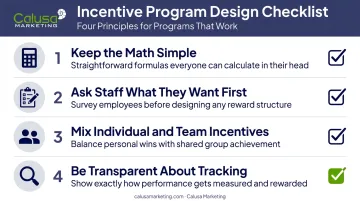
- Keep the math simple. If a staff member can't calculate their potential reward mid-shift, it won't motivate them. Skip complicated multipliers that need a spreadsheet to explain.
- Ask staff what they want before launching. Managers guess wrong about rewards more often than they'd like to admit. A five-minute survey on cash, time off, or merchandise saves you from building an incentive nobody's excited about.
- Mix individual and team incentives. Some staff thrive on personal competition; others check out during a solo grind. Pair a team battle with an individual leaderboard to engage every personality type.
- Be transparent about tracking and payouts. Staff who suspect the numbers are fudged, or that a favorite always wins, disengage quickly. Post results publicly and pay out on schedule, every time.
Measuring the Success of Your Upsell Incentive Program
A fun contest that doesn't move revenue is just a party. Decide upfront how you'll know if the program earned its budget back.
- Average transaction value — Compare basket size before, during, and after the contest for the clearest signal that upsell behavior actually changed.
- Participation and redemption rates — An unchecked leaderboard or unclaimed points mean the mechanic missed the mark, even if a few top performers keep upselling out of habit.
- Program ROI — Add up every cost, prizes, platform fees, staff time, then compare that total against incremental revenue during the contest window.
Together, these numbers tell a fuller story than any single metric on its own. Here's what each one signals on its own:
| Metric | What it tells you |
|---|---|
| Average transaction value | Whether upsell behavior is changing revenue |
| Participation rate | Whether staff are engaging with the contest |
| Redemption rate | Whether rewards feel worth pursuing |
| Program ROI | Whether the incentive pays for itself |
Track these from day one. Retroactive guessing rarely produces numbers anyone trusts.
How an Incentive Partner Like Calusa Marketing Makes It Easier
Running one contest is manageable. Running a leaderboard, a points program, and a quarterly travel incentive all at once, while also doing your actual job, is where most managers hit a wall.
This is where a dedicated incentive marketing partner earns its keep. Instead of building tracking spreadsheets and chasing down who redeemed what, a platform handles the administrative load so you can coach your team instead of managing logistics.
Calusa Marketing runs its digital punch card and points programs on a cloud-based platform with no app download and no IT integration required. Managers configure point values, tiers, and rules around their own goals instead of forcing their team into a fixed template.
For bigger milestone rewards, like the travel incentives mentioned earlier, Calusa's fulfillment team handles the process end to end:
- Booking flights, hotels, and event tickets
- Managing guest questions and upgrade requests
- Resolving issues before, during, and after the trip
- Handling transfers if a winner wants to gift their reward
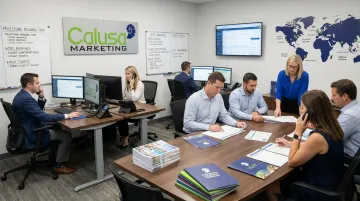
A manager juggling a busy sales floor shouldn't also be a travel agent. Support is available seven days a week, which takes that off a manager's plate entirely.
If you're weighing whether to build an upsell incentive program in-house or bring in a partner, reach out to Calusa Marketing to talk through what fits your team's size and budget.
Frequently Asked Questions
How do you motivate employees to upsell?
A mix of clear goals, achievable incentives, recognition, and light ongoing training keeps staff motivated to upsell consistently. Programs that stay fun and low-pressure tend to outlast ones built purely on quotas.
What are some examples of upselling?
Common examples include offering a larger size at checkout, recommending a premium version of a service, or adding a protection plan to a purchase. Each moves the customer toward a higher-value option than they originally considered.
What are examples of sales incentives?
Typical incentives include cash bonuses, gift cards, public recognition, extra time off, and travel rewards. The strongest programs mix monetary and non-monetary rewards so different personality types stay engaged.
What makes an employee incentive program successful?
Simplicity, transparency, employee input, and consistent tracking are the core success factors. Staff need to trust that the numbers are accurate and that the rules are easy to understand.
How do you measure if an upsell incentive program is working?
Watch average transaction value, participation and redemption rates, and overall program ROI. Comparing pre- and post-contest numbers is the most reliable way to isolate the program's real impact.
Can gamification actually increase upselling results?
Yes. Leaderboards, points, and friendly competition tap into intrinsic motivation and consistently boost sales performance when managers stay actively involved and keep the competition genuine.