Here's the problem most sales leaders run into: they launch a contest, announce a prize, and watch the same top rep win every single time. Everyone else checks out by week two.
This article breaks down what a sales contest actually is, why the format matters more than the prize, the main contest types worth trying, and how to pick (and run) the right one for your team.
Key Takeaways
- A sales contest is a time-bound program designed to change specific behaviors, not just crown a winner
- Tiered and milestone structures keep more reps engaged than winner-take-all formats
- Contest length should match your sales cycle, not an arbitrary calendar quarter
- Rules clarity and real-time tracking matter as much as the prize itself
- Prize strategy should shift based on rep tenure, from gear to cash to travel
What Is a Sales Contest and Why It Matters
A sales contest is a short-term incentive program designed to shift specific selling behaviors during a fixed period. It's not the same as a bonus plan or commission structure. Those reward outcomes over the long haul. A contest rewards a defined action, right now.
Sales management literature generally groups contests into three core categories:
- Individual competition — reps compete head-to-head on a single metric
- Team competition — groups compete collectively, pooling contributions into one score
- Goal-based competition — reps chase milestones rather than an overall ranking
Without structured incentives, sales activity tends to drift. Pipelines stall during slow stretches, call volume dips, and momentum is hard to rebuild once it's lost. A well-timed contest injects urgency exactly when a team needs it.
Here's the part most managers miss: contest success hinges less on the prize than on whether reps believe they can actually win it.
A field-and-lab study on sales contest design found that multi-segment contests, where reps are grouped by ability level, increased total sales by about 5%. Single-segment, winner-take-all formats did not outperform running no contest at all.
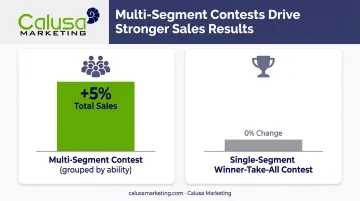
The takeaway is simple. Perceived attainability drives participation. If a rep knows they can't win, they won't try.
Types of Sales Contest Ideas to Boost Team Performance
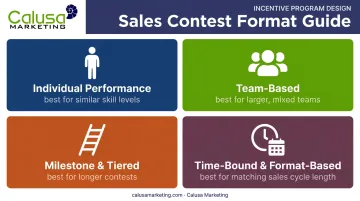
Sales contests aren't one-size-fits-all. The right format depends on your team size, your sales cycle length, and the specific behavior you're trying to drive. Below are four proven structures, along with where each one fits best.
Individual Performance Contests
These rank reps against a single, trackable metric like calls made, demos booked, or deals closed.
Example contest ideas:
- "Top Producer" (most closed deals in the period)
- "Most Improved" (biggest jump from baseline)
- "Highest Close Rate" (best conversion percentage, not just volume)
Individual contests work best when your team has clear, comparable metrics and similar skill levels. They're simple to run and create direct accountability for every rep.
The catch: if one rep dominates every round, mid- and low-performers disengage fast.
Team-Based Contests
Reps split into small groups that compete collectively, with individual contributions rolling up into a team score.
Example contest ideas:
- Department-vs-department sales races
- "Squad Showdown" point tournaments
- Relay-style point accumulation across a shift or week
Team formats shine in collaborative selling environments, larger teams, or when you're onboarding newer reps alongside veterans. Something interesting happens when team scores are on the line: stronger reps start coaching weaker teammates, because the group's outcome depends on it.
The limitation is balance. Stack all your top performers on one team and the rest disengage within days.
Milestone and Tiered Contests
Instead of rewarding only the final winner, these contests pay out at set benchmarks, like 25%, 50%, 75%, and 100% of a target.
Example contest ideas:
- Bronze, silver, gold reward ladders
- First-to-hit-target bonuses layered on top of a main contest
- Punch-card-style challenges where every completed milestone earns something
Tiered structures suit longer contests and teams with mixed experience levels. A rep who falls behind early still has a next tier worth chasing, which keeps effort up through the entire period.
The trade-off: more planning. Tiers need to be clearly communicated, or reps won't know what they're chasing.
Time-Bound and Format-Based Contests
These are built around a specific cadence, matched to how your sales cycle actually moves.
Example contest ideas:
- 1-2 hour "Power Hour" call sprints
- 24-48 hour flash contests
- Month-long tiered challenges
- Quarterly bracket-style tournaments
Short-cycle, high-volume teams do well with weekly or flash formats. Longer B2B sales cycles need monthly or quarterly windows to give the behavior time to produce results. The format's biggest strength is timing: a well-placed flash contest during a slow week can reset momentum almost overnight.
How to Choose the Right Sales Contest for Your Team
Start with the behavior, not the format. Are you trying to boost calls made, close more deals, drive upsells, or improve retention? The goal should dictate the contest structure, never the other way around.
A few factors to weigh before you build one:
- Sales cycle length — short cycles suit weekly or flash contests; longer enterprise cycles need monthly or quarterly windows
- Team composition — mixed-experience teams benefit from tiered or paired formats; similarly skilled teams can run fair individual competitions
- Budget and prize structure — decide upfront whether prizes will be cash, gear, experiences, or a mix based on rep seniority
- Tracking visibility — real-time leaderboards matter. A contest that updates once a week loses momentum fast
Common Mistakes to Avoid
Even well-intentioned contests fail for predictable reasons:
- Designing a contest only the top performer can win — this is the single biggest driver of disengagement. When only one rep can realistically win, the rest disengage entirely, sometimes performing worse than if there were no contest at all
- Leaving scoring criteria vague — unclear rules breed disputes and erode trust in future contests
- Mismatching contest length to sales cycle — a one-week contest for a complex enterprise sale, or a three-month contest for high-volume B2C, both fall flat
- Picking one prize for everyone — a $50 gift card excites a new rep and insults a veteran closer
There's a subtler risk worth watching too. an HBR podcast on incentive design pitfalls points to cases where period-based incentives encouraged reps to delay or shift orders just to hit a threshold, cutting revenue by 4% to 6% in the process. Build in safeguards, like tracking cancellations and order timing, so your contest doesn't undermine the business it's meant to help.
Why the Right Incentives and Prizes Make or Break Your Contest
Prize selection should match the rep and the moment, not a one-size-fits-all budget line. Newer reps tend to respond to branded gear or tech. Veterans want cash. Top performers chase experience-based rewards like travel. Get this wrong and even a well-designed contest structure loses its pull.
For most sales managers, fulfilling the prize causes more headaches than selecting it. Sourcing gift cards, booking travel, tracking redemptions, and fielding "where's my reward" emails pulls time away from coaching and pipeline work.
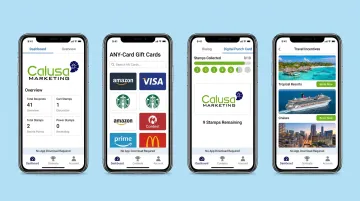
This is where a dedicated incentive partner earns its keep. Calusa Marketing manages the full lifecycle of contest rewards through a cloud-based platform that requires no integration and no app downloads for participants. That includes:
- ANY-Card digital gift cards: a catalog of 100+ retail and restaurant brands plus a VISA cash-alternative option, so winners pick their own reward within budget
- Digital punch cards: milestone tracking delivered straight to a rep's phone wallet for tiered or progress-based contests
- Transferable travel incentives: from solo high-end trips to group experiences, booked and managed end-to-end
Real-world results show how these tools hold up under pressure. Calusa's client work with Hajoca, a program built specifically around sales growth KPIs across more than 800 locations, is a case in point: reward logistics at that scale only work when fulfillment is someone else's job.
Backed by white-glove, seven-day-a-week customer support, the goal is straightforward: keep contest momentum intact instead of stalling it out on a fulfillment delay.
Conclusion
Sales contests move the needle when they're built around a clear goal and a structure reps actually believe they can win. Individual, team, milestone, and time-bound formats each solve a different problem. The work is matching the format to your team and sales cycle, not picking whatever contest ran last quarter.
Once the structure is right, the prize strategy and fulfillment process determine whether engagement holds up for the full contest period. Calusa Marketing handles that side of the equation, from gift card and merchandise rewards to travel incentives, so your team can focus on running the contest instead of chasing down prize logistics.
Frequently Asked Questions
What is a sales contest?
A sales contest is a structured, time-bound incentive program that rewards specific sales behaviors or results. Most are run as individual, team, or goal-based competitions tied to a defined metric.
What are good sales contest ideas?
Strong options include individual leaderboards, team-vs-team races, milestone or tiered ladders, and time-bound formats like flash contests or quarterly tournaments. The best choice depends on your team's makeup and goals.
How do you run a successful sales contest?
Set a clear goal, choose trackable metrics, and communicate rules before launch. Keep standings visible in real time, and reward progress across the whole team, not just the top rep.
How long should a sales contest last?
Duration should match your sales cycle. Short cycles favor weekly or flash contests, mid-length cycles suit monthly formats, and enterprise sales call for quarterly or seasonal contests.
What metrics should a sales contest track?
Contests work best when built on activity reps can control, like calls, demos, or appointments, rather than revenue alone. This matters especially for newer reps who can't yet control every close.
What are the best prizes for a sales contest?
Prizes should match career stage: gear or tech for newer reps, cash for veterans, and travel or experiences for top performers. Tying the reward to the contest's theme adds extra pull.