That gap matters more now than ever. Acquisition costs keep climbing, switching brands has never been easier, and competitors are one click away. Building loyalty isn't a nice-to-have anymore. It's the difference between steady growth and a leaky bucket.
This guide breaks down what actually works: proven retention strategies, how to measure whether they're paying off, and why more businesses are handing rewards program management to specialists like Calusa Marketing instead of building it themselves.
Key Takeaways
- Rewards programs, personalization, and service quality drive most repeat business
- Bad customer service remains a top reason people abandon brands for good
- Customer lifetime value (CLV), repeat purchase rate, and program engagement are the metrics that prove ROI
- Outsourcing rewards management cuts operational strain while strengthening member engagement and retention
Why Customer Loyalty Matters
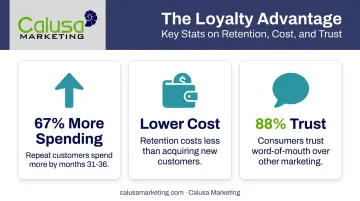
Loyal customers are worth more. They spend more per visit, they shop more often, and they stick around longer. That 67% spending jump identified by Bain & Company didn't happen by accident. It happened because those customers trusted the brand enough to keep coming back.
Retention is also cheaper than acquisition, even if the exact multiplier gets thrown around loosely online. What's certain: replacing the revenue from one departed customer often takes several new ones to make up the difference. Every dollar spent chasing new business is a dollar not spent deepening relationships with people who already buy from you.
Then there's word of mouth. 88% of consumers trust recommendations from people they know more than any other form of marketing, according to Nielsen research on consumer trust. Loyal customers become unpaid sales reps. They tell friends, leave reviews, and defend your brand in comment sections.
Three reasons loyalty pays off:
- Loyal customers spend up to 67% more per visit over time
- Retaining existing customers costs far less than acquiring new ones
- 88% of consumers trust word-of-mouth over any other form of marketing
Core Strategies to Boost Customer Loyalty
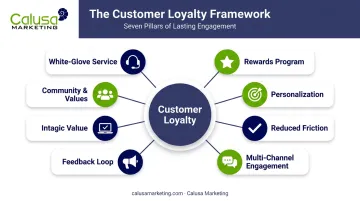
These seven strategies show up again and again in successful loyalty programs across industries. None of them require reinventing your business. They require consistency.
Launch a Structured Rewards & Loyalty Program
Points-based systems, tiered memberships, and digital punch cards all work. The format matters less than the execution. Deloitte found that loyalty program members belong to an average of 8 programs but actively engage with only 5. Enrollment isn't the goal. Active participation is.
Flexible, low-friction formats win. A punch card that lives in a wallet app instead of requiring a separate download removes a barrier most customers won't bother crossing. This is where cloud-based platforms make a real difference: businesses can launch a program without app downloads or IT integration, which is the model Calusa Marketing builds for clients.
Deliver Consistent, White-Glove Customer Service
One bad interaction can undo months of goodwill. PwC's 2025 Customer Experience Survey found that 52% of consumers stopped buying from a brand after a poor product or service experience. That's not a small leak. It's over half your customer base at risk from a single misstep.
Fixing this requires:
- Empowering frontline staff to resolve issues without escalation
- Offering support across phone, email, chat, and social
- Prioritizing speed, since slow resolutions frustrate customers as much as no resolution at all
Personalize the Customer Experience
Generic offers get ignored. Most shoppers now expect brands to remember what they've bought before and tailor recommendations accordingly. Using purchase history to customize emails, offers, and product suggestions turns a transactional relationship into something that feels attentive.
Start small: segment customers by purchase frequency or category preference, then adjust messaging accordingly. You don't need advanced AI to personalize. You need clean data and the willingness to act on it.
Reduce Friction Across the Customer Journey
Map the full journey, including browsing, checkout, onboarding, and returns, and find where customers drop off. A confusing return policy or a clunky checkout can quietly cost you repeat business.
Systems that don't require complex integrations keep both customers and internal teams from getting frustrated. Fewer steps, fewer logins, fewer reasons to abandon a purchase halfway through.
Engage Consistently Across Multiple Channels
Customers now expect a seamless experience whether they're browsing your app, opening an email, or seeing a retargeting ad. Mixing email, SMS, social, and direct mail with a consistent voice and offer structure keeps your brand present without feeling repetitive.
The key word is consistent. Disjointed messaging across channels erodes the trust you're trying to build.
Collect and Act on Customer Feedback
Surveys, reviews, and social listening only matter if you do something with what you learn. Customers notice when feedback disappears into a void. They also notice when it doesn't.
One retailer extended its return window after repeated complaints. The small policy change turned a wave of one-star reviews into public praise within a quarter. Visible action rebuilds trust faster than any apology email.
Build Emotional Connections Through Shared Values and Community
Younger consumers increasingly want to buy from brands that stand for something beyond the product itself. Gen Z, in particular, gravitates toward companies willing to take a position on issues they care about.
Community-building tactics that work:
- Create private social media groups for loyal customers
- Offer member-only events or early access drops
- Launch recognition programs that celebrate top customers publicly
Measuring Customer Loyalty Success
You can't manage what you don't measure. Three metrics tell the real story of whether your loyalty efforts are working.
Customer Lifetime Value (CLV) is the long-term scorecard. It's calculated as annual customer revenue multiplied by relationship length in years, minus acquisition and service costs. CLV tells you whether your retention investment is actually paying off, not just whether customers feel good about your brand.
Repeat Purchase Rate (RPR) is more immediate. It's simply the percentage of customers who buy more than once in a given period. Track it monthly and compare against your own historical baseline. Industry benchmarks vary too widely by category to be useful.
Net Promoter Score (NPS) measures advocacy. Ask customers how likely they are to recommend you on a 0-10 scale, then subtract the percentage of detractors (0-6) from promoters (9-10). Bain, which created the metric, recommends benchmarking against direct competitors rather than obsessing over your internal number alone.
| Metric | What It Measures | How Often to Check |
|---|---|---|
| CLV | Long-term revenue value per customer | Quarterly |
| Repeat Purchase Rate | Actual repeat buying behavior | Monthly |
| NPS | Stated likelihood to recommend | Quarterly |
Don't rely on just one. CLV shows economic value, RPR shows behavior, and NPS shows sentiment — together they give you the full picture.
Why Partnering with an Incentive Marketing Expert Accelerates Loyalty Results
Running a rewards program in-house sounds simple until you're managing fulfillment, tracking redemptions, and fielding support calls on top of your actual job. Most businesses underestimate the operational lift required to keep a loyalty program running smoothly month after month.
This is where a dedicated incentive marketing partner changes the equation. Calusa Marketing operates a cloud-based SaaS platform that requires no integration and no app download — clients launch programs quickly without disrupting existing systems. The platform supports:
- Enables digital punch cards for simple, low-friction repeat-visit rewards
- Offers flexible ANY-Card gift card programs redeemable across major retailers
- Provides fully transferable travel incentives for high-value reward tiers
The track record backs it up: Calusa Marketing has managed over 1,000 programs, serves more than 500,000 program members, and holds a 99% client retention rate. Clients like Baker Distributing and Johnstone Supply rely on Calusa's platform to deepen customer relationships and drive measurable engagement.
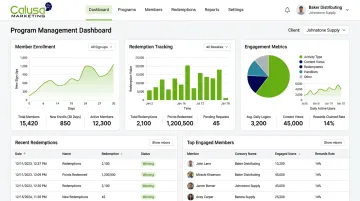
Support runs seven days a week through an in-house, bilingual team. This white-glove service handles redemptions, upgrades, and member questions day-to-day, freeing clients to focus on their core business.
Common Challenges in Building Loyalty
Even well-designed programs run into friction, and three challenges surface repeatedly.
Shifting expectations. Customers want faster service and more meaningful personalization than they did a year ago, with transparency expectations climbing right along with them. Programs that don't evolve alongside these expectations lose relevance fast. Regular feedback loops help catch this before it becomes a retention problem.
Low switching costs. Competitors are always just one tap away, ready to switch. Differentiation now comes down to emotional connection and consistent service quality — not price alone, since price wars rarely produce loyal customers.
Turning one-time buyers into repeat customers. A single purchase doesn't equal a relationship. Targeted follow-ups and a well-timed first-purchase incentive make a strong start, but a clear invite to join a rewards program is often what turns a single sale into a second one.
Frequently Asked Questions
What is the best way to promote customer loyalty?
Combine a well-structured rewards program with consistently great service and personalized engagement. No single tactic works alone — it's the layering of all three that keeps customers coming back.
What are the different types of customer loyalty?
There's behavioral loyalty (repeat purchases regardless of emotion), attitudinal loyalty (genuine brand affinity), and program-driven loyalty (participation tied to points or rewards). Strong brands build all three over time.
How long does it take to build customer loyalty?
Loyalty builds gradually through multiple positive interactions, typically over several months rather than a single transaction. Consistency matters more than any one standout experience.
What's the difference between customer loyalty and customer retention?
Loyalty is the emotional preference customers feel toward your brand. Retention is the measurable outcome: whether they actually keep buying. You can retain customers without true loyalty, but loyalty almost always drives retention.
How much does it cost to implement a customer loyalty program?
Costs vary widely based on program complexity, reward types, and audience size. Working with an experienced incentive marketing partner typically lowers upfront investment and ongoing management overhead compared to building everything in-house.
Can small businesses build customer loyalty without a formal rewards program?
Yes. Personalized service, consistent communication, and genuine community engagement build loyalty even without a points-based system. A formal program simply accelerates and scales what good relationships already do.