The stakes go beyond a single reward decision. Incentive choice affects your program's cost structure, redemption rates, fraud exposure, and whether customers stay loyal long after they've cashed in their reward. Get it wrong, and you're either overpaying for referrals or offering something nobody wants.
Here's why it matters: 88% of global consumers trust recommendations from people they know more than any other marketing channel, according to Nielsen's 2021 research on consumer trust. That trust is already there. Your incentive just needs to activate it.
This guide breaks down the factors that should drive your incentive decision, plus 20+ real-world examples across every major reward category.
Key Takeaways
- Two-sided (give-get) incentives outperform one-sided rewards by removing friction for new customers.
- Ideal incentives depend on profit margins, customer lifetime value, and fulfillment scale.
- Rewards range from cash and store credit to gift cards, loyalty points, and travel experiences.
- The "Rule of 100" balances generosity with profitability when setting reward values.
- Partnering with a fulfillment specialist cuts operational headaches and boosts redemption rates.
What Are Referral Incentives?
Businesses offer referral incentives as rewards to existing customers or employees who successfully bring in a new customer, lead, or hire. Some programs also reward the person being referred, not just the advocate.
There are two core structures:
- One-sided: Only the referring person receives a reward.
- Two-sided: Both the advocate and the new referral receive something of value.
Why Businesses Rely on Referral Incentives
Referred customers aren't just cheaper to acquire. They tend to stick around longer.
A widely cited Journal of Marketing study of a German bank found that referred customers had 16% higher lifetime value over six years than customers acquired through other channels. They were also 18% less likely to churn, based on a Wharton faculty analysis of referral program data. That's a single-industry study, but the pattern shows up consistently across referral marketing.
Referral incentives also flip the acquisition cost model. Instead of paying upfront for ad impressions that may or may not convert, you only pay out when a referral actually succeeds.
This isn't just a retail or ecommerce tactic:
- Employee referral bonuses reward staff for successful hires
- Distributor loyalty rewards incentivize channel partners
- B2B lead-referral programs pay out for qualified introductions
Same core mechanics. Different context.
What to Consider When Choosing the Right Referral Incentives
Choosing an incentive shouldn't be guesswork. Each factor below ties directly to a measurable outcome, whether that's participation rate, cost per acquisition, or redemption rate.
Profit Margins and Incentive Value
Your reward value has to be anchored to product margin and customer lifetime value, not just what feels generous. This is where the Rule of 100 comes in handy: percentage discounts feel bigger on items under $100, while fixed-dollar amounts feel more substantial on items over $100.
KPI impacted: net margin per referral.
A $20 discount on a $40 product feels huge. That same $20 off a $500 purchase barely registers, but a flat $50 credit does.
Customer Lifetime Value and Purchase Frequency
Repeat-purchase businesses should lean toward store credit or points. One-time purchase businesses should favor cash or free products.
Why? A subscription box customer will use store credit on their next order. Someone who bought a mattress once has no reason to hold onto brand-specific credit.
KPI impacted: repeat purchase rate and average order value.
Audience Preferences and Industry Norms
B2C audiences generally respond well to discounts, credit, or product-based rewards. B2B audiences tend to favor cash or high-value gift cards since the referral often isn't tied to their own purchase.
KPI impacted: referral participation and conversion rate.
Note: preference patterns vary by industry and aren't universal, so testing within your own audience matters more than following a blanket rule.
Incentive Structure: Two-Sided vs. One-Sided, and Timing
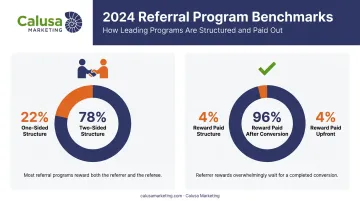
Two-sided rewards that deliver instantly tend to drive higher share rates because there's less friction for the referrer to ask and less hesitation for the new customer to accept. Delayed rewards, on the other hand, help reduce fraud by giving you time to verify the conversion.
A 2024 analysis of 120+ referral programs found that 78% used a two-sided structure, and 96% of referrer rewards were only paid out after a successful conversion.
KPI impacted: referral share rate and fraud incidence.
Fulfillment Complexity and Scalability
Custom or physical rewards sound exciting until you have to fulfill thousands of them. Tesla learned this the hard way: its early referral program let top advocates earn a free Roadster.
The automaker ended that structure in February 2019, when Elon Musk said the perk added too much cost to vehicles, particularly the Model 3. Tesla replaced it with Supercharging miles and drawing entries instead.
KPI impacted: fulfillment cost and delivery time.
Fraud Prevention and Compliance
Cash and gift card rewards are the most attractive targets for referral fraud. Protect your program with:
- Minimum purchase thresholds before a reward triggers
- Caps on how many referrals one person can submit per year
- Identity and device verification to catch duplicate accounts
- Short pending periods (often 1–7 days) to process cancellations first
KPI impacted: fraud rate and program integrity.
20+ Referral Incentive Examples to Inspire Your Program
The examples below are grouped by category, with notes on which business types each tends to suit.
Cash and Direct Payout Incentives
- Flat cash rewards ($10–$100 range): common at fintech apps like Revolut
- Percentage-of-order cash commissions: pays a cut of the referred purchase
- Instant PayPal/ACH payouts: Wise pays after three qualifying friends join
- Milestone cash bonuses: Cash App and Chime pay after specific conditions, like linking a card and sending money within 14 days
Best fit: high-ticket retail, B2B, one-time purchase products.
Store Credit and Discount Incentives
- "Give X, Get X" discounts: Allbirds offers $15 off $100+ to both parties
- Fixed-dollar store credit: Airbnb credits travel funds after a friend's first completed stay
- Free shipping rewards: low-cost, high-perceived-value option
- Free subscription-month extensions: popular with subscription boxes
Best fit: fashion, subscription boxes, repeat-purchase retail.
Gift Card and Prepaid Card Incentives
- Third-party gift cards (Amazon, Visa): flexible, widely accepted
- Branded prepaid Mastercards: T-Mobile offers a $50 virtual card; Metro by T-Mobile caps rewards at $125 per year
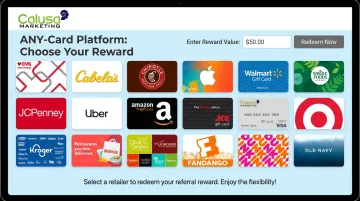
- Flexible ANY-Card style rewards: let the recipient pick their own card, the model behind Calusa Marketing's ANY-Card platform
This category works well when a business wants to reward advocates without touching product margin directly. It's also less operationally taxing than shipping physical product.
Loyalty Points and Tiered/Milestone Rewards
- Bankable loyalty points: Marriott Bonvoy awards 2,000 points per referred stay, up to 50,000 annually
- Membership tier upgrades: reward high-volume referrers with status
- Tiered milestone bonuses: larger rewards after the 3rd, 5th, or 10th referral
- Leaderboard/competition prizes: gamifies high-referral periods
Best fit: brands that already run a loyalty program, since the infrastructure is already built.
Travel and Experiential Incentives
- Travel vouchers or credit: Insight Vacations gives $100 travel credit after a referred friend travels
- VIP event access: concert tickets, early product launches
- Early product access: beta features for top referrers
- Drawing entries for larger trips: Tesla's post-2019 program enters referrers into monthly and quarterly prize drawings instead of guaranteeing a vehicle
Travel rewards carry high perceived value, but only work smoothly when someone else handles the booking and logistics.
Product-Based, Charitable, and Novelty Incentives
- Free products or service add-ons: Dropbox gives extra storage per referral
- Branded merchandise/swag: low-cost, high-visibility
- Charitable donation incentives: appeals to values-driven audiences
- Mystery/surprise bonuses: unpredictable rewards can boost engagement
- Sweepstakes or raffle entries: Robinhood's "pick your own stock" reward is a novel spin on this
These tend to resonate most with younger or values-driven audiences who care as much about the story behind the reward as the reward itself.
How Calusa Marketing Can Help
Choosing the right incentive is only half the equation. Reliable fulfillment, redemption, and support are what actually determine whether a referral program delivers ROI, or turns into a support headache.
That's where Calusa Marketing comes in. Its cloud-based SaaS reward platform requires no integration and no app download, so referral rewards like gift cards, flexible ANY-Card options, and travel perks can launch fast.
A few specifics worth knowing:
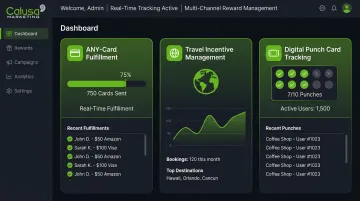
- Flexible ANY-Card fulfillment lets referral participants choose their own gift card instead of forcing one option on everyone
- Fully transferable travel incentives that Calusa's team books and manages directly, so recipients aren't stuck figuring out logistics themselves
- Digital punch card capability for tracking repeat-referral or milestone-based rewards
- White-glove customer support available seven days a week
- 99% client retention rate across 1,000+ incentive programs serving 500,000+ members
Beyond the platform itself, Calusa's experience spans distribution, media, retail, and membership-based businesses, the same industries where referral-driven growth matters most. That range gives the team a practical understanding of how to structure and fulfill referral rewards without the operational strain falling on your internal team.
Conclusion
Choose the referral incentive that fits your margins, your audience, and how often people actually buy from you. Popularity alone won't tell you what works.
That decision isn't permanent, either. Customer preferences shift, margins change, and what worked last year might underperform this year. Review your incentive performance regularly, and don't be afraid to A/B test reward types.
Pair the right incentive with fulfillment support you can trust. Calusa Marketing handles reward delivery and fulfillment for over 500,000 program members, so referrals stop being a one-off campaign and become a growth channel you can actually scale.
Frequently Asked Questions
What are referral incentives?
Referral incentives are rewards given to customers or employees for successfully referring new customers, leads, or hires. Many programs use a two-sided structure, rewarding both the advocate and the new referral.
What is a typical referral bonus?
Bonus size varies widely by industry and price point. Low-cost goods often use small fixed rewards, while high-ticket items or B2B referrals tend to offer larger cash or credit amounts.
What is the best incentive for referrals?
It depends on your audience and purchase behavior. Cash tends to work well for high-consideration, one-time purchases, while discounts and store credit perform better for repeat-purchase businesses.
Are two-sided referral incentives better than one-sided programs?
Two-sided incentives generally outperform one-sided ones because they reduce friction for the new customer while still giving the advocate a reason to share.
How do you prevent fraud in a referral incentive program?
Set minimum purchase thresholds, cap the number of referrals per person, add identity or device verification, and use a short pending period before releasing rewards. These controls catch most abuse without slowing down legitimate referrals.
How often should you update or refresh your referral incentives?
Review your incentive performance quarterly or seasonally, and A/B test different reward types and values. Customer preferences and profit margins shift over time, so your incentive strategy should shift with them.