Introduction
Most manufacturers coast on distributor momentum. Long-term accounts keep reordering, the numbers look fine, and nobody questions whether growth is actually being driven or just... happening.
That's a risky bet: distributor sales reps typically carry five, ten, sometimes twenty product lines at once. Every manufacturer on that list wants attention, shelf space, and mindshare. Passive support, an occasional email, a price sheet update, isn't enough to win that competition.
Manufacturers who intentionally invest in their distributor network see the difference. A Forrester study found that a partner who hasn't started marketing or selling within 90 days of onboarding is unlikely to ever ramp up meaningfully, which means early engagement isn't optional — it's the foundation.
This post covers 10 strategies across five areas: relationship-building, enablement, motivation, technology, and operations, so let's get into it.
Key Takeaways
- Trust and structured feedback loops drive long-term distributor sales growth
- Training and quality leads outperform volume since distributors only sell what they understand
- Points-based and tiered rewards consistently outperform one-time cash rebates
- CRM and AI tools help reps prioritize at-risk accounts instead of guessing
- Frictionless ordering and smart network expansion accelerate the entire sales cycle
Build Stronger Distributor Relationships and Communication
Nurture Long-Term Partnerships Built on Trust
Onboarding a new distributor is expensive: recruiting time, technical setup, territory coverage, and the months it takes before that partner generates real revenue. Every one of those costs resets if a relationship sours and you have to start over.
Avoiding that costly reset starts with clarity. Set expectations early and in writing. Cover:
- Sales targets and review cadence
- Marketing and co-op support details
- Communication protocols, including who to contact and expected response times
Distributors who understand the deal from day one commit faster, because ambiguity breeds churn.
Create Two-Way Feedback Loops
Manufacturers often assume they know what's slowing distributor sales down, but they usually don't. Ordering delays, confusing product messaging, or a lead that looked "hot" on paper but wasn't, these friction points surface fastest from the people closest to the customer.
Formalize the channel:
- Quarterly feedback calls with key accounts
- Short surveys after major launches
- A shared dashboard for lead disposition and rejection reasons
One distributor complaint repeated three times is a pattern, not noise.
Host Regular Sales Meetings, Conferences, and Roadshows
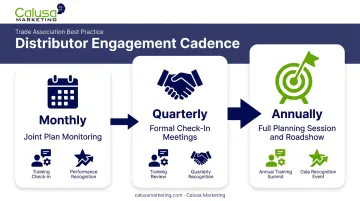
Trade associations like NAED recommend monitoring joint plans monthly, formal check-ins quarterly, and a full planning session annually. That cadence works because it matches how sales cycles actually move, not too frequent to feel like micromanagement, not so rare that momentum dies between touches.
Combine these events with product training and recognition moments. A quarterly call that only reviews numbers is forgettable, but one that also celebrates a top performer or previews a launch sticks. Structured incentive programs, like the dealer and channel rewards platforms Calusa Marketing builds for distributor networks, turn those recognition moments into consistent motivation rather than one-off gestures.
Equip Distributors to Sell With Confidence
Provide In-Depth Product Training and Launch Events
A distributor rep juggling twenty product lines will default to selling what they already know. Limited bandwidth, not laziness, drives that pattern. If your product isn't part of their default pitch, it doesn't get pitched.
Dedicated launch training fixes this, but only if it's structured well. Skip the feature dump. Focus on:
- What makes the product different from competitors on the shelf
- Which customer profile buys it fastest
- The three objections reps will hear most and how to answer them
Arm Reps with Case Studies and Proof Points
Training gets reps talking about your product, but talk only goes so far. Distributor reps need ammunition, not just talking points.
In the 2024 Content Preferences Benchmark Survey by Demand Gen Report, 55% of B2B buyers said case studies, user content, and product reviews were helpful in their decision-making. Even more telling, 78% relied on case studies specifically in the middle of their buying process.
Make case studies usable, not decorative:
- Include specific, measurable outcomes (not vague claims)
- Add visuals reps can drop into a quote or proposal
- Provide market context so a rep in Ohio can adapt a story that happened in Texas
Deliver Well-Defined, Sales-Ready Leads
Even well-trained reps with strong proof points stall without the right leads. A lead with no context wastes a rep's time. A lead scored by fit, intent, and territory tells them exactly where to spend their next hour.
Build a simple lead-scoring framework and share it through your CRM so reps can self-serve insights instead of waiting on a rep from your side to forward details. Fewer bottlenecks, faster follow-up.
Motivate Peak Performance with Incentives and Recognition
Launch a Structured Incentive and Rewards Program
Cash rebates feel transactional, and they're often forgotten by the time the invoice clears. A field experiment involving a rug wholesaler's sales tournaments found that weaker-performing retailers eligible for tangible, non-cash rewards improved more in a follow-up contest than those eligible for cash. Tangible rewards carry trophy value that cash simply doesn't.
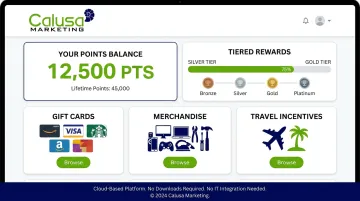
This is exactly the kind of program Calusa Marketing builds for distribution clients. The company's cloud-based SaaS platform requires no integration and no app download, so a manufacturer can launch a distributor rewards program without months of IT back-and-forth. Reward options typically include:
- Digital gift cards (100+ options, domestic and international)
- Branded merchandise from a catalog of 10 million+ items
- Group or individual incentive travel
Clients across HVAC, electrical, and tire distribution, including Johnstone Supply, Baker Distributing, and Midstate Tire, run points-based programs on this model. Each ties rewards to a different goal:
- Johnstone Supply pairs points with product education goals
- Midstate Tire connects points to both purchases and account growth
- Hajoca runs a custom program across its nationwide dealer network, proving these platforms scale from a handful of locations to enterprise-sized operations
Tiered structures matter. Reserve the top tier for your highest performers, but build meaningful mid-tier rewards too. A program that only pays out to the top 5% loses the other 95% within a quarter.
Introduce Gamification and Friendly Competition
Well-designed tiers only pay off if reps can see where they stand. Leaderboards and real-time point tracking turn routine order activity into something reps actually check, and the competitive instinct does the rest of the motivational work for you.
Pair gamification with milestone rewards, not just a season-end prize. A rep who sees their point total climb weekly, with a tangible reward attached to hitting the next threshold, stays engaged long after the launch excitement fades.
Leverage Data, CRM, and AI to Sharpen Sales Focus
Use Data, CRM, and AI to Sharpen Sales Focus
Data tells you where to focus before a problem becomes a lost account. Three applications matter most for distributor networks:
- Flag at-risk accounts early. AI-driven analytics can catch a decline in order volume before it becomes a churn conversation, giving reps time to intervene while there's still a relationship to save.
- Automate the busywork. CRM automation for lead routing and follow-up reminders frees reps from manual data entry, time that's better spent on relationship-building calls.
- Replicate what's working. Analyzing sales data across the full distributor network can surface top-performing product categories or territories, patterns worth applying elsewhere across your operations.
The catch: saved time only helps if it's redirected. Recovered hours need to go toward coaching and account intervention, not just a lighter workload.
Streamline Operations and Expand Market Reach
Simplify Operations and Expand Market Reach
Growth isn't only about motivating the distributors you already have. It's also about removing friction and expanding smartly.
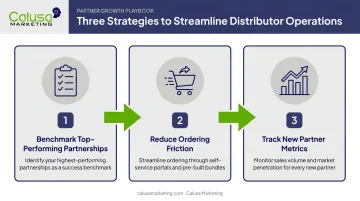
- Benchmark before expanding. Use your top-performing partnerships as the model when recruiting and onboarding new distributors, rather than starting from scratch each time.
- Reduce ordering friction. Self-service ordering portals and exclusive product bundles increase order size and cut down on phone-tag over routine reorders.
- Track new partners from day one. Set clear metrics—sales volume, market penetration, and customer feedback—so you know within the first few months whether a new distributor relationship is on track.
Frequently Asked Questions
How to help distributors increase sales?
Combine strong communication, hands-on product training, quality sales-ready leads, and a structured incentive program. No single lever works in isolation; it's the combination that drives consistent gains.
What is the 70/30 rule in sales?
It's a coaching heuristic suggesting the prospect should talk about 70% of the time, with the seller using the remaining 30% to ask focused questions. For distributor reps, it means listening to the customer's actual problem before pitching a solution.
How do incentive programs improve distributor performance?
Structured, flexible rewards like points, gift cards, or travel create ongoing motivation that a one-time cash bonus rarely matches. They also make performance visible and measurable over time, not just at year-end.
What metrics should be used to measure distributor sales performance?
Track sales volume growth, market penetration, lead conversion rate, and customer retention. Together, these give a fuller picture than revenue numbers alone.
How often should manufacturers meet with distributor partners?
Quarterly business reviews paired with an annual conference or roadshow is a solid baseline. Monthly check-ins on active initiatives help keep smaller issues from becoming quarterly-review surprises.
Can gamification really improve B2B distributor sales?
Yes, when leaderboards and point-based competition are paired with meaningful, tangible rewards. Gamification alone without a real payoff tends to lose steam fast.