Boosting morale isn't about a pizza party or a one-time bonus. It takes consistent, targeted strategies that match what actually drives your specific workforce.
This guide covers nine practical strategies for lifting morale, what causes it to tank in the first place, how to measure whether your efforts are working, and the mistakes that quietly undo good intentions.
Key Takeaways
- Recognition, communication, growth, and flexibility drive morale more than pay
- Disengaged teams cost businesses through lost productivity and turnover risk
- The 9 strategies below work best when combined, not applied as a checklist
- Pulse surveys, eNPS, and turnover data show which efforts work
- One-off gestures and inconsistent managers waste morale investments fastest
What Causes Low Employee Morale?
Low morale rarely comes from one problem. It's usually a mix of poor leadership, missing recognition, unclear expectations, and few paths for growth, all compounding at once.
The cost of ignoring these signals is steep. According to Gallup's State of the Global Workplace 2026 report, low employee engagement cost the global economy roughly $10 trillion in lost productivity in 2025, equal to 9% of global GDP.
That's engagement data specifically, but morale and engagement feed off each other closely enough that the warning applies either way.
Other common culprits include:
- Toxic culture or interpersonal conflict that goes unaddressed
- Chronic work overload without added support or staffing
- Job insecurity following layoffs, restructuring, or vague communication about company direction
- Managers who don't recognize burnout signs until someone's already checked out
Catching these issues early through surveys and honest feedback is what makes any morale strategy worth trying. Skip that step, and you're just guessing.
9 Ways to Boost Employee Morale and Motivation
These strategies work best combined and tailored to what your employees actually tell you they need, not rolled out as a generic checklist.
1. Recognize and Reward Achievements Consistently
Recognition can't wait for an annual review. It needs to be frequent, specific, and visible. Gallup research found that only one in three U.S. workers strongly agree they received recognition or praise for good work in the past seven days. That gap is where a lot of morale problems quietly start.
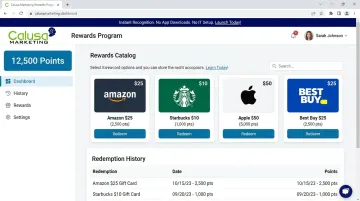
Structured reward programs formalize appreciation so it doesn't depend on a manager remembering to say thanks. Options include:
- Points-based rewards redeemable across large merchandise catalogs
- Digital gift cards for instant, flexible recognition
- Travel incentives for milestone achievements or top performance
- Digital punch cards for tracking smaller, ongoing wins
Calusa Marketing, for example, helps businesses launch these programs through cloud-based platforms that require no app downloads or IT integrations, so recognition scales without adding administrative work. Mixing peer-to-peer shoutouts with manager-led recognition reinforces the message from every direction.
2. Encourage Open, Two-Way Communication
Small frustrations become big morale problems when nobody's listening. Regular check-ins, pulse surveys, and "you said, we did" follow-ups build the trust that stops that from happening.
Give managers simple, repeatable tools:
- Weekly team huddles for quick alignment
- Anonymous feedback channels for issues people won't raise directly
- Monthly one-on-ones focused on more than task status
Consistency matters more than complexity here. A five-minute weekly check-in done every week beats an elaborate quarterly survey nobody trusts.
3. Prioritize Work-Life Balance and Flexible Work Options
Flexibility isn't a nice-to-have anymore. A 2025 Gallup study of over 10,000 U.S. employees found 59% rated work-life balance and personal wellbeing as very important when considering a new job, compared to 54% who said the same about higher pay or better benefits.
Practical ways to support this include:
- Flexible hours instead of rigid start and end times
- Remote or hybrid arrangements where the role allows it
- Genuinely respecting PTO, not just approving it on paper
- Setting real boundaries around after-hours emails and messages
Trusting employees with schedule autonomy signals respect. It's also one of the simplest ways to reduce burnout-driven disengagement before it turns into a resignation.
4. Invest in Professional Development and Career Growth
Employees who see no path forward eventually look elsewhere. Lack of advancement opportunity consistently ranks among the top reasons people voluntarily quit, right alongside pay.
Build growth into the culture, not just the org chart:
- Offer mentorship pairing newer employees with experienced team members
- Fund training budgets for courses, certifications, or conferences
- Make promotion paths visible so people know what's next and how to get there
- Tie recognition to skill milestones so growth feels noticed, not invisible
This kind of investment builds loyalty that short-term perks alone can't match.
5. Foster a Positive, Inclusive Workplace Culture
Psychological safety lets employees bring their full selves to work. That directly supports both morale and retention, since people stay where they feel they genuinely belong.
Concrete steps matter more than mission statements:
- Run inclusive meetings where every voice gets airtime, not just the loudest
- Support employee resource groups with real budget and visibility
- Hold leaders accountable for modeling the values the company claims to have
Employees notice what leadership tolerates day to day far more than what gets said in an all-hands meeting.
6. Empower Managers to Lead with Empathy
Managers shape day-to-day morale more than any company-wide initiative ever will. Yet many are never trained in recognition, feedback delivery, or spotting early burnout signs.
Equip them with:
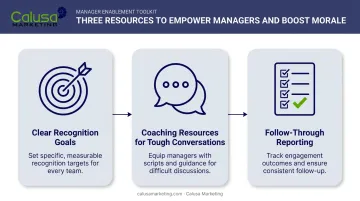
- Clear recognition goals and expectations, not vague encouragement
- Coaching resources for tough conversations
- Reporting that tracks whether they're actually following through on morale initiatives
A manager who doesn't know how to deliver feedback well can undo months of culture work in a single bad conversation.
7. Celebrate Milestones, Anniversaries, and Life Moments
Performance wins aren't the only thing worth celebrating. Work anniversaries, promotions, and personal milestones show employees they're valued as people, not just output.
Personalized rewards tend to land better than one-size-fits-all gestures:
- Let employees choose between merchandise, gift cards, or an experience
- Recognize five- and ten-year anniversaries with something memorable, not routine
- Acknowledge personal moments like weddings or new babies, where appropriate
Choice increases perceived value. A reward someone actually wants means more than a generic plaque.
8. Encourage Team Bonding and Social Connection
Shared experiences build the relationships that make work enjoyable. Gallup's engagement research highlights having "a best friend at work" as one factor linked to stronger retention and performance.
Ways to build this without forcing it:
- Team outings or lunch-and-learns that aren't mandatory
- Virtual games or casual check-ins for remote teams
- Occasionally letting employees lead the planning themselves
Keep activities optional and inclusive. Employees bond naturally when participation feels optional; forcing it kills the goodwill you're trying to build.
9. Give Employees Autonomy and Ownership
Micromanagement erodes morale faster than almost anything else on this list. Trust and ownership, on the other hand, build intrinsic motivation that doesn't need constant external pushing.
Practical ways to hand over more control:
- Focus on outcomes rather than tracking hours or logging in times
- Involve employees in decisions that affect their own work
- Recognize initiative when someone takes ownership without being asked
People who feel trusted tend to rise to that trust, taking more ownership over their work.
How to Measure the Impact of Your Morale-Boosting Efforts
You can't improve what you don't track. Pulse surveys, eNPS (Employee Net Promoter Score), and recognition participation rates are the most direct ways to monitor morale changes over time. Platforms like Calusa Marketing's often track participation rates automatically, saving you a manual step.
A few practical notes on measurement:
- Compare eNPS scores using the same scale and population each time, since methods vary by platform and don't translate well to outside benchmarks
- Pair quantitative data (survey scores, turnover rates) with qualitative signals like exit interview themes and manager feedback
- Set a morale baseline before rolling out new strategies, so improvements can actually be attributed to specific changes
Without a baseline, you're left guessing whether morale genuinely improved or you just got lucky with a good quarter.
Common Mistakes to Avoid When Boosting Morale
Even well-intentioned morale efforts fail when they're inconsistent or performative. Watch for these patterns:
- One-off perks or annual events that generate a short spike but nothing sustained between occurrences
- Rolling out initiatives without employee input, which reads as forced rather than genuine
- Inconsistent follow-through, like launching a survey, reward program, or flexibility policy and then failing to hold managers accountable for using it
You'll lose employee trust fastest when you ask for feedback and then visibly ignore it.
Conclusion
Morale improves fastest when recognition, communication, growth, and flexibility work together, not as isolated initiatives bolted onto an existing culture.
Measuring and adjusting based on real feedback is what separates lasting culture change from a short-lived morale bump that fades by next quarter.
That kind of ongoing measurement takes time and resources many HR teams don't have. Businesses looking to formalize recognition and reward efforts without adding administrative overhead can simplify the process by working with an experienced incentive marketing partner like Calusa Marketing. Their managed platforms handle fulfillment, reporting, and customer service, freeing internal teams to focus on people instead of logistics.
Frequently Asked Questions
What are 5 ways to improve workplace morale?
Consistent recognition, open two-way communication, flexible work options, clear growth opportunities, and an inclusive culture form the core of most effective morale strategies. Combining several at once works better than relying on just one.
What causes low employee morale?
Poor leadership, lack of recognition, unclear expectations, and limited growth opportunities are the most common causes. These issues usually combine rather than appear in isolation.
How is employee morale different from employee engagement?
Morale is the emotional state employees have about their work environment. Engagement adds behavioral commitment, meaning active involvement and enthusiasm toward organizational goals.
How do you measure employee morale?
Pulse surveys, eNPS scores, and turnover rates provide quantitative data, while exit interviews and manager feedback add qualitative context. Combining both gives the clearest picture.
Who is responsible for employee morale in an organization?
It's shared across leadership, managers, and employees themselves. Leadership sets the culture, managers execute it daily, and employees shape it through peer interactions.
How does recognition impact employee morale?
Timely, specific recognition builds trust and reinforces that an employee's work is genuinely valued. It also reduces the disengagement risk that comes from feeling overlooked.