A November 2024 Fiserv survey found that two-thirds of respondents preferred digital gift cards over physical ones, with instant delivery cited as the top reason by 70% of respondents. That shift matters for businesses too.
Yet many buyers and program managers still treat e-gift cards as a black box. They don't understand what happens between "purchase" and "redeem," which leads to failed transactions, frustrated recipients, and rushed platform choices. This guide breaks down exactly what an e-gift card is and how it works, step by step, for personal gifting and business reward programs alike.
Key Takeaways
- An e-gift card is a traditional gift card delivered digitally instead of physically.
- The process follows four steps: purchase, delivery, redemption, and balance tracking.
- E-gift cards come in three types: closed-loop, multi-brand, and open-loop (Visa/Mastercard).
- Businesses use e-gift cards for instant, trackable rewards without holding physical inventory.
What Is an E-Gift Card?
An e-gift card is a digital product with a monetary value tied to a unique code, card number, or barcode. Instead of a physical card mailed to your door, it arrives by email, text message, or through an app.
Federal rules define these products by function rather than by name. The Consumer Financial Protection Bureau's Regulation E treats an emailed alphanumeric code redeemable online or in-store as a legitimate gift certificate or store gift card, regardless of whether it ever touches paper or plastic.
Why they exist: E-gift cards solve three specific problems that plastic cards can't:
- Instant delivery (minutes, not days)
- Zero printing and shipping costs
- No risk of physical loss, theft, or damage in the mail
What it is not. An e-gift card is not cryptocurrency. It's not a linked store credit account tied to your identity. And it's distinct from a general mobile wallet balance, which pools funds from multiple sources rather than holding a fixed, redeemable value.
Why They Still Matter Alongside P2P Apps
Venmo and Zelle make it easy to send cash, so why does anyone still buy an e-gift card? Three reasons stand out:
- Universal accessibility: the recipient doesn't need a bank account or even a phone number linked to a payment app.
- Ready-made gifting occasions: a Starbucks or Amazon e-gift feels like a gift; a bank transfer feels like a bill payment.
- No friction for the sender: pick a brand, pick an amount, done.
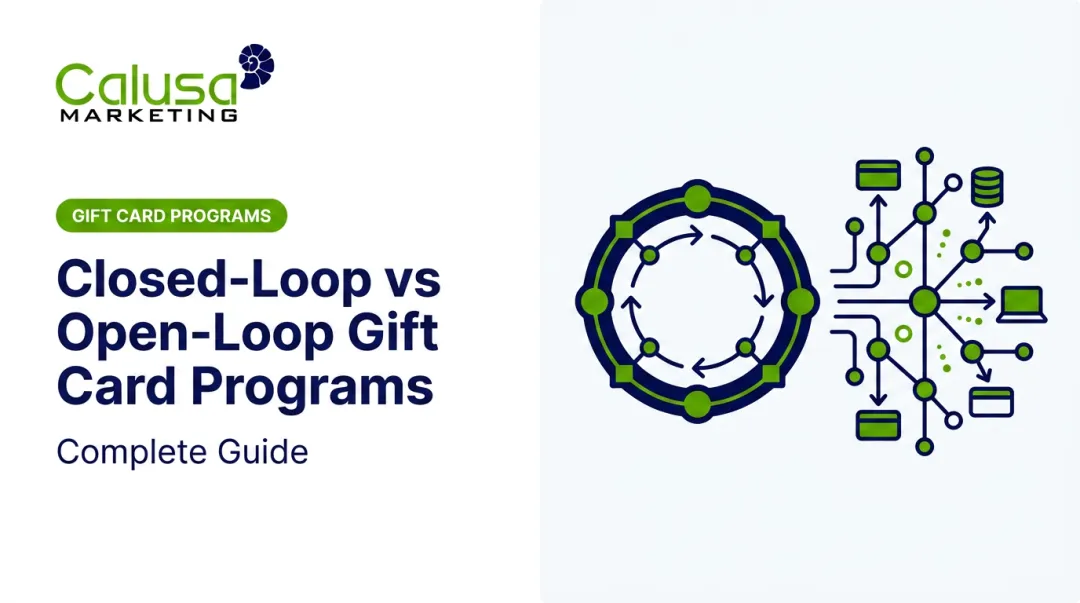
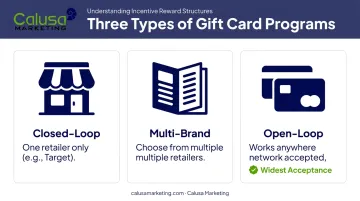
The Three Main Types
- Closed-loop cards are redeemable only at a single retailer (a Target eGiftCard works only at Target).
- Multi-brand cards let the recipient choose from a catalog of retailers using one voucher code.
- Open-loop cards (Visa or Mastercard) work anywhere the network is accepted, similar to a prepaid debit card.
You'll also see these products called digital gift cards, virtual gift cards, or online gift certificates. They're overlapping industry labels for the same underlying credential.
How Do E-Gift Cards Work?
Regardless of the issuer, every e-gift card moves through four consistent stages: purchase, delivery, redemption, and balance tracking.
Purchase & Loading
The process starts when a buyer picks a retailer and a dollar amount, then pays online. This can happen two ways:
- Manually: an individual buying a birthday gift for a friend
- Automatically: a system issuing a card the moment an employee hits a sales target or loyalty milestone
A mistyped recipient email or phone number causes more failed deliveries than payment issues do, making it the leading cause of delayed or "lost" e-gift cards.
Delivery
Once payment clears, the platform generates a unique code or PIN and sends it electronically, often within minutes. The delivery email or text typically includes:
- Redemption instructions
- The code or card number
- Sometimes a scannable barcode or QR code
Target notes that its eGiftCards normally deliver within four hours, though security review can extend that to 24 hours. Delivery speed and reliability remain the real differentiators between competing platforms.
Redemption
Recipients redeem the card by entering the code at online checkout, or for hybrid cards, by presenting a barcode or QR code in-store, or adding the number to a digital wallet. Some cards are single-use. Others are multi-use, deducting only the purchase amount and keeping the remaining balance active for later.
Built-in security controls include:
- Balance tracking tied to the unique code
- Expiration policies (federal rules generally protect underlying funds for at least five years)
- One-time-use protections that block duplicate redemption attempts
Balance Tracking & Result
The end result is simple: value transfers from the card balance to the purchase, and any leftover balance stays active for next time. Most issuers, including Visa and Mastercard, provide an online balance-check tool so recipients can track remaining funds.
For businesses, this stage matters even more. Real-time redemption data lets program managers see who redeemed what and when, turning a gift card program into a measurable engagement tool rather than a black box.
That kind of visibility, paired with accurate, on-schedule reporting, is what clients look for when evaluating a rewards platform. Calusa Marketing's cloud-based reward platforms deliver exactly that, requiring no integration or app download to launch a program.
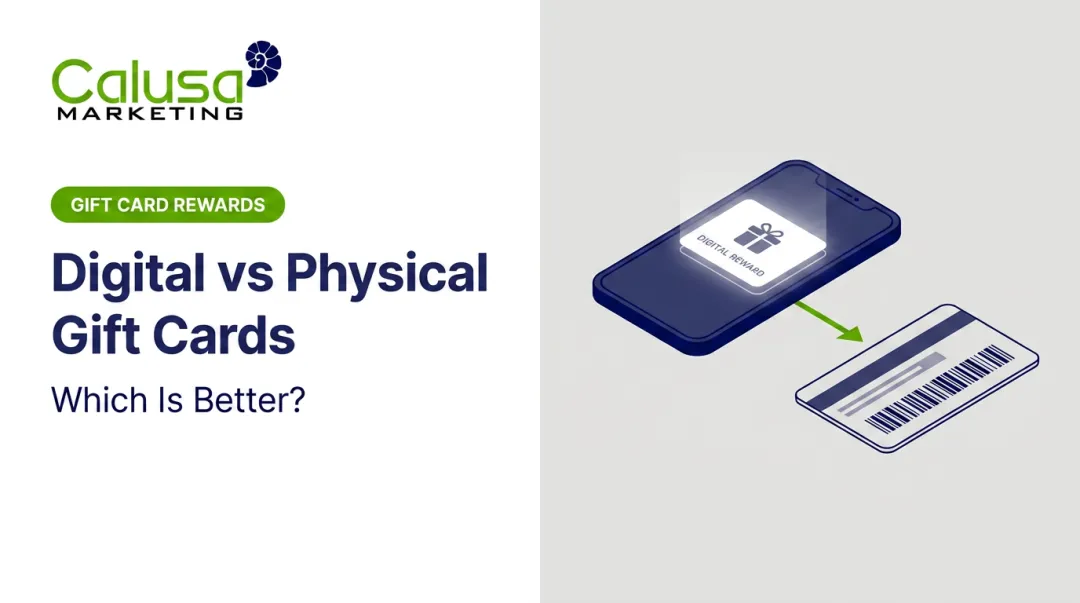
E-Gift Cards vs. Physical Gift Cards
The core difference comes down to speed and cost — plus which format actually fits the occasion.
| Factor | E-Gift Cards | Physical Gift Cards |
|---|---|---|
| Delivery | Instant email/SMS, often within minutes | Mailing time or in-store pickup required |
| Cost | No printing, shipping, or plastic production | Manufacturing and mailing costs apply |
| Best fit | Last-minute gifts, remote teams, digital-first rewards | In-person or tangible gifting occasions |
Blackhawk Network's 2024 survey found that 60% of U.S. consumers planned to buy a digital gift card that year, up 6% from the prior year. That trend lines up with what businesses are discovering: distributed teams and online-only customer bases don't have time to wait on a mailed card.
Physical cards aren't obsolete, though. A tangible card still works well for in-person retail gifting or when a physical unboxing moment matters to the brand experience.
Where Are E-Gift Cards Used?
Personal use covers the obvious occasions: birthdays, holidays, and last-minute gifts where instant delivery saves the day.
Business use cases span a wider range:
- Employee recognition and milestone rewards
- Customer loyalty and retention incentives
- Sales incentive programs
- Survey and research participation incentives
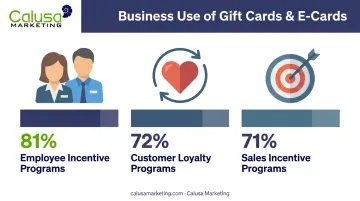
The Incentive Federation's research on business incentive programs found that 81% of companies use gift cards or e-cards for employee incentive programs. Adoption is similarly high for customer loyalty (72%) and sales incentives (71%).
E-gift cards perform best in specific environments:
- Distributed or remote workforces where mailing a physical card isn't practical
- Nationwide or online-only customer bases
- High-volume programs that need fast fulfillment without holding physical card inventory
This is where a flexible catalog approach helps. Calusa Marketing's ANY-Card program gives businesses a digital voucher-based gift card that recipients can redeem for whichever brand they actually want, from a catalog of 100+ options spanning retailers, restaurants, and even Visa cards as a cash alternative.
Clients including Hajoca and AAA have used this model to reward employees or customers without managing physical card stock or reorder cycles.
Conclusion
E-gift cards run on a simple, secure loop: purchase, delivery, and redemption, backed by balance tracking that keeps everything accountable. This loop helps gift-givers avoid delivery mishaps and helps businesses choose reward platforms that reduce friction instead of adding to it.
Whether you're sending a birthday gift or building a company-wide recognition program, knowing how the process works separates a smooth experience from a support ticket. For businesses ready to launch one, Calusa Marketing's platforms manage that loop end-to-end without added friction.
Frequently Asked Questions
What is an eGift Card and how does it work?
An eGift Card is a digital version of a traditional gift card, delivered by email, text, or app instead of by mail. It works through purchase, digital delivery of a unique code, and redemption against the loaded balance.
What is the difference between a gift card and an eGift Card?
A physical gift card is a plastic card mailed or handed to the recipient. An eGift Card is the same product delivered electronically, usually within minutes, with no shipping involved.
How do I pay with an eGift Card?
Enter the code at online checkout, or for hybrid cards, present the barcode or QR code in-store. Some cards can also be added directly to a digital wallet.
Do e-gift cards expire?
Expiration depends on the issuer and applicable state law. Federal rules generally protect underlying funds for at least five years, but always check the specific card's terms.
Are e-gift cards safe to use?
Yes, when handled correctly. Unique codes, balance tracking, and one-time-use protections limit fraud risk, and no personal financial data is exposed during redemption. Never share a card's code or PIN with an unknown party.
Can businesses use e-gift cards for employee or customer rewards?
Yes, businesses commonly use e-gift cards for employee recognition, sales incentives, and loyalty rewards. Platforms like Calusa Marketing handle bulk distribution and provide reporting that tracks redemption and program engagement.