Introduction
Loyalty program innovation is the shift away from static points-for-purchase systems toward dynamic, personalized reward ecosystems that mirror how customers actually shop and engage today.
Nearly every brand now runs some kind of loyalty program, yet a real engagement gap is emerging. The average consumer enrolls in 8 loyalty programs but actively uses only 5, according to Deloitte's 2025 consumer research.
That's the real challenge: converting sign-ups into consistent engagement.
This gap is exactly why program design matters more than ever.
Understanding these innovation trends helps brands of any size — from global retailers to regional distributors and local service providers — stay competitive, deepen retention, and get more value from every incentive dollar spent.
Key Takeaways
- AI personalization, experiential perks, subscriptions, omnichannel access, and behavior-based earning are reshaping rewards
- Active and redeeming members consistently outspend enrolled-but-inactive members
- Cloud-based, no-integration platforms bring enterprise-grade loyalty tools to mid-market and B2B companies
- When every points system looks alike, experience and personalization become the real differentiator
Key Loyalty Program Innovation Trends
Five distinct shifts define where loyalty programs are headed. Each addresses a different weakness in the traditional points model.
AI-Driven Personalization & Predictive Rewards
Generic, blanket discounts are giving way to real-time offers built from actual purchase behavior. Ulta Beauty has publicly tied its AI strategy directly to loyalty data, using its rewards program as the engine for more relevant, individualized promotions and product recommendations.
That said, industry experts urge caution. CMSWire's guidance on AI and loyalty is blunt: brands need to "do the listening work first." In other words, fix friction in the core program (clear earning rules, fast redemption, useful communication) before layering on predictive technology. AI amplifies a good program. It doesn't fix a broken one.
Forrester identifies several proven AI use cases worth prioritizing:
- Propensity modeling to predict which customers will churn
- Personalized reward recommendations based on past redemptions
- Automated tier-status reminders
- Fraud detection across point balances
Experience-Based & Non-Monetary Rewards
Discounts still matter, but they're no longer the whole story. Brands are adding VIP access, early product drops, member-only events, and sustainability-linked redemption options to their reward mix. The North Face's XPLR Pass, for example, offers exclusive events, early access to limited-edition gear, and chances to win premium outdoor experiences, none of which involve a percentage off.
The data shows why this matters as a complement, not a replacement, to savings. EY's 2024 Loyalty Market Study found:
- 77% of consumers enjoy accessing discounts
- 72% enjoy earned points or miles
- Only 19% cite exclusive events or experiences as a favorite reward type
Experiential rewards aren't the top preference yet, but they're the fastest way to stand out once your points structure looks like everyone else's. Calusa Marketing sees this firsthand: International Diamond Centers uses premium travel rewards, not discounts, for engagement ring purchases, preserving the emotional and financial value of the sale while still giving customers something memorable.
Subscription & Paid Membership Models
Instead of earning points over months, customers now pay a recurring fee for guaranteed benefits: free shipping, early sale access, exclusive pricing. Target Circle 360 is a clear example, layering a paid membership tier with same-day delivery and expedited shipping on top of Target's free loyalty program.
The commitment appears to change behavior. McKinsey found paid-program members were 60% more likely to spend more with a brand after subscribing, compared with just 30% of free-program members. That's a meaningful gap in stated purchase intent, even if it doesn't prove the fee itself causes the spend.
Subscription loyalty isn't limited to national retailers, either. Mid-sized brands can apply the same logic on a smaller scale through premium perk tiers or flexible digital reward platforms that don't require building custom subscription infrastructure from scratch.
Omnichannel & Flexible Redemption
Members expect their points and rewards to follow them everywhere, whether in-store, on the app, or online, without friction. That expectation extends to redemption too: cash equivalents, travel, merchandise, and gift cards should all be on the table.
This is where flexible, "any-card" style reward platforms earn their keep. Calusa Marketing's ANY-Card program gives businesses of any size access to 100+ digital gift card options plus a VISA cash-alternative card, all delivered digitally with no physical inventory to store or reorder.
The company's Digital Loyalty Card takes the same no-integration philosophy further:
- Enrollment happens three ways: QR code scan, link click, or text opt-in, with no app download required
- Cards live in Apple Wallet or Google Wallet, appearing on a customer's phone within seconds
- Geo-fencing and push messaging trigger automatically as members near a location
- A Manager Scanner app issues punches at the point of interaction, replacing paper punch cards without any POS integration
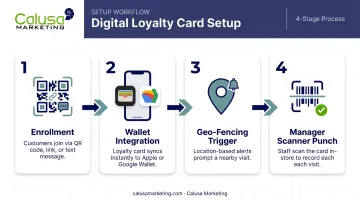
Most programs go live in under a week — a sharp contrast to legacy systems that can take months of API work and IT approval.
Community & Behavioral Loyalty Beyond Transactions
Leading programs now reward engagement, not just spend. Jeep's Badge of Honor app awards Trail Points and community rank for completing off-road trails and checking in at trailheads, recognizing participation, not purchases.
Calusa's client base reflects the same shift across very different industries:
- New South Windows rewards customers for leaving reviews and booking in-home estimates
- Johnstone Supply rewards product education engagement alongside online orders
- Travel + Leisure Co. rewards survey completion
- Memorial Blood Centers rewards the act of donating blood or plasma
None of these are purchase transactions. All of them build the kind of ongoing relationship that a points-only program never captures.
What's Driving These Loyalty Trends
Rising customer acquisition costs, program parity, and shifting expectations are forcing brands to rethink rewards from the ground up. Consumer research backs up why: loyalty programs genuinely shape buying decisions, with 64% of US online adults saying programs influence where they shop and 54% saying programs influence what they buy, per Forrester.
Several forces are converging at once:
- Technology has gotten cheaper and faster. Cloud-based SaaS platforms and AI/ML tools now make sophisticated, personalized programs deployable in days rather than the months legacy systems required.
- Customer expectations have shifted. Forrester reports 77% of US online adults enjoy engaging with loyalty programs even when they aren't buying, proving that non-transactional engagement has real appeal.
- Margins are under pressure. Partnerships and experiential rewards deliver high perceived value without discounting. iHeart Media, Audacy, and Lee Enterprises reward advertisers with Calusa-managed travel incentives instead of cutting ad rates.
- Everyone's program looks the same. When most competitors run near-identical points structures, differentiation shifts to emotional design and personalization rather than reward size.
- Data regulation is tightening the personalization opportunity. McKinsey notes brands must personalize data responsibly, as GDPR and CCPA have left over 90% of consumers concerned about how their data gets used.
How These Trends Are Impacting the Loyalty Industry
Innovation is reshaping more than the member experience. It's changing internal operations, budgets, and hiring across the industry.
Operational Impact
Legacy punch cards and static point systems are giving way to cloud platforms that support rapid configuration and multi-channel delivery. But diversifying reward types, including travel, gift cards, and physical merchandise, adds real fulfillment complexity.
Moving beyond simple points typically requires:
- Shipping insurance and replacement policies for physical merchandise
- Multi-country supplier coordination for international reward delivery
- Customer support scaled to handle diverse redemption types
That complexity is exactly why full-service fulfillment partners have become essential rather than optional.
Business Impact
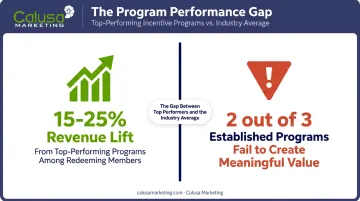
Budgets are shifting away from blanket discounting and toward CRM, personalization technology, and reward diversification. The upside is real: top-performing programs can lift annual revenue from redeeming members by 15% to 25%, according to McKinsey.
The catch is that roughly two-thirds of established programs fail to create meaningful value at all. Loyalty data itself is also increasingly treated as a strategic asset that informs product decisions and marketing strategy, not just retention scores.
Workforce Impact
Running an always-on, personalized program requires specialized roles: loyalty strategists, data analysts, CX designers, and engagement managers. The same engagement principles are moving into employee-facing programs too.
Calusa applies an identical framework: define the desired behavior, value it appropriately, and segment the audience, applying it to both customer loyalty and sales incentive programs.
Clients like APG Media have used this dual approach to motivate sales teams and reward client spend simultaneously, generating millions of dollars in incremental revenue, according to a client testimonial from Regional President Jim Normandin.
Future Signals for Loyalty Program Innovation
These trends will keep evolving. Here's what's worth watching over the next one to three years:
- Blockchain-based loyalty ledgers: Forbes argues blockchain could make point value transferable across participating brands, though this remains largely conceptual. Starbucks discontinued its Odyssey NFT beta in 2024, a reminder that adoption risk is real.
- Creator and social engagement mechanics: American Eagle's AE Creator Community already awards points for styling videos and social content, rewarding creativity alongside purchases.
- Dynamic, AI-adjusted tiers: Forrester notes predictive AI can already recommend adding tiers or lowering point thresholds in real time. Static annual tiers may eventually give way to structures that adjust continuously.
Conclusion
Loyalty program innovation now spans five fronts: personalization, experience, subscription access, omnichannel flexibility, and behavior-based rewards. None of these replace the others; instead, they layer together into a program that feels relevant rather than routine.
Brands that adapt early gain a measurable edge in retention, spend, and lifetime value, regardless of size or industry. And you don't need an enterprise IT budget to get there.
Calusa Marketing has spent over a decade managing 1,000+ programs and 500,000+ members. Its configurable, no-integration reward technology spans digital loyalty cards, ANY-Card gift card fulfillment, and incentive travel, letting brands of any size put these innovations to work quickly.
Frequently Asked Questions
What are modern loyalty programs?
Modern loyalty programs go beyond points-for-purchase, combining AI personalization, tiered experiential perks, subscription access, and flexible digital rewards like gift cards and travel incentives.
What is loyalty program innovation?
It's the use of new technology, strategy, and creative reward structures to move beyond generic points systems and create more personalized, engaging member experiences.
How is AI changing loyalty programs?
AI enables real-time personalized offers, predictive reward recommendations, and dynamic tiering. Program fundamentals still matter more than the AI layer, so brands should nail the basics before investing heavily in automation.
What's the difference between points-based and experience-based rewards?
Points-based rewards convert spend into redeemable value. Experience-based rewards offer access, recognition, and non-monetary perks that build emotional connection instead.
Are subscription-based loyalty programs only for big brands like Target or Amazon?
No. While large retailers popularized paid memberships, smaller and mid-sized brands can apply the same principles through scaled-down premium perks or flexible digital reward platforms.
How can a business start innovating its loyalty program without a big IT team?
Cloud-based, no-integration reward platforms and digital loyalty/gift card solutions let businesses launch modern, flexible programs in days, not months, without custom development.