Many dealers get stuck chasing the next sale instead of building the relationship that keeps customers coming back. In competitive trades like HVAC, electrical, and tire retail, where margins get squeezed and customers can shop a competitor down the street, that habit gets expensive fast.
Aftermarket and service work makes up roughly 50% of total HVAC revenue, according to McKinsey — proof that what happens after the sale matters just as much as the sale itself.
This guide breaks down what a dealer-customer relationship actually is, the four customer types every dealer encounters, and the strategies that turn one-time buyers into repeat business.
Key Takeaways
- Dealer-customer relationships cover every touchpoint, not just the transaction
- Segmenting customers into four types sharpens how dealers communicate and sell
- Aftermarket and service revenue rivals new-unit sales in dealer-driven trades
- Loyalty programs and CRM tools let dealers personalize service at scale
- Reviews and referrals remain the top acquisition channels for local dealers
What Is a Dealer-Customer Relationship?
A dealer is a business or individual authorized to sell a manufacturer's or distributor's products directly to end buyers. Think of a local HVAC contractor installing Trane systems, or a tire shop carrying Michelin and Goodyear. The customer is whoever calls, walks in, or clicks to buy and use that product.
The dealer-customer relationship covers everything in between: the first phone call, the quote, the installation, the warranty claim two years later, and the repeat purchase five years after that.
This differs from standard retail in one important way. Dealers represent someone else's brand. A tire dealer who mishandles a warranty claim doesn't just risk losing a customer — they can damage how that customer views the manufacturer behind the product. Distributors like Hajoca and Johnstone Supply rely on their dealer networks to uphold brand standards consistently across hundreds of locations.
Why this matters for the bottom line:
- Aftermarket and service work drives about half of HVAC revenue, with manufacturers earning margins up to 4 times higher than on new-unit sales, per McKinsey's analysis of aftermarket service
- Retaining an existing customer costs far less than acquiring a new one, making every follow-up interaction a profit driver
- The relationship built after the sale often generates more profit than the sale itself
This dynamic plays out across industries beyond HVAC. Consider an electrical distributor's dealer network: the distributor sources the product, but the local electrical contractor handles the actual purchase, installation, and any callback if something goes wrong. The distributor's reputation rides on that contractor's follow-through.
A jewelry retailer faces the same dynamic: customers don't just buy a ring, they return for resizing, cleaning, and eventually their next purchase. Every visit either strengthens or weakens the relationship.
The 4 Types of Customers Every Dealer Should Know
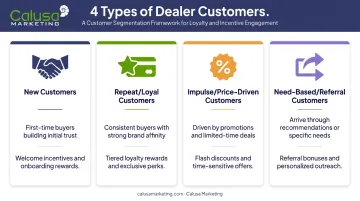
Not every customer walks through the door for the same reason. Segmenting buyers by behavior, not just demographics, helps dealers tailor communication, offers, and follow-up.
New Customers
First-time buyers need education and trust-building before anything else. They don't know your brand's track record, so onboarding matters: clear explanations, transparent pricing, and a smooth first experience set the tone for whether they ever come back.
Repeat/Loyal Customers
These customers already trust you. They respond well to recognition — a personalized offer, an early heads-up on a promotion, or simple acknowledgment that you remember their last purchase. Digital loyalty or punch-card programs make that recognition consistent by tracking purchase history automatically. Losing a loyal customer costs far more than keeping one happy.
Impulse or Price-Driven Customers
Motivated by discounts, urgency, or a good deal rather than brand loyalty. They'll buy today if the offer is right, but they're also the first to leave for a competitor's lower price. Structured promotions work better here than relationship-building alone.
Need-Based/Referral Customers
These buyers show up because something broke, or because a neighbor sent them your way. They didn't plan to shop today. Excellent service at this moment of need, backed by a referral reward for the person who sent them, is often the fastest path to converting them into long-term, loyal customers.
Why Strong Dealer-Customer Relationships Drive Business Growth
Trust changes the sales conversation. When a customer trusts their dealer, price becomes secondary to reliability, letting dealers compete on service instead of racing competitors to the bottom on discounting.
The flip side is unforgiving. In a PwC survey of more than 5,500 U.S. consumers, 29% said they stopped buying from a brand after a poor experience with the brand itself. 52% stopped after a bad experience with the product or service. For a dealer, that's one dismissive phone call or rushed installation away from losing a customer for good.
The upside works just as powerfully: strong relationships fuel the cheapest form of marketing, word of mouth. A satisfied customer tells neighbors, coworkers, and local community groups without being asked.
Dealers who build trust see three compounding benefits:
- Reduced price sensitivity: customers value reliability over the lowest quote
- Higher referral rates: turning existing customers into an unpaid sales force
- Lower marketing costs, especially valuable for single-location dealers competing against national chains
Proven Strategies to Build and Strengthen Dealer-Customer Relationships
Loyalty depends on consistent habits, not a single tactic.
Start with the fundamentals:
- Communicate proactively — train staff to listen and follow up after every transaction, not just at the point of sale
- Personalize the experience: use purchase history to tailor recommendations instead of treating every customer the same
- Collect feedback regularly — ask what friction points exist in the buying journey, then actually act on the answers
- Empower frontline staff: give them product knowledge and the authority to resolve issues without escalating every problem
Make Loyalty Programs the Backbone
A structured loyalty program, whether digital punch cards, reward points, or gift card incentives, keeps customers coming back for reasons beyond just liking your service. Calusa Marketing helps distributors and dealers launch these programs without app downloads or IT integrations.
Customers enroll through a QR code, text, or link, and the digital card lands directly in their phone's wallet — no app store required. Most programs go live in under a week, which matters when a dealer doesn't have months to spare on a rollout. That speed also means dealers can test different reward structures without long IT wait times or vendor delays.
Treat Post-Sale Service as Part of the Sale
Service satisfaction often outweighs the initial sale price in determining whether a customer returns. That's true whether it's a follow-up call after an HVAC install or a quick resolution to a tire warranty issue. Dealers who treat service as an afterthought lose customers they never had to lose.
Leveraging Dealer CRM and Technology to Manage Customer Relationships
A dealer CRM is software that tracks customer interactions, purchase history, and follow-ups so relationships can be managed at scale instead of relying on memory or spreadsheets.
Core benefits include:
- Centralized customer data across every touchpoint
- Automated follow-up reminders so no customer falls through the cracks
- Easier identification of high-value accounts and at-risk customers before they churn
Many distributors have adopted CRM software over the past decade. Yet plenty of sales reps still treat it as a reporting tool rather than a relationship-management tool, meaning the data sits there without driving action.
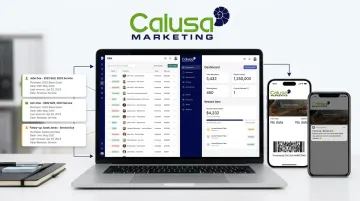
Pairing a CRM with a cloud-based incentive platform closes that gap. Calusa Marketing's SaaS reward solutions work alongside a dealer's existing CRM rather than replacing it, combining relationship tracking with actionable loyalty rewards. No IT integration is required, a critical advantage for dealers without a dedicated tech team.
How to Get More Customers as a Dealer
Growing a dealer business takes more than advertising alone. Visibility, referrals, and partnerships all need to work together to keep new leads coming in.
- Lean on referral and loyalty programs. Existing customers are your cheapest source of new leads when given a reason to talk about you.
- Build local search visibility. BrightLocal's consumer review survey found that 97% of shoppers read local-business reviews, and 68% require at least a four-star rating before choosing a business. Outdated reviews send prospects straight to a competitor.
- Invest in community and partnership marketing. Sponsorships and co-op advertising with your distributor extend reach without the full cost falling on your business alone.
Frequently Asked Questions
What is the difference between a customer and a dealer?
A dealer is a business authorized to sell a manufacturer's or distributor's products directly to end buyers. The customer is the person who purchases and uses that product, interacting with the dealer for sales, service, and support.
How to get customers as a dealer?
Focus on referral and loyalty programs, strong local online reviews, and community or co-op partnerships with your distributor. These channels bring in prospects who already trust your brand before they walk in.
What is a dealer CRM?
A dealer CRM is software that tracks customer interactions, purchase history, and follow-ups. It helps dealers manage relationships at scale and spot which accounts need attention.
What are the 4 types of customers?
New customers, repeat/loyal customers, impulse or price-driven customers, and need-based/referral customers. Each group responds to different messaging and incentives.
How can incentive programs improve dealer-customer relationships?
Reward and loyalty programs give customers a reason to return beyond price alone. Digital punch cards and points-based rewards increase repeat visits and build habitual buying patterns.
Why is post-sale service important for dealers?
Service quality after the sale often determines whether a customer returns or leaves for a competitor. A smooth installation or quick issue resolution builds more loyalty than the initial sale price ever could.