The problem is misdiagnosis. Sales leaders blame "the market," "bad leads," or a seasonal dip — and that misdiagnosis delays the real fix. Every month it goes unaddressed compounds the revenue already lost.
This guide breaks down the specific behaviors behind chronic underperformance, the warning signs that show up weeks before your numbers do, and the process and motivational fixes that stop the cycle for good.
Key Takeaways
- Weak sales performance stems from repeatable rep habits, not market conditions or luck
- Left unaddressed, these habits compound into missed quota, discounted deals, and rep turnover
- Fixing the problem requires structured cadences, coaching, and consistent accountability, not a quick pep talk
- Recognition and incentive programs correct complacency more effectively than pressure alone
Common Behaviors That Cause Weak Sales Performance
Weak sales performance isn't a single bad month. It's a pattern: missed targets, stalled deals, and inconsistent pipeline activity that repeats across multiple cycles.
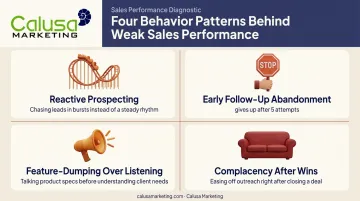
Behind nearly every one of these patterns sits a specific, observable behavior that keeps happening because nobody flags it. Here are the four that show up most often.
Inconsistent or Reactive Prospecting
Reps who only prospect when the pipeline runs dry create rollercoaster revenue instead of steady flow. It's a familiar cycle: close a big deal, ride the high for a few weeks, stop reaching out to new prospects, then scramble once the pipeline empties.
By the time the scrambling starts, it's already too late. New pipeline takes weeks to build and mature, so the gap between "stopped prospecting" and "felt the pain" shows up as a quarter with no deals to close.
Abandoning Follow-Up Too Early
Most reps give up far before a prospect actually says no. An analysis of 5.7 million marketing leads and more than 55 million sales activities across 400+ companies found that making seven or more follow-up attempts led to 15% more prospect connections — yet 81% of sellers stopped at five attempts or fewer.
That gap matters. A prospect who doesn't answer email number two isn't necessarily uninterested; they're often just busy. Reps who read silence as rejection are leaving connections, not just deals, on the table.
Talking More Than Listening (Feature-Dumping)
Some reps default to reciting features the moment a call connects, instead of asking discovery questions first. It feels productive, but it usually backfires.
The typical result: a prospect hears a full pitch, then says it "doesn't really apply" to them. The real culprit is a discovery gap, not the product itself. The rep never uncovered what the buyer actually needed before jumping into a solution, so the pitch landed on the wrong pain point entirely.
Complacency and Low-Urgency Habits
Once quota is hit, or a rep gets comfortable in a role, activity levels drop off. Fewer calls, fewer prospecting touches, slower follow-up, all justified by a recent win.
A strong quarter followed by a missed one is the classic signature of this pattern. The rep coasted on momentum from the last close, didn't rebuild the pipeline behind it, and walked into the next quarter with nothing in the funnel to show for it.
What Happens If These Behaviors Are Ignored
Left unchecked, these behaviors don't stay contained. They compound.
A shrinking pipeline forces discounting to close whatever deals are left. Missed quota erodes confidence and commissions. Reps who feel stuck or unsupported eventually leave, and replacing them isn't cheap.
Gallup estimates replacing an employee costs one-half to two times their annual salary, and puts the total cost of voluntary turnover to U.S. businesses at $1 trillion annually.
That figure covers the entire workforce, but the underlying driver (disengagement that builds before someone quits) applies directly to sales floors, where burnout and stalled pipelines are common triggers.
Warning Signs You're About to Experience a Sales Slump
These indicators typically surface weeks before revenue numbers actually drop:
- Pipeline value swings sharply month to month with no steady mid-funnel activity to smooth it out
- Deals sit untouched for extended stretches with no logged follow-up or next step
- Activity metrics slip, with fewer calls and fewer prospecting touches, while reps point to lead quality or "the market"
These aren't minor red flags. Research from Ebsta's analysis of 4.2 million opportunities representing $54 billion in revenue found that deals with more than seven days of inactivity had 65% lower win rates, while opportunities updated weekly were 17% more likely to close won. Inactivity is a measurable predictor of a dying deal.
How to Prevent These Behaviors
Prevention relies on structured process, coaching, and the right motivational levers working together, not just demanding "more effort."
Set a Non-Negotiable Prospecting Cadence
Require daily or weekly prospecting minimums, tracked in the CRM, regardless of how full the pipeline looks right now. This blocks the feast-or-famine cycle by turning outreach into a habit instead of a reaction to an empty funnel.
When prospecting is scheduled rather than optional, reps stop treating it as something to do "when things slow down."
Build a Structured, Multi-Touch Follow-Up Sequence
Give reps a defined sequence (call, email, social touch, call again) with set timing between each step. Follow-up shouldn't depend on memory or motivation on any given day.
A documented cadence removes the guesswork that causes reps to give up after one or two attempts, directly countering the abandonment pattern covered earlier.
Train for Consultative Discovery and Active Listening
Use role-play and call reviews to shift reps away from pitching features and toward asking open-ended discovery questions. The goal is diagnosis before prescription.
- Review recorded calls for talk-to-listen ratio
- Flag calls where a rep pitched before asking three or more discovery questions
- Coach reps to tailor the pitch to the pain point the buyer actually stated
This counters feature-dumping by making discovery a required step, not an afterthought.
Reinforce Motivation With Recognition and Incentive Programs
Complacency often stems from a lack of ongoing recognition, not laziness. A rep who closes a big deal and hears nothing for the next six weeks has little reason to sustain that same intensity.
Structured incentive programs sustain effort between big wins by rewarding the daily behaviors that lead to them, not just the close itself.
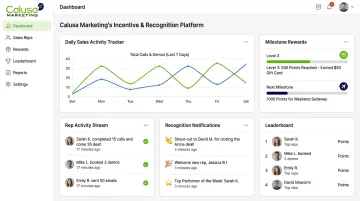
A technology-based platform like Calusa Marketing's can automate recognition, rewards, and milestone tracking so motivation doesn't rest entirely on a manager remembering to say "good job" in a Monday meeting.
One regional media client worked with Calusa's team to build an incentive structure around its sales staff. According to the company's regional president, the program helped generate millions of dollars in incremental revenue by keeping the sales team motivated between major wins, not just after them.
Tying rewards to consistent behaviors, such as prospecting volume, logged follow-ups, and discovery call quality, reinforces the daily habits that prevent slumps in the first place. Rewarding only closed deals leaves the months in between unaddressed, which is exactly when complacency creeps back in.
Tips for Long-Term Prevention and Control
Beyond the fixes above, a few ongoing habits keep behavior drift from creeping back in:
- Schedule regular 1:1 coaching and call reviews to catch slipping habits before they show up in the numbers
- Refresh sales training periodically instead of relying on a one-time onboarding session that fades within months
- Document a shared playbook and CRM activity standards so expectations stay consistent across the whole team
- Use gamification or ongoing incentive platforms (such as Calusa Marketing's cloud-based reward systems) to keep desired behaviors reinforced year-round, not just during a quarterly contest
None of these are one-time fixes. They work because they're repeated, which is the same reason the original bad behaviors took hold in the first place.
Conclusion
Weak sales performance has identifiable, behavioral root causes. Reactive prospecting, early follow-up abandonment, feature-dumping, and complacency all show up as patterns long before they surface in a missed quarterly number.
Blaming external factors feels easier in the moment, but it doesn't fix anything. Combining structured process (cadences, sequences, coaching) with sustained motivation and recognition, like the incentive programs Calusa Marketing builds for sales teams, creates lasting behavior change.
That combination protects revenue over the long term, not a single pep talk after a rough month.
Frequently Asked Questions
What causes weak sales performance?
Weak sales performance typically stems from repeatable rep behaviors like inconsistent prospecting, weak follow-up, poor listening, and complacency. It's rarely caused by a single external factor like the market or lead quality.
How do I improve weak sales performance?
Build a non-negotiable prospecting cadence, a structured multi-touch follow-up sequence, and consultative discovery training. Reinforce all three with recognition and incentive programs so the behaviors stick between big wins.
What is the biggest early warning sign of an underperforming sales team?
Inconsistent pipeline activity and untouched deals are the clearest early indicators. Deals sitting more than seven days without a logged next step show a measurably lower win rate long before the quarter ends.
How long does it take to fix behavior-driven sales underperformance?
Visible improvement often appears within one to two sales cycles once new cadences, follow-up sequences, and accountability structures are consistently enforced. The habits need repetition, not just a one-time announcement.
Can incentive programs really improve sales behavior?
Yes. Structured recognition and reward programs reinforce daily positive behaviors and sustain motivation between major wins. Calusa Marketing's incentive platforms reward consistent activity, not just closed deals, helping client sales teams sustain momentum long-term.
Do external factors like the economy cause weak sales performance?
External factors play a role, but they rarely explain sustained underperformance on their own. Unaddressed internal behaviors, such as reactive prospecting and poor follow-through, usually determine whether a team recovers quickly or stays stuck.